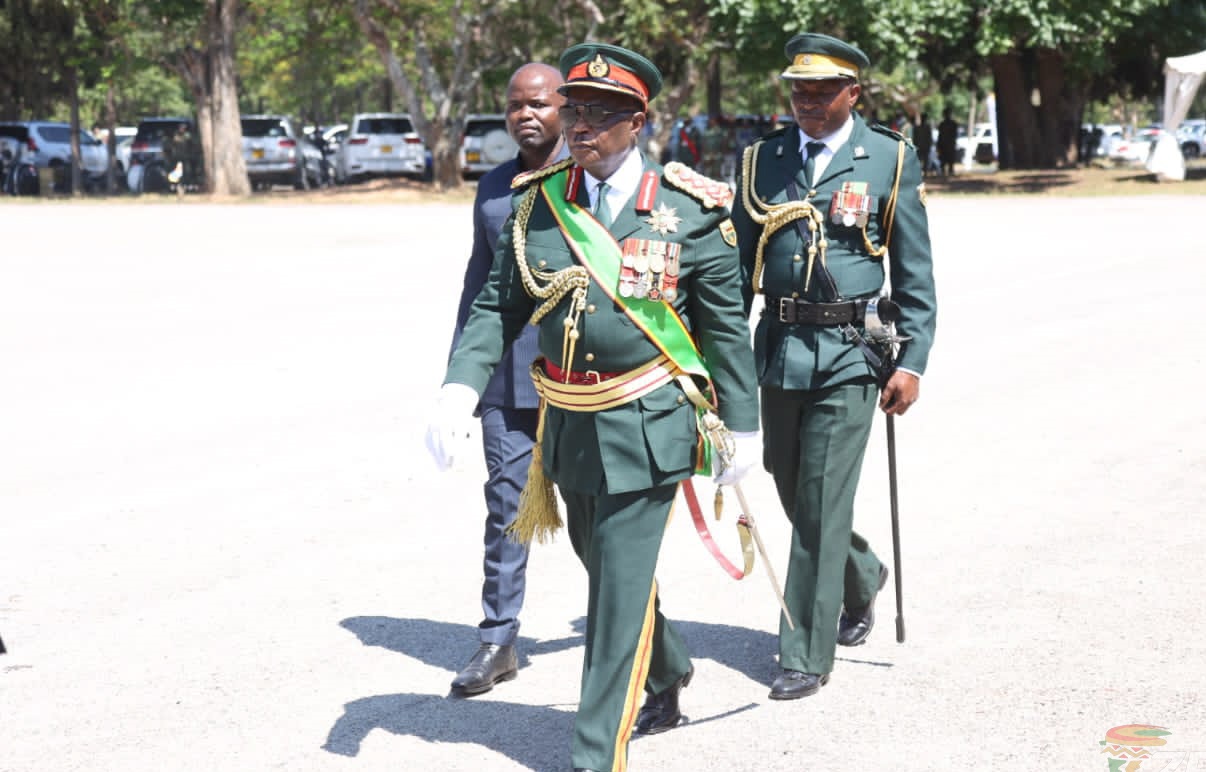
Harare – In a dramatic escalation of the power struggle at the top of Zimbabwe’s ruling party, Vice President Constantino Chiwenga has publicly locked horns with President Emmerson Mnangagwa, with sources inside ZANU-PF confirming that the two men are now openly at odds ahead of a parliamentary vote on the controversial Constitutional Amendment Bill 3 (CAB3). The bill, which has been shrouded in secrecy and political maneuvering, is widely seen as a vehicle to reshape the country’s succession rules – either extending Mnangagwa’s hold on power or clearing the path for Chiwenga’s own ambitions.
The CAB3 Battle
Constitutional Amendment Bill 3, introduced in parliament last year, has become the flashpoint of Zimbabwe’s factional war. While the government has been vague on the bill’s exact provisions, leaked drafts and public statements from ZANU-PF officials suggest it could alter the timeline for presidential elections, adjust term-limit clauses, or introduce a mechanism that would allow Mnangagwa to bypass the two-term cap he faces after 2028. Political analyst Reuben Chikwanda, a lecturer at the University of Zimbabwe, said the bill is ‘a proxy war over the soul of the party and the future of the state.’
‘This is not about legal technicalities – it’s about survival,’ Chikwanda said. ‘Chiwenga’s faction sees CAB3 as a tool to entrench Mnangagwa’s faction and sideline the military-backed wing of ZANU-PF. If the bill passes, the balance of power shifts decisively toward the civilian presidency. If it fails, Mnangagwa loses face and Chiwenga gains momentum for a leadership challenge.’
Parliament was scheduled to vote on CAB3 as early as next week, but sources now say the vote may be delayed as the party tries to contain the internal split. The public nature of the rift is unprecedented; Zimbabwe’s ruling party has traditionally kept its leadership disputes behind closed doors, projecting unity even as factions fight for control.
Regional Repercussions
The fallout is already rippling across Southern Africa. Zimbabwe, a key member of the Southern African Development Community (SADC), has been teetering on the edge of political and economic crisis for years. An open leadership battle in Harare threatens to destabilize the region, which has seen increased instability in Mozambique and the Democratic Republic of Congo. Neighboring South Africa, which relies on Zimbabwe as a trade corridor and a source of labor, is watching nervously. Diplomatic sources in Pretoria confirmed that South African officials have quietly urged both sides to de-escalate.
‘If Zimbabwe tips into a full-blown succession crisis, the entire region will feel the shockwaves,’ said Dr. Mthuli Ncube, a political risk analyst at the Institute for Security Studies in Pretoria. ‘We’ve seen what happens when security sector factions align with political factions in Zimbabwe – the 2008 election violence and the 2017 coup are recent examples. SADC does not have the capacity or the appetite for another intervention.’
The international community, including the United States and the European Union, has imposed targeted sanctions on Zimbabwean officials over human rights abuses and electoral fraud. Western diplomats in Harare have privately expressed alarm at the escalating feud, warning that any unconstitutional transfer of power could trigger a new round of sanctions or even an arms embargo under the Zimbabwe Democracy and Economic Recovery Act.
Economically, Zimbabwe is already in a fragile state. Inflation topped 500% last year, the local currency has collapsed repeatedly, and millions of citizens depend on remittances from abroad. The political uncertainty surrounding CAB3 has further suppressed investor confidence, with the Zimbabwe Stock Exchange losing 15% of its value over the past month as the rift became public. Business leaders fear that a protracted leadership battle will delay much-needed reforms, including currency stabilization and debt restructuring with international financial institutions.
What remains unclear is whether Mnangagwa can muster enough votes in parliament to pass CAB3. The ruling party controls two-thirds of the seats, but defections or abstentions from Chiwenga’s allies could sink the bill. Chiwenga, who retains strong loyalty within the military and among veterans of the liberation struggle, has not publicly called for the president’s removal – but his allies have begun floating the idea of a special party congress to elect new leadership.
The coming days will be pivotal. If the vote proceeds and CAB3 passes, Mnangagwa will have consolidated power but deepened the party rift. If the bill stalls or fails, the president will emerge weakened, and Chiwenga will be emboldened to make his move. For ordinary Zimbabweans, already battered by years of economic hardship, the political drama offers little hope – only the grim certainty that the battle at the top will leave the country even more fractured.