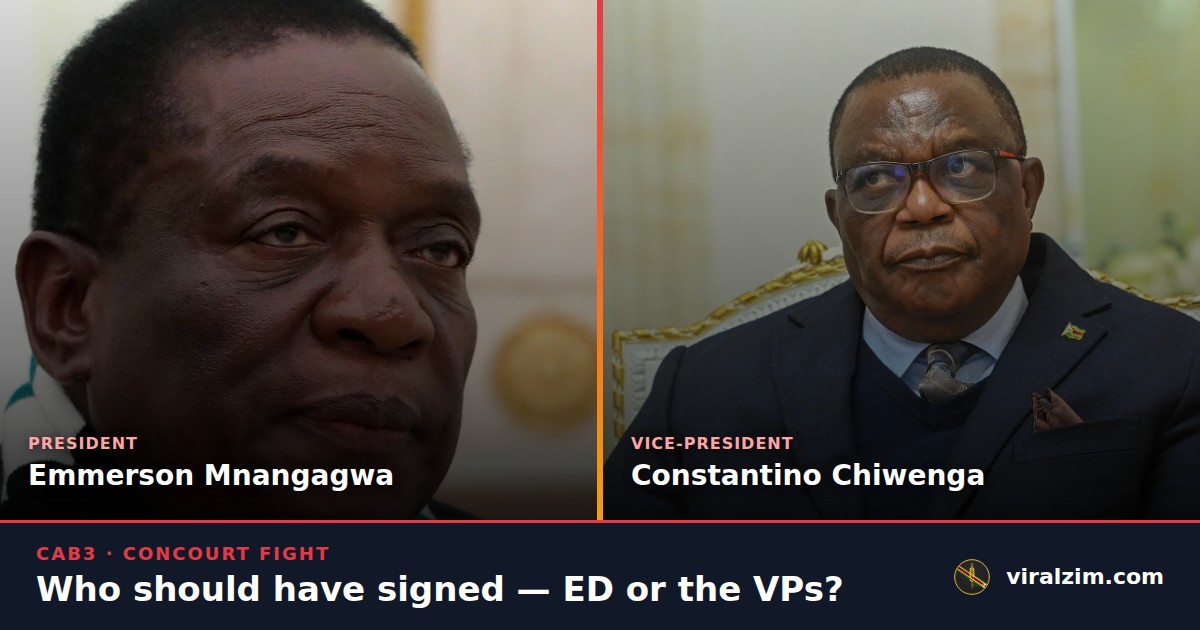
The claim, which has been circulating among party insiders and on social media platforms, paints a picture of an increasingly brittle leadership struggle at the top of Africa’s second-longest-ruling party. While neither the presidency nor the vice president’s office has commented, the narrative underscores the deep factional fault lines that have defined Zimbabwe’s politics since the 2017 military-assisted transition that brought Mnangagwa to power.
The Tagwirei factor: A businessman at the center of power
Kudakwashe Tagwirei, the founder of the Sakunda Holdings energy and mining conglomerate, has long been viewed as Mnangagwa’s key financial ally and fixer. Under the president’s administration, Tagwirei has amassed vast influence over fuel, mining, and agricultural contracts, often benefiting from state tenders and regulatory favor. Critics have accused him of using his proximity to the president to build an economic empire while ordinary Zimbabweans endure hyperinflation, currency collapse, and a grinding cost-of-living crisis.
‘What we are seeing is a classic succession battle dressed in factional colours,’ said a Harare-based political analyst who spoke on condition of anonymity due to the sensitivity of the matter. ‘Chiwenga has never hidden his ambition, and Mnangagwa knows that his own survival after 2028 depends on who succeeds him. Tagwirei was sent to do the president’s dirty work, but the VP turned the tables.’
The broader Zimbabwe crisis: Why this matters for Southern Africa