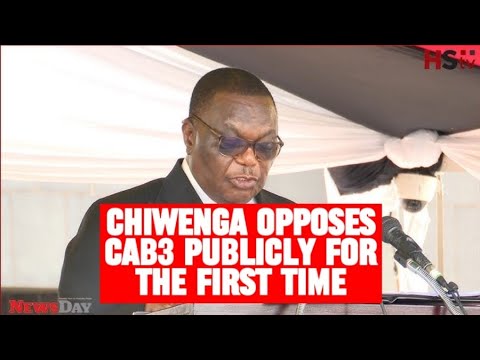
In an unprecedented public address, Zimbabwean Vice President Constantino Chiwenga has voiced direct opposition to Constitutional Amendment Bill No. 3 (CAB3), a move that threatens to fracture the ruling ZANU-PF party and reshape the political landscape of Southern Africa. The Vice President’s remarks, delivered at a public gathering, specifically target the bill's provisions that would restrict the electorate's ability to choose their leaders, effectively centralizing power within a select few.
Chiwenga’s critique centers on the fundamental democratic principle of universal suffrage. He argued that the proposed legislation, which he attributed to the administration of President Emmerson Mnangagwa, undermines the sacrifices made during the nation’s struggle for independence. By suggesting that only a limited number of officials should have the right to select the president, the bill has sparked intense debate regarding the future of constitutional governance in the region.
A Fractured Leadership and Regional Implications
This public dissent from the country's second-in-command is being viewed by political analysts as a significant escalation in the internal power struggle within the Zimbabwean government. For months, there has been speculation regarding the relationship between the President and his Vice President, particularly concerning policy direction and the handling of the nation’s economic crises. The opposition to CAB3 provides the most concrete evidence to date that the two leaders are at odds over the fundamental structure of the state.
The implications of this rift extend beyond Zimbabwe’s borders. As a key player in the Southern African Development Community (SADC), Zimbabwe’s political stability is crucial for the region. Any internal instability in Harare is closely monitored by neighboring nations, as it directly impacts trade, migration, and regional security. The potential for a constitutional shift that limits democratic participation could set a concerning precedent for other nations in the region, where democratic norms are already under scrutiny.
The Debate Over Democratic Rights
Chiwenga’s address explicitly questioned why the masses, who suffered during the liberation struggle, should now be denied their right to vote. He framed the issue as a battle for two core principles: the right to land and the right to vote. By framing the debate in these terms, the Vice President is positioning himself as a defender of the people, a strategy that could resonate strongly with a population struggling with high inflation and limited economic opportunities.
The government has not yet provided a formal response to the Vice President’s public stance. However, the move has already galvanized opposition groups and civil society organizations in Zimbabwe, who are calling for a broader national dialogue on the proposed constitutional changes. As the situation develops, the international community will be watching closely to see whether this public disagreement leads to a formal split in the ruling party or a reconsideration of the contentious bill.