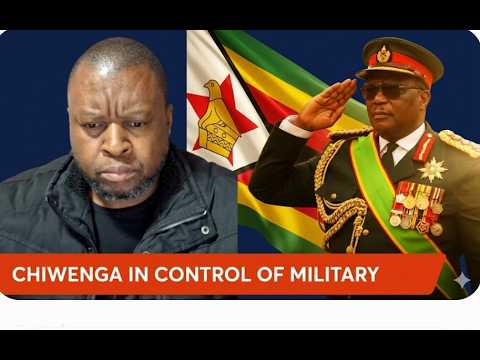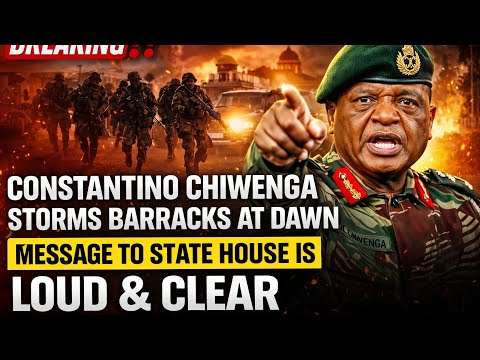
In an early morning move that has sent shockwaves through Zimbabwe’s political establishment, Vice President Constantino Chiwenga conducted a high-profile visit to military barracks at dawn. The timing and nature of the visit, which involved a significant military presence and reception by top-ranking officials, have fueled widespread speculation about a potential shift in the country's power dynamics.
While official statements have remained absent, the symbolic weight of the visit has not been lost on the public. In Zimbabwe, where the military has historically played a central role in national security and political stability, such an event is rarely interpreted as a routine inspection. Instead, it is being viewed as a deliberate and purposeful signal, potentially indicating a realignment within the leadership structure.
The visit has triggered intense debate across Southern Africa, with observers questioning the intent behind such a public display. For many, the move is seen as a clear message to State House, suggesting that the Vice President is consolidating his influence within the military and, by extension, the national government. As Zimbabwe continues to navigate a complex political landscape, this event has become a focal point for those attempting to interpret the country's future trajectory.
The Geopolitical Implications for Southern Africa
The stability of Zimbabwe is a critical factor for the entire Southern African Development Community (SADC). Any perceived shift in power or internal friction within the Zimbabwean government has immediate ripple effects across the region, impacting trade, migration, and security cooperation. Regional leaders are likely monitoring the situation closely, aware that the stability of their own nations is closely linked to the political health of their neighbor.
Analysts suggest that the military's involvement in this event underscores the fragility of the current political environment. In a region where democratic transitions have often been fraught with challenges, the intersection of military and political authority remains a sensitive issue. The message sent by the Vice President is not just for domestic consumption; it is a signal to regional partners that the internal power balance in Harare is in a state of flux.
For the citizens of Zimbabwe and the broader Southern African region, the lack of official communication regarding the purpose of this visit has only served to heighten uncertainty. As the nation waits for further developments, the event serves as a stark reminder of the complex and often opaque nature of political power in the region.
For more updates on this developing story, stay informed through the latest reports.