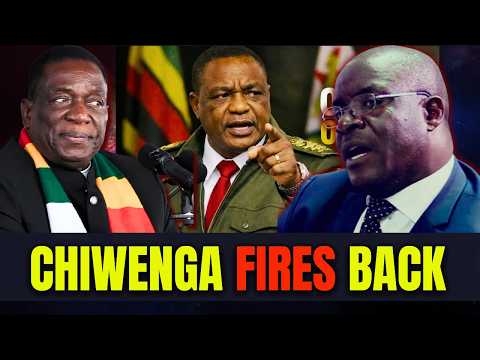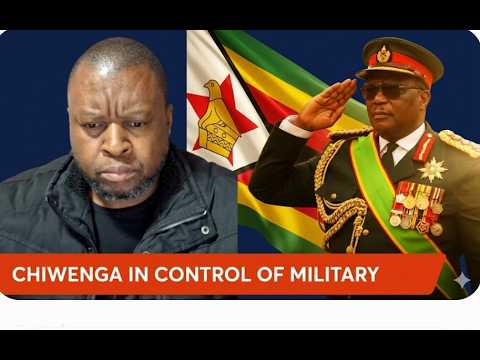
Chiwenga, a former army general who orchestrated the 2017 coup that ended Robert Mugabe’s 37-year rule, has long been the de facto kingmaker in Zimbabwean politics. His latest power play — aired live under the title “Chiwenga Takes Control Of Zimbabwe Military” — came without prior announcement or official confirmation from President Emmerson Mnangagwa’s office. As of late Thursday, military units in Harare were reported to be on high alert, with armored vehicles seen near key government buildings.
A Power Play Within ZANU-PF
The timing of Chiwenga’s move is critical. Mnangagwa, 82, has been increasingly absent from public duties, fueling speculation about his health and the party’s succession mechanisms. Chiwenga, 67, has positioned himself as the leading contender for the presidency, but faces stiff opposition from a faction loyal to Mnangagwa, which includes younger technocrats and the president’s inner circle.
“What we are witnessing is not a coup in the classical sense, but a preemptive internal takeover of the military command structure by the country’s most powerful general turned politician,” said Dr. Knox Chitiyo, an Africa analyst at Chatham House. “Chiwenga is sending a clear message that any attempt to sideline him or bypass the military in the succession process will be met with force.”
Zimbabwe’s constitution vests command of the defence forces in the president, but the military has historically acted independently. In 2017, then-General Chiwenga deployed troops to surround Harare and place Mugabe under house arrest before forcing his resignation. The current manoeuvre echoes that playbook, though analysts say Mnangagwa — a former security chief himself — is unlikely to surrender power without a fight.
The economic context deepens the stakes. Zimbabwe is in the grip of hyperinflation, chronic fuel shortages, and a collapsing currency. The military consumes roughly 15% of the national budget, a figure that has drawn criticism from international lenders. Any internal instability could trigger capital flight, currency devaluation, and a humanitarian crisis.
Regional Ramifications for Southern Africa
The crisis in Zimbabwe has immediate implications for Southern Africa. The Southern African Development Community (SADC), of which Zimbabwe is a member, has a stated policy of non-interference in internal affairs but has previously mediated political transitions in Lesotho and Madagascar. A military takeover in Harare would mark the first outright seizure of power by force in the region since the 2014 coup in Lesotho.
South Africa, the regional hegemon, is watching closely. President Cyril Ramaphosa’s government has maintained cautious relations with Mnangagwa, hoping to stabilise Zimbabwe’s economy to stem cross-border migration and illicit trade. A Chiwenga-led military government would likely be more hostile to South African business interests and could accelerate the flow of refugees across the Limpopo River.
“If Chiwenga succeeds in sidelining Mnangagwa, expect a harder line on mining contracts, land reform, and regional co-operation,” said Dr. Amara Chilufya, a political risk analyst based in Johannesburg. “South Africa cannot afford a failed state next door, especially with its own electoral challenges in 2024.”
In Mozambique, the insurgency in Cabo Delgado has already drawn regional troops from Rwanda and SADC. A distracted Zimbabwe — which had contributed a small contingent to the mission — could strain the fragile counter-insurgency effort. Meanwhile, Botswana and Zambia have privately expressed alarm over the breakdown of constitutional order in Harare.
International reaction has been muted but wary. The United States Embassy in Harare issued a brief statement urging “all parties to respect constitutional processes.” The European Union called for restraint, while China, Zimbabwe’s largest creditor, has not yet commented. Russia, which has expanded military ties with Zimbabwe under Mnangagwa, may see an opportunity to deepen influence with a Chiwenga-led regime.
What remains unclear is whether Chiwenga’s move enjoys the full backing of the military rank and file. Zimbabwe’s army is ethnically divided between Shona-speaking majority troops and a small Ndebele minority, with Chiwenga’s power base primarily among the Zezuru sub-group. Any defection by senior officers from other ethnic or factional lines could trigger a counter-coup or civil unrest.
The next 48 hours are critical. If Mnangagwa does not publicly assert his authority — or if he is seen as negotiating from a weak position — Zimbabwe could slide into a period of military rule unseen since the early 1980s. For ordinary Zimbabweans, already battered by poverty and state repression, the prospect of another power grab offers little hope of relief.