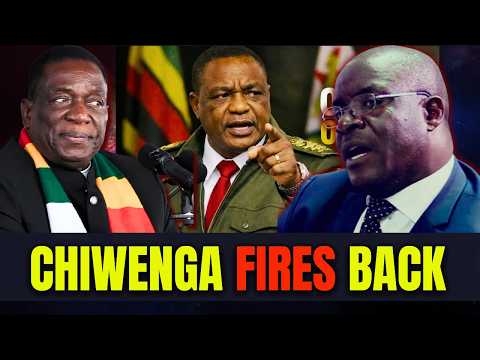
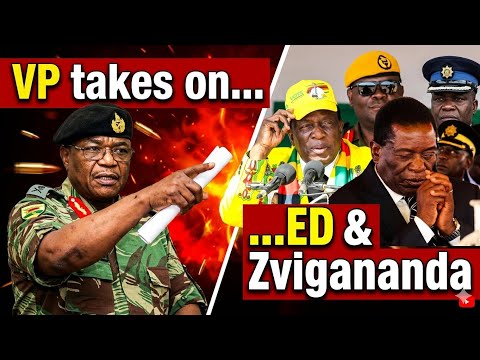
HARARE, Zimbabwe — The most explosive political crisis to hit Zimbabwe since the 2017 military intervention is unfolding in plain sight: Vice President Constantino Chiwenga, the former army general who once wielded the power to unseat a president, now stands accused by allies of President Emmerson Mnangagwa of orchestrating a ‘silent coup’ to seize control of the ruling ZANU-PF party and ultimately the state.
The allegations, which surfaced through internal party memos and leaked security briefings, point to a coordinated effort by Chiwenga loyalists to stack key party posts, control military appointments, and undermine Mnangagwa ahead of the 2028 elections. The accusations have paralyzed government business and raised the specter of a violent rupture inside Zimbabwe’s security establishment — a development that directly threatens the fragile economic recovery and the stability of the entire Southern African region.
The anatomy of a silent coup
‘What we are witnessing is a classic slow-motion coup,’ said Dr. Pedzisayi Ruhanya, a political analyst at the University of Zimbabwe who has studied military interventions in African politics. ‘Chiwenga controls the loyalty of the army’s top brass. If he can also control the party machinery, Mnangagwa becomes a figurehead with no real power. The question is whether Mnangagwa will tolerate that or strike first.’
The silent coup narrative gained momentum in late 2023 when Mnangagwa abruptly canceled a planned trip to the African Union summit in Addis Ababa, citing ‘unexpected security developments.’ Shortly after, three senior army officers known to be Chiwenga loyalists were transferred to non-command positions, a move widely interpreted as a preemptive purge. Chiwenga’s office denied any plot, calling the allegations ‘baseless fabrications by those who fear the Vice President’s popularity.’
But the timing is critical. Mnangagwa is in his second and final constitutional term; the succession battle within ZANU-PF is already tearing the party apart. Chiwenga, 67, has positioned himself as the natural heir, leveraging his military credentials and his role in the 2017 coup that ousted Robert Mugabe. However, Mnangagwa has shown no intention of stepping aside quietly, and his inner circle has been accused of using state security agencies to monitor and intimidate Chiwenga’s supporters.
Regional implications and the SADC response
The standoff in Zimbabwe has alarmed neighboring states, particularly South Africa and Botswana, which fear that a violent power struggle could trigger a refugee crisis and destabilize trade routes. The Southern African Development Community (SADC) has quietly dispatched a fact-finding team to Harare, but officials familiar with the mission say the bloc is reluctant to intervene openly for fear of being accused of interference.
‘A coup in Zimbabwe, whether silent or loud, would be catastrophic for the region,’ said Dr. Mzukisi Qobo, a geopolitical analyst at the University of Johannesburg. ‘Zimbabwe is a lynchpin of the regional economy — its agriculture, mining, and transport corridors feed into South Africa, Zambia, and Mozambique. A political meltdown would send shockwaves through the SADC, especially given the ongoing crises in Mozambique’s Cabo Delgado and the DRC.’
Meanwhile, Mnangagwa’s government has launched a public relations offensive, with state-controlled media running stories that portray Chiwenga as a power-hungry schemer. In a rare interview with the state broadcaster ZBC, a senior ZANU-PF official who spoke on background said: ‘The President is aware of the plot. He will not allow Zimbabwe to be taken hostage by one man.’
Chiwenga, for his part, has maintained a public silence, avoiding public events and canceling appearances. His last public speech, at a heroes’ day commemoration in August 2023, was a veiled warning: ‘No individual is bigger than the party. But the party must respect the will of the people.’
The next few weeks are critical. Mnangagwa is expected to reshuffle his cabinet, possibly demoting Chiwenga’s allies. Any such move could trigger a response from the military. The SADC is urging restraint, but as one diplomat put it: ‘In Zimbabwe, the guns have the final word.’
The story of Zimbabwe’s silent coup is not just about two politicians in a luxury hotel suite. It is about a nation that has been held captive by its own security apparatus for decades, and a region that can no longer afford to look the other way. The question now is whether the silence will be broken by diplomacy — or by gunfire.