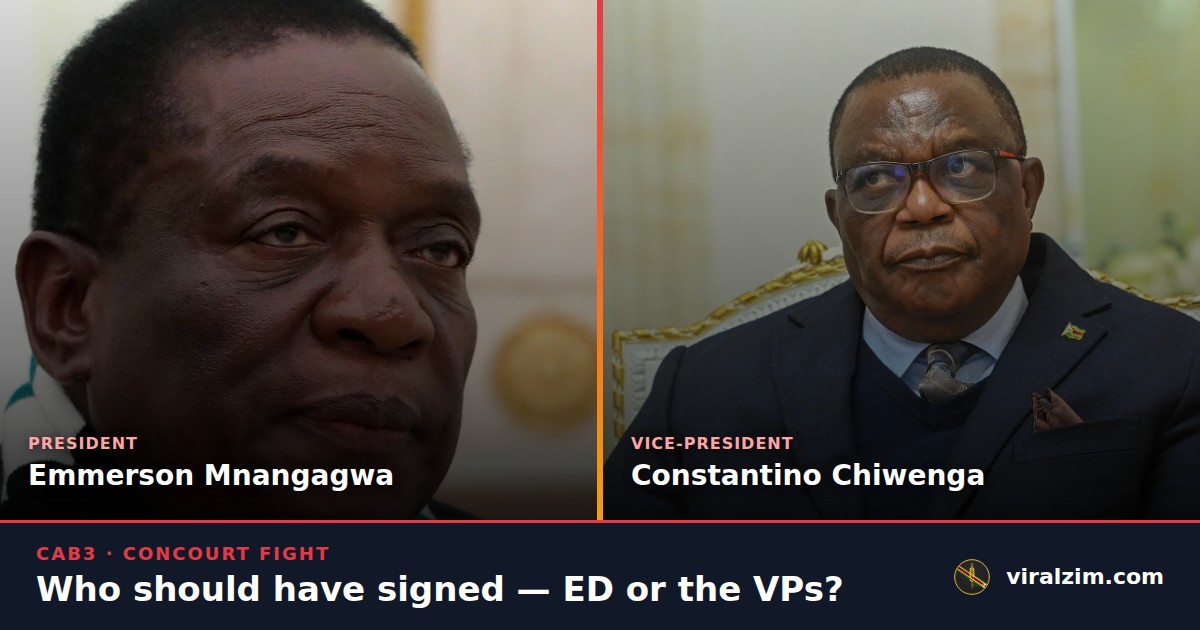
HARARE, Zimbabwe — Vice President Constantino Chiwenga’s war on corruption and his resistance to Constitutional Amendment Bill No. 3 (CAB3) are no longer separate storylines. Inside ZANU-PF and across social media, they are being read as one fight: against tenderpreneur capture of the state, and against a constitutional rewrite that extends power toward 2030.
For months, Chiwenga has hammered what he calls zvigananda — politically connected briefcase entrepreneurs whose unexplained wealth, he argues, corrodes the economy and betrays the liberation struggle. At the Zimbabwe National Chamber of Commerce and at national hero burials, he has warned that “phantom entrepreneurship” and rent-seeking have no place in a serious economy, insisting a “day of reckoning” is inevitable.
War on corruption meets the succession machine
The anti-graft line landed hardest when it named the network around President Emmerson Mnangagwa — figures such as Kudakwashe Tagwirei, Wicknell Chivayo, Pedzisayi “Scott” Sakupwanya and Paul Tungwarara, repeatedly accused by critics of using proximity to power to steer state contracts. Chiwenga’s Politburo dossier earlier alleged concealment of a ZANU-PF stake linked to Sakunda, turning a moral sermon into an internal party indictment.
Party spokesperson Christopher Mutsvangwa hit back, accusing the Vice President of weaponising the zvigananda label for presidential ambition and defending black capital accumulation. That clash exposed the real stakes: who controls patronage, who succeeds Mnangagwa, and whether anti-corruption rhetoric can survive inside the ruling party.
CAB3: the other front
CAB3 extends presidential, parliamentary and local authority terms from five to seven years, shifts the choice of president from a direct popular vote to a joint sitting of Parliament, expands presidential Senate appointments, and moves voter registration toward the Registrar General. Civil society and opposition voices say those changes needed a referendum; the ruling majority pushed them through anyway — and Mnangagwa has signed the package into law.
Chiwenga’s camp and many war veterans cast CAB3 as a project of the same oligarchic interests he brands corrupt: a constitutional shield for elite enrichment and a roadmap to shut out a military-liberation succession. His coded biblical sermons — from King Hezekiah’s extra years to Lazarus and public participation — have been widely mapped onto the amendment fight.
One message, two battlefields
Put together, Chiwenga’s war on corruption and his CAB3 resistance form a single political brand: liberation values versus tenderpreneur rule; voter power versus parliamentary presidency; ethical leadership versus unexplained wealth. Supporters hear a reformer taking on state capture. Rivals hear a succession bid dressed as moral crusade.
With CAB3 now law, the corruption fight does not end — it intensifies. Courts, streets, ZANU-PF structures and the security establishment will decide whether “no one is above the law” remains a slogan, or becomes the next chapter of Zimbabwe’s power struggle.