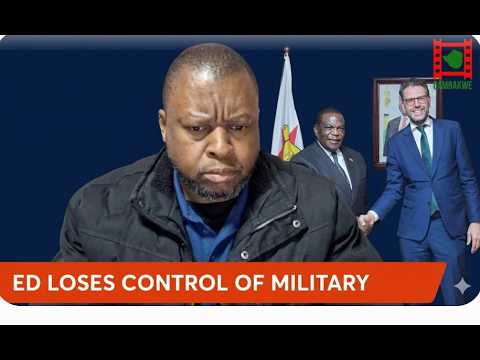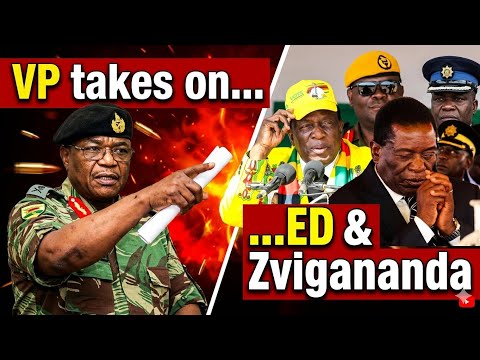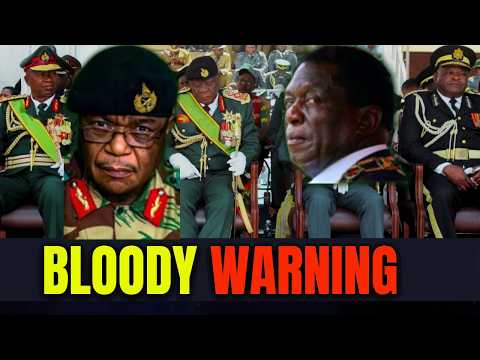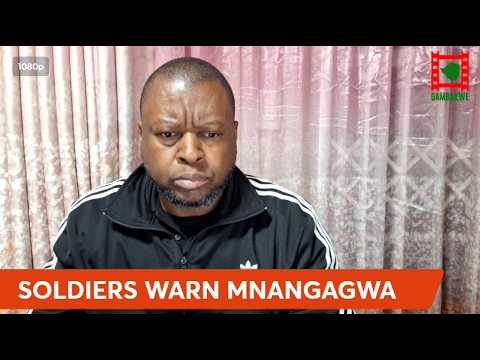
For the first time in Zimbabwe’s post-2017 political landscape, a group of junior soldiers has publicly warned President Emmerson Mnangagwa in a live broadcast—a development that analysts say signals a dangerous fracturing within the military, the backbone of the ruling ZANU-PF party.
The broadcast, which aired on an independent platform, featured uniformed personnel identifying themselves as junior officers who claimed to speak on behalf of disillusioned rank-and-file members. They accused the President of presiding over economic collapse, corruption, and the betrayal of the liberation struggle. The warning was direct: if the government fails to address the deepening crisis, the military would no longer guarantee the stability of the regime.
While the authenticity of the broadcast cannot be independently verified, the content and the visible military insignia have sent shockwaves through Harare’s political corridors. The Zimbabwe Defence Forces have not issued an official response, but sources close to the presidency describe the situation as ‘extremely sensitive’.
Geopolitical Context: A Military Under Strain
Zimbabwe’s military has long been a pillar of political power. The 2017 coup that ousted Robert Mugabe was orchestrated by high-ranking generals who later backed Mnangagwa. Since then, the economy has spiralled—inflation topping 500%, chronic fuel shortages, and a collapsing healthcare system. Junior officers, who bear the brunt of these hardships, are increasingly vocal.
‘The warning from junior soldiers is unprecedented,’ said a Harare-based political risk analyst, speaking on condition of anonymity. ‘If the rank and file are breaking ranks, it suggests that the loyalty the top brass once commanded is fraying. That is a direct threat to Mnangagwa’s survival.’
The broadcast also referenced the ongoing crisis in the SADC region, where Zimbabwe’s instability could spill into neighbouring countries already struggling with drought and economic slow-down. South Africa, Botswana, and Zambia have watched the situation warily, mindful of the 2017 precedent when a military intervention reshaped regional politics.
What This Means for Zimbabwe and Southern Africa
For ordinary Zimbabweans, the prospect of internal military dissent is both alarming and familiar. The country has experienced two coups in four decades, each followed by renewed repression. A divided army could trigger a power struggle within ZANU-PF, potentially leading to a violent transition or a prolonged security vacuum.
‘The Southern African region is already fragile,’ said a Lusaka-based security expert. ‘Zimbabwe is a key node in the transport corridor to the DRC and the SADC Free Trade Area. Any armed instability here would disrupt supply chains and energy flows, especially for copper and cobalt exports that pass through Zimbabwe’s rail network.’
International observers are also on alert. The African Union and the UN have discreetly asked for more information. Western governments, which maintain sanctions on Mnangagwa’s inner circle, have condemned any threat of military force, but have not taken a clear position.
At home, the warning has emboldened the opposition. The Citizens Coalition for Change (CCC) called for an immediate national dialogue, though its leader Nelson Chamisa remains in exile. Civil society groups have urged the military to remain neutral and respect the constitution.
The live broadcast ended without any call to action or further instructions from the junior soldiers. However, its symbolic weight is undeniable. In a country where the military’s silence is often interpreted as support, a public warning from within its ranks is a seismic event.
Whether Mnangagwa can manage this discontent—or whether the generals will move to contain their own junior officers—remains the central question. For now, Zimbabwe holds its breath, and the region watches.