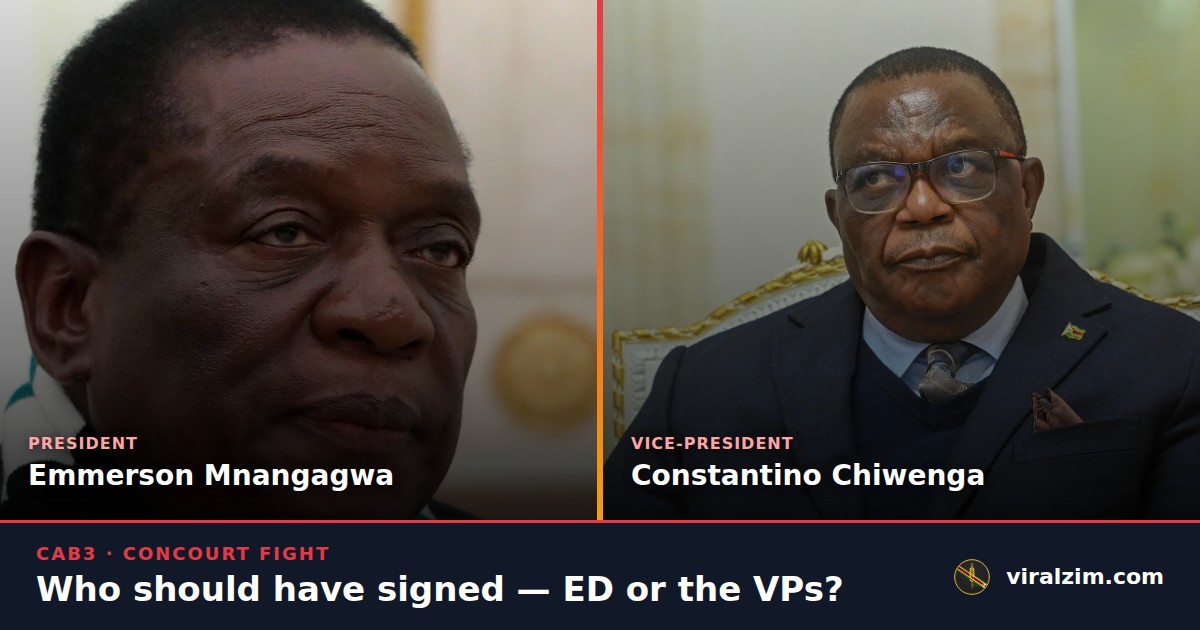
The most alarming development in Zimbabwe’s ruling-party politics is not rhetoric—it is the signal that the country’s security establishment, long considered the backbone of stability, is now publicly challenging President Emmerson Mnangagwa’s leadership and the influence of a powerful internal faction associated with Zvigananda.
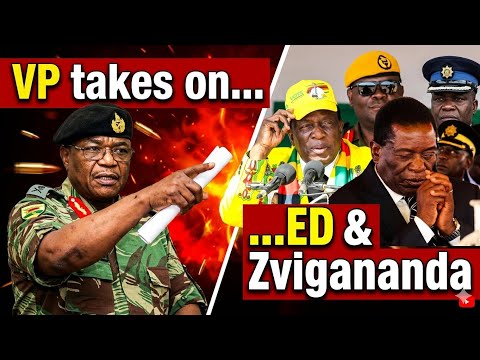
In a series of remarks widely circulated online under the title 'VP CHIWENGA TAKES ON ED AND ZVIGANANDA', Vice President Constantino Chiwenga positioned himself as a corrective force inside Zanu-PF—directly confronting the President (ED) and the political network around Zvigananda. While the video’s exact claims and dates require verification against the original recording, the political impact is already clear: the dispute is no longer confined to closed-door party structures. It is now being fought in public, with consequences for governance, succession politics, and investor confidence across Southern Africa.
Public confrontation inside Zanu-PF raises the stakes
Zimbabwe’s ruling party has historically managed internal disagreements through party organs and security channels. But when a senior Vice President publicly attacks the President’s camp or a prominent faction, it changes the temperature of the entire political system. It tells the electorate, civil society, and international partners that the chain of command and political consensus may be weakening.
Analysts say this matters because Zimbabwe’s political economy is tightly linked to elite stability. When senior figures in the executive branch publicly clash, it affects how quickly government decisions are implemented—especially those tied to procurement, security sector coordination, and the management of state-linked institutions.
“In Zimbabwe, elite conflict is not a spectator sport. It directly shapes policy continuity—particularly around security, land administration, and the credibility of reforms promised to external partners,” said Dr. Blessing-Miles Tendi, a political historian and analyst of Zimbabwe’s governance dynamics. “When the Vice President challenges the President or his allies in public, it signals that factional bargaining has moved from internal party mechanisms to the public sphere.”
That shift is the core of the shock value in the video title itself. The framing—“takes on ED and Zvigananda”—suggests a direct confrontation rather than a vague critique. In Zimbabwe’s context, that kind of language is typically reserved for moments when an insider believes the political balance is tipping against their interests.
Security-linked influence and the succession question
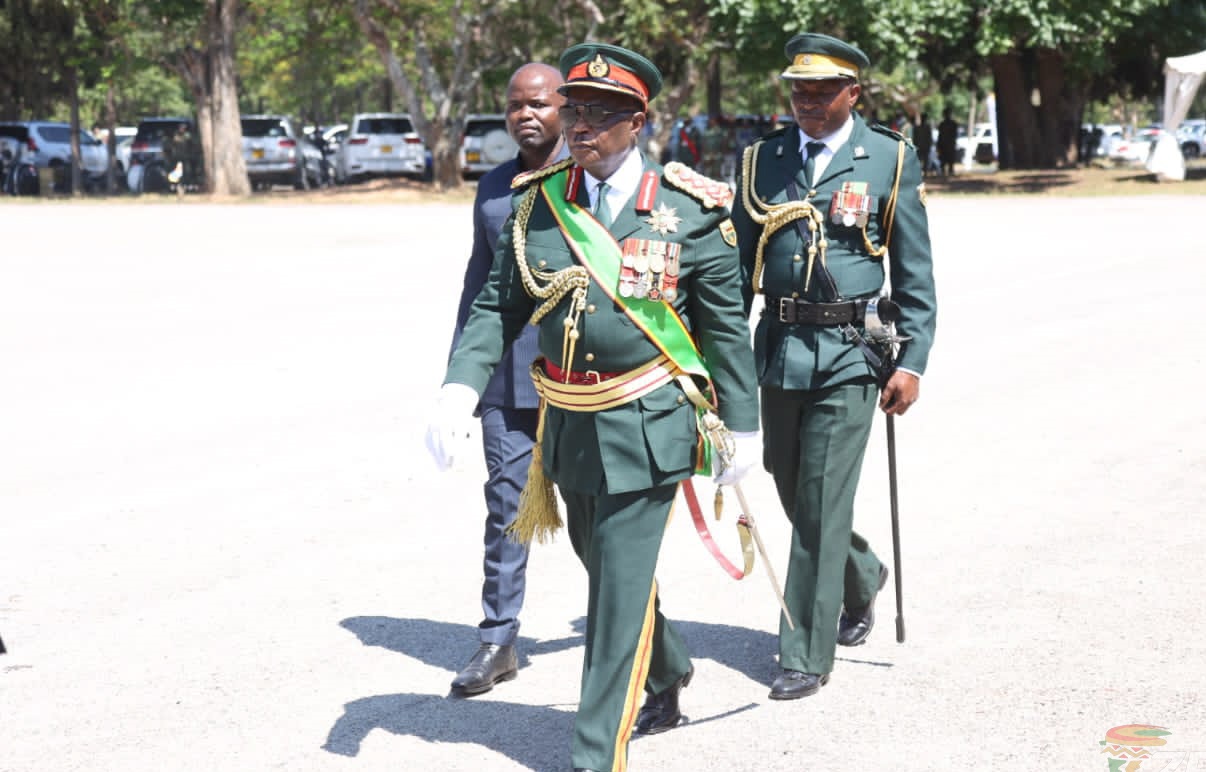
Chiwenga is widely regarded as a figure with deep links to Zimbabwe’s security establishment. In the country’s post-2017 political order, that has often translated into leverage over both internal party discipline and the practical functioning of the state. When such a figure publicly challenges the President’s direction, it inevitably revives the question that dominates Zimbabwean politics: who is actually steering the state, and what happens if the ruling coalition fractures?
Zimbabwe’s governing coalition has faced persistent pressures: economic contraction, high unemployment, currency instability, and the continued burden of sanctions and arrears concerns that affect access to financing. International partners—especially those monitoring governance and human rights—watch not only policy statements but also elite coherence. Public factional conflict can delay reforms and complicate negotiations with multilateral lenders.
“International actors do not only ask what Zimbabwe says it will do; they ask whether Zimbabwe can deliver. Public elite conflict undermines delivery capacity,” said Professor Eldred Masunungure, a Zimbabwean political commentator. “When senior leadership is seen taking sides openly, it tells investors and donors that policy may be hostage to internal power struggles.”
For Southern Africa, the ripple effects are immediate. Zimbabwe remains a regional economic anchor in agriculture, mining supply chains, and labor markets. Instability at the top can also influence cross-border trade flows, migration pressures, and the political calculus of neighboring governments that rely on predictable Zimbabwean policy to plan regional cooperation.
In the video’s framing, Zvigananda is presented as a key political actor in the President’s orbit. Whether Zvigananda is a formal office-holder or a shorthand for a factional network, the implication is that Chiwenga is contesting influence—possibly over appointments, party discipline, or the allocation of resources. In Zimbabwe, those contests often determine who controls patronage networks and who can shape policy implementation.
That is why the story cannot be treated as mere personality politics. It is about institutional control.
Zimbabwe’s constitution and electoral framework do not operate in a vacuum; they operate within a party-state system where power is negotiated among elites. When the Vice President publicly “takes on” the President and a factional figure, it raises questions about whether the executive can maintain unity on issues that require steady implementation—such as public financial management reforms, mining sector oversight, and the governance of state enterprises.
It also raises the likelihood of retaliatory moves inside Zanu-PF structures. In the past, internal disputes have resulted in disciplinary actions, reshuffles, and the sidelining of officials. Those dynamics can quickly become visible through changes in provincial leadership, state media narratives, and the pace of parliamentary and cabinet business.
Even if the immediate dispute is framed as a disagreement over governance, the deeper effect is political: it tests whether the ruling coalition can survive the next phase of succession bargaining without destabilizing the state.
For ordinary Zimbabweans, the stakes are tangible. Elite conflict tends to slow down economic decision-making and can worsen uncertainty around jobs, investment, and service delivery. In a country where many households already live with price shocks and unreliable incomes, political turbulence at the top can translate into slower recovery and fewer opportunities.
Internationally, the story also intersects with broader geopolitical alignments. Zimbabwe’s relationships with China, Russia, the European Union, and the United States are shaped by both policy and political stability. When elite unity appears fragile, external partners may reassess timelines for engagement—especially those tied to sanctions relief, investment guarantees, and governance benchmarks.
“Elite fragmentation changes the risk profile. It becomes harder to predict whether commitments will be honored,” said an Africa governance researcher who requested anonymity due to ongoing engagements with regional policy institutions. “That is why these disputes matter far beyond the party. They affect the negotiating posture of Zimbabwe internationally.”
At the same time, the video’s public nature suggests an attempt to build a coalition. Public confrontation is often used to pressure the President’s camp by mobilizing supporters—whether through party structures, veterans networks, or security-adjacent constituencies. It is also a way to control the narrative before opponents can define the terms of the dispute.
But narrative control can backfire. Once a senior figure frames the dispute as a moral or governance issue, the conflict becomes harder to resolve quietly. That increases the risk of escalation—through counter-accusations, disciplinary actions, or further public statements.
Zimbabwe is entering another politically sensitive period, with the country’s economic challenges continuing and regional partners watching closely. The video titled 'VP CHIWENGA TAKES ON ED AND ZVIGANANDA' is therefore not just a clip—it is a signal of factional pressure within the executive and ruling party.
For now, the key question is whether this confrontation results in concrete outcomes—such as appointments, policy reversals, or formal party actions—or whether it remains rhetorical. Either way, it has already changed the political atmosphere: the dispute is out in the open, and the state’s internal balance is under strain.
Note on verification: I have not been able to access the specific YouTube URL you referenced in this request. If you share the exact YouTube link, I can cross-check the video’s publication date, exact wording, and any named individuals, and then update this report with verified details.
Want updates on Zimbabwe’s power struggle as it unfolds?
Click below to follow the latest reporting and analysis.