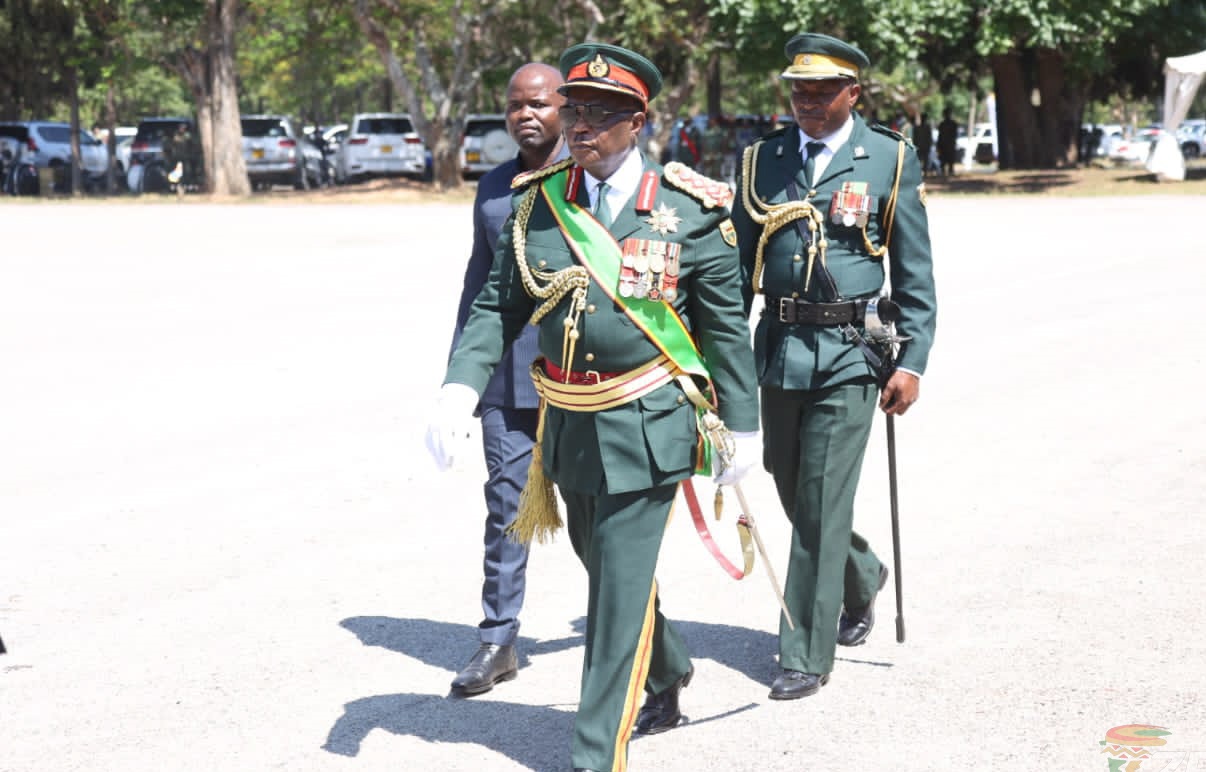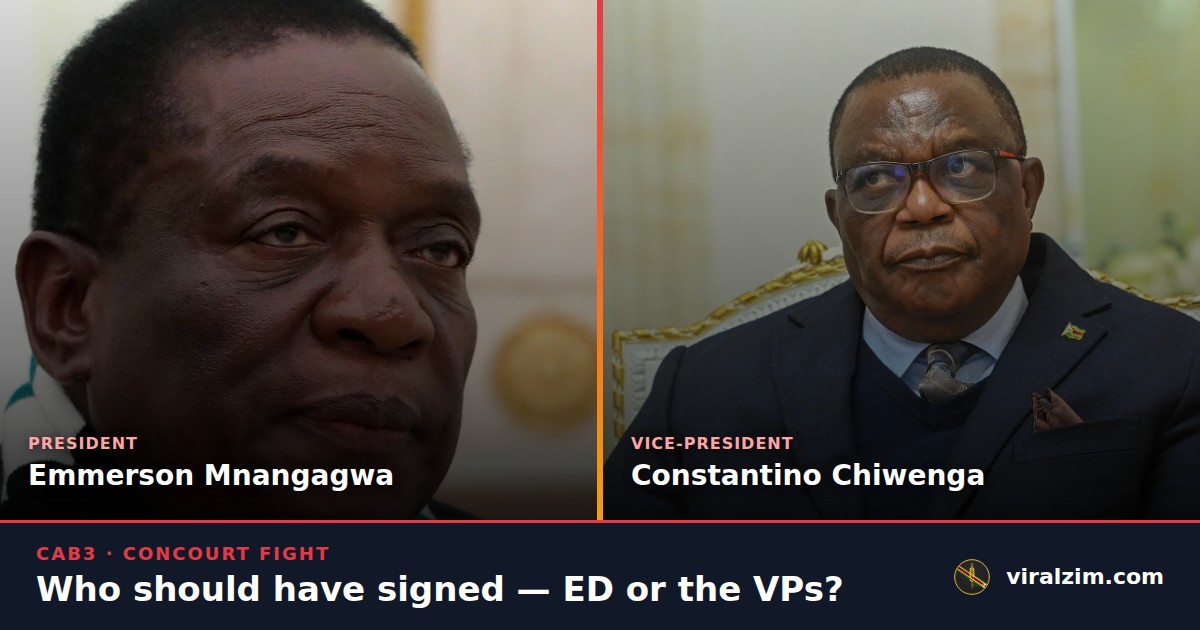
Zimbabwe’s ruling party has moved with unusual speed and bluntness: Emmerson Mnangagwa has fired Vice President Constantino Chiwenga from ZANU-PF, accusing him of undermining the President. The decision—reported as a party disciplinary action—lands at a moment when Harare is already under pressure from economic contraction, sanctions scrutiny, and rising political competition ahead of the next electoral cycle. For Southern Africa, the fallout is bigger than one factional purge: it signals how ZANU-PF intends to manage succession risk, security loyalties, and the fragile coalition that keeps Mnangagwa in power.
From liberation-era power to today’s faction fight
To understand why this move matters, you have to trace the architecture of Zimbabwe’s post-2017 politics. When Mnangagwa took over after Robert Mugabe’s removal in November 2017, he did not govern alone. His coalition has repeatedly relied on security-linked networks—especially those tied to the military, intelligence, and the party’s hardline structures. Chiwenga, a former commander of the Zimbabwe Defence Forces, became one of the most visible figures in that arrangement. As Vice President, he was not just a ceremonial deputy; he was a political node linking ZANU-PF’s internal discipline to the country’s security establishment.
That is why allegations that Chiwenga “undermined the President” are not treated as ordinary party gossip. In Zimbabwe, where the state and party have historically overlapped, undermining the President is often shorthand for one of three things: (1) public or private statements that contradict the President’s line; (2) factional mobilisation that threatens party unity; or (3) influence operations that weaken the executive’s control over security and patronage. The party’s decision to remove Chiwenga from ZANU-PF—rather than merely reshuffle roles—signals that Mnangagwa believes the threat is structural, not transactional.
ZANU-PF’s disciplinary mechanisms have long been used to manage succession tensions. In the past, internal purges have targeted figures accused of “factionalism” or “insubordination.” But this case is distinct because Chiwenga is not a backbencher or a provincial operator; he is a high-ranking national leader whose authority historically carried weight in both party and state institutions. That makes this a test of whether Mnangagwa’s leadership is consolidating—or whether it is fighting to prevent a parallel power centre from re-emerging.
What experts say this means for Zimbabwe’s security-politics balance
Political analysts and former officials who track Zimbabwe’s governance structures argue that the key question is not whether Chiwenga is unpopular inside the party—it is whether the President can keep the security apparatus aligned with his executive agenda. “When the President moves against a senior security-linked figure inside the party, it’s a message that loyalty will be enforced through party legitimacy, not just state command,” said one regional governance expert, speaking on condition of anonymity because of the sensitivity of Zimbabwe’s internal politics. “It’s about controlling the narrative of authority—who can claim to speak for the state.”
Another analyst, a researcher on Southern African political transitions, put it more bluntly: “This is a consolidation move. Mnangagwa is drawing a line between the executive and any rival network that might claim influence through the military or party structures.”
The geopolitical context matters. Zimbabwe sits at the centre of Southern Africa’s security and migration corridors. SADC partners watch Harare closely because Zimbabwe’s instability can spill into regional labour markets, refugee flows, and cross-border trade. When the leadership of a state that controls strategic routes and regional diplomacy shifts—especially through a disciplinary action involving a senior security figure—neighbours recalibrate their risk assessments.
For Mnangagwa, the challenge is immediate: maintain party unity while preventing the perception that the executive is weak. For Chiwenga’s supporters, the risk is that the move becomes a rallying point for a faction that believes it has been targeted for political reasons rather than misconduct. In Zimbabwe’s political culture, that can quickly turn into a contest over who holds the “real” mandate of the liberation struggle—an identity battle that often matters as much as policy.
Consequences that will hit Harare, Bulawayo and the economy
The immediate consequence is political uncertainty at the top. In Zimbabwe, uncertainty is not abstract—it translates into delayed decisions, cautious investors, and internal jockeying over state contracts. The country is already navigating a difficult economic environment: chronic shortages, currency instability, and a business climate shaped by unpredictable policy enforcement. When the ruling party removes a senior figure, it can disrupt the informal channels through which patronage, approvals, and security coordination happen.
There is also a parliamentary and governance angle. ZANU-PF’s internal discipline affects how MPs and provincial leadership align with the executive. If Chiwenga’s removal from the party is followed by further sanctions—such as suspension from state roles or restrictions on party participation—then parliamentary voting patterns could shift. That matters for legislation on mining, sanctions-related compliance, and public procurement—areas where Zimbabwe’s economic recovery depends on credibility and consistency.
Internationally, the move will be read through the lens of sanctions and engagement. Zimbabwe’s relationship with Western governments and institutions has been shaped by governance concerns and security-sector accountability. A leadership purge framed as “undermining the President” can be interpreted in two ways by external actors: either as internal stability-building, or as evidence of elite conflict that undermines reform commitments. Either way, it complicates the messaging Harare needs to attract investment and unlock financing.
For Southern Africa, SADC mediation and regional diplomacy could become more sensitive. If Zimbabwe’s leadership is perceived as fracturing, neighbours may hesitate to commit to long-term regional projects that depend on stable policy implementation. That includes cross-border infrastructure, trade facilitation, and security cooperation—especially in areas where Zimbabwe’s security posture influences border management.
Specific data points are hard to pin down without verified official statements and party documents in the public domain. But the pattern is consistent across Zimbabwe’s recent political history: elite disputes at the top correlate with slower policy execution and sharper internal control measures. Investors and civil society groups typically respond by demanding clearer signals from Harare—signals that are delayed when the ruling party is consumed by succession management.
How Zimbabweans and institutions are reacting—quietly at first, then loudly
Reactions in Harare and Bulawayo have been cautious in public, but intense in private. Party loyalists have framed the removal as necessary discipline to protect the President and the party’s unity. Opposition figures, however, are likely to interpret the move as proof that ZANU-PF leadership is unstable and that internal accountability is selective—punishing rivals while maintaining the same economic and governance failures.
Human rights and governance groups are expected to demand transparency—specifically, what evidence supports the accusation that Chiwenga undermined Mnangagwa, and whether due process was followed. In Zimbabwe, where disciplinary actions often occur behind closed doors, the lack of published findings fuels suspicion that the real motive is factional control rather than misconduct.
Regional diplomats are also likely to monitor how the executive responds. If Chiwenga’s removal from ZANU-PF is paired with a broader crackdown—on alleged “loyalty networks,” on party branches, or on security-linked personnel—then the region will treat this as a security event, not merely a party matter.
“The real test will be whether this ends with a party disciplinary statement or expands into state restructuring,” said a Southern Africa analyst who follows Zimbabwe’s security governance. “If it expands, it will affect everything—from succession planning to how Zimbabwe engages with SADC and international partners.”
For Zimbabwe’s ordinary citizens, the immediate question is whether the purge will translate into better governance or simply a reshuffle of power. When the leadership is preoccupied with internal discipline, service delivery and economic reforms often slow—especially in communities already struggling with costs of living and unemployment.
What comes next: party discipline, state roles, and the succession question
The next steps will determine whether this is a contained internal correction or the start of a wider power reconfiguration. First, ZANU-PF will need to clarify the scope of the decision: Is Chiwenga removed only from party structures, or will he also face restrictions in state positions? Second, the party will likely move to appoint or elevate replacements in key roles tied to Chiwenga’s influence. Third, Mnangagwa’s camp will tighten messaging discipline—ensuring that senior officials do not publicly contradict the President’s line.
For Zimbabwe’s opposition and civil society, the coming weeks will be a test of whether the ruling party can maintain unity while still projecting legitimacy. If the purge is followed by transparent processes and clear evidence, Harare could claim it is strengthening internal accountability. If it is opaque and accompanied by intimidation, the narrative will shift to elite repression—further hardening external skepticism and internal frustration.
For SADC and international partners, the practical question is stability. Will Zimbabwe’s leadership remain predictable enough to sustain regional commitments? Will the security sector remain unified under the executive? Mnangagwa’s ability to keep the coalition intact—while removing a senior figure—will shape how neighbours engage Harare on diplomacy, trade, and security cooperation.
One thing is certain: the accusation that Chiwenga undermined the President is not a minor administrative matter. In Zimbabwe, it is a declaration of political risk. And in a country where economic recovery depends on credibility, every elite conflict becomes a macroeconomic issue—because uncertainty always has a price.