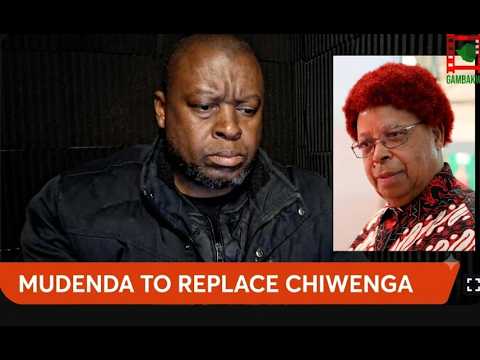
Harare, Zimbabwe – In a move that has sent shockwaves through Zimbabwe’s ruling ZANU-PF party, President Emmerson Mnangagwa has elevated the country’s top military commander, General Valerio Sibanda, to the party’s powerful Politburo. The appointment, confirmed by party insiders this week, is widely seen as a direct challenge to Vice President Constantino Chiwenga’s deep-rooted influence within the armed forces—a gambit that analysts warn could accelerate a succession crisis with regional consequences.
General Sibanda, who has served as Commander of the Zimbabwe Defence Forces since 2021, now holds a seat in the party’s highest decision-making body. The move comes barely six months after Mnangagwa reshuffled his cabinet, removing several Chiwenga allies. But the President’s ace—Chiwenga’s continued grip on key military units—remains unbroken. “Chiwenga still holds the ace,” said one Harare-based political analyst who requested anonymity due to the sensitivity of the matter. “Bringing Sibanda into the Politburo is Mnangagwa’s attempt to peel away military loyalty, but the general’s real allegiance is still an open question.”
The Power Play Behind the Appointment
The struggle for control of Zimbabwe’s security apparatus is not new. Vice President Chiwenga, a former army general, led the 2017 coup that ousted Robert Mugabe and installed Mnangagwa. Since then, he has methodically placed loyalists in top military posts. Sibanda, a career soldier with close ties to both men, was seen as a neutral figure when he took over the defence forces. His promotion to the Politburo changes that calculus. “By inducting Sibanda into the party’s inner circle, Mnangagwa is essentially demanding a public loyalty test,” said Dr. Pedzisai Ruhanya, a Zimbabwean political analyst and director of the Zimbabwe Democracy Institute. “The general can no longer stay above the fray. He must choose a side.”
ZANU-PF insiders report that the appointment was pushed through during a closed-door Politburo session last week, with Mnangagwa citing Sibanda’s ‘longstanding party credentials and service to the liberation struggle.’ However, the move has deepened divisions within the party’s ‘G40’ faction, which has long opposed Chiwenga’s influence.
Regional Repercussions for Southern Africa
The power struggle in Zimbabwe has immediate implications for stability across Southern Africa. Zimbabwe remains a key player in the Southern African Development Community (SADC), and any internal convulsion risks spilling into neighbouring states. South Africa, Botswana, and Zambia are watching closely, given that Zimbabwe’s security forces have a history of regional interventions. “If the military becomes politicised again, it could undermine the fragile democratic gains in the region,” said a SADC diplomat based in Pretoria, speaking on condition of anonymity. “No one wants a replay of 2017.”
Economically, the uncertainty is already taking a toll. The Zimbabwean dollar has lost over 80% of its value this year, and investor confidence has plummeted. The Mnangagwa-Chiwenga rivalry has stalled critical reforms needed to unlock International Monetary Fund and World Bank support. “Donors and creditors are watching this internal power game,” said economist Dr. Gift Mugano. “Every time the party tears itself apart, ordinary Zimbabweans pay the price through hyperinflation, food shortages, and crumbling services.”
Mnangagwa’s strategy to contain Chiwenga by co-opting Sibanda may backfire. Security analysts note that the general retains strong ties to the rank and file, many of whom still view Chiwenga as the ultimate guarantor of military interests. “The safest bet in Harare right now is that no one is sure who the soldiers will follow if a real split occurs,” said the Harare-based analyst. “That uncertainty is the most dangerous factor of all.”
As the Politburo prepares for its next session, all eyes are on Sibanda. His first vote—whether on party discipline or a policy matter—will be read as a signal. Meanwhile, Chiwenga has maintained a low profile, but his allies have begun circulating a memorandum calling for ‘unity and respect for the party constitution’—code, insiders say, for a warning against Mnangagwa’s power grab.
For Southern Africa, the outcome of this Zimbabwean chess match will determine not only the future of ZANU-PF but the stability of a region already grappling with coups in West Africa and economic collapse in Zambia. The next few weeks could decide whether the ace Chiwenga holds is played—or folded.