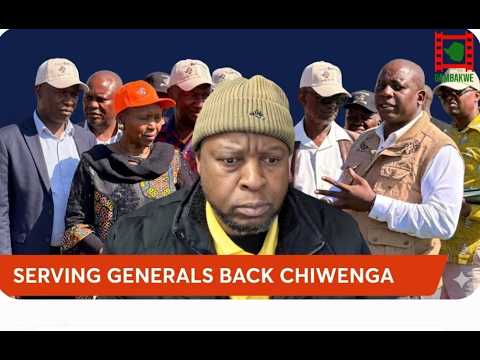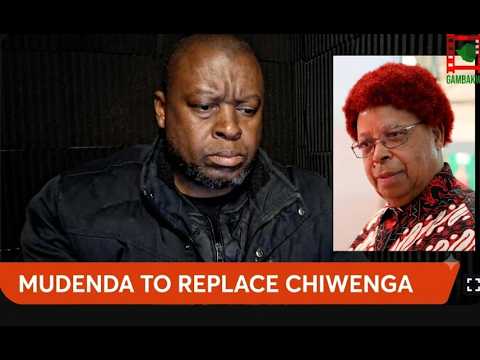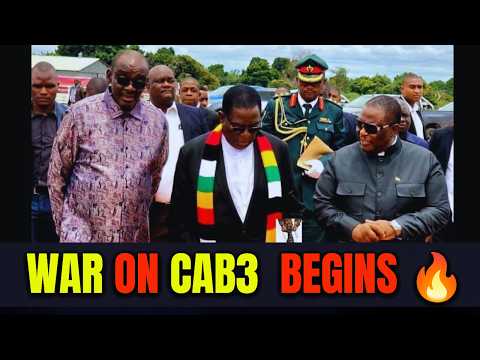
A dramatic and potentially explosive political rift in Zimbabwe has reached a new peak, with unconfirmed but persistent reports alleging that the Zimbabwe Defence Forces (ZDF) are preparing to intervene on behalf of Vice President Constantino Chiwenga in a bitter dispute over President Emmerson Mnangagwa’s pursuit of an unconstitutional third term. The claim, which circulated widely on social media and in political circles after a live broadcast by local media, has sent shockwaves through Harare’s corridors of power and raised the spectre of military involvement in civilian governance—a scenario that would mark the most serious crisis in Zimbabwe since the 2017 coup that brought Mnangagwa to power.
The reported tension centers on Mnangagwa’s alleged determination to amend the constitution to extend his rule beyond the two-term limit set by the 2013 charter. Although Mnangagwa has publicly denied any intention to seek a third term, his inner circle—particularly loyalists in ZANU-PF’s faction—has been accused of quietly lobbying for a change that would allow him to stand again in 2028. Vice President Chiwenga, a former army general who orchestrated the 2017 military intervention that ousted Robert Mugabe, is believed to view the third-term push as a direct threat to the party’s succession rules and to his own ambitions. Chiwenga’s faction, known as the ‘Lacoste’ group, has historically been at odds with the ‘Generation 40’ (G40) faction that backed Mugabe, but the current split is between Mnangagwa’s loyalists and Chiwenga’s military-aligned bloc.
The lack of an official transcript or verified sources from the broadcast makes it impossible to confirm the precise nature of the claim. However, the video title—"WATCH LIVE: Zimbabwe Army To Intervene For Chiwenga In Mnangagwa 3rd Term Dispute"—strongly suggests that the channel, GAMBakwe Media, aired an unverified report or an interview with a source alleging imminent military action. Such reports, even if unsubstantiated, reflect the deep anxiety and rumor-driven climate that has gripped Zimbabwe as the 2028 election cycle approaches.
The Third-Term Controversy and Constitutional Stakes
Zimbabwe’s constitution explicitly limits presidents to two five-year terms, a provision adopted after the 2013 referendum to prevent future life-long presidencies. Mnangagwa, who succeeded Mugabe in 2017, completed Mugabe’s term and then won his own full term in 2018 and again in 2023. Legal scholars argue that the two-term cap applies, meaning Mnangagwa cannot constitutionally stand in 2028. Yet his allies have floated the idea that the count should restart because the 2017 term was not his own—a legal interpretation rejected by most constitutional experts. ‘Any attempt to amend the term-limit clause would require a two-thirds majority in parliament plus a national referendum,’ said Lovemore Madhuku, a prominent constitutional lawyer. ‘That process is neither simple nor likely to succeed in the current polarized environment, which is precisely why factional battles are being fought through backroom deals and, allegedly, military threats.’
The dispute has already paralyzed government decision-making, with key ministries deadlocked between Mnangagwa and Chiwenga loyalists. In recent weeks, the vice president has conspicuously absented himself from public events, fueling speculation that he is either under house arrest or plotting his next move. The ZDF, for its part, has issued no official statement, and military spokespeople did not respond to requests for comment. The silence from the armed forces is itself telling: in a country where the military rarely stays quiet for long, the absence of a denial is often interpreted as tacit confirmation of internal turmoil.
Regional Implications for Southern Africa
Zimbabwe’s instability does not occur in a vacuum. The Southern African Development Community (SADC), which includes Zimbabwe as a founding member, has a longstanding principle of non-interference in member states’ domestic affairs, yet the bloc has been forced to mediate crises in Lesotho, Madagascar, and Mozambique. A military intervention in Zimbabwe would represent the most serious test of SADC’s capacity to manage political upheaval in the region since the 1990s. Neighboring South Africa, already grappling with its own internal challenges, would face a surge of refugees and economic spillover if Zimbabwe slips into conflict. Botswana and Zambia, both reliant on cross-border trade with Zimbabwe, would also be directly affected.
The United States and European Union have imposed sanctions on Zimbabwe’s ruling elite for years, largely over human rights abuses and electoral fraud. A military takeover would almost certainly trigger immediate additional sanctions and possibly an arms embargo, further isolating Zimbabwe diplomatically. China, Zimbabwe’s largest creditor and strategic ally, would face a difficult choice: continue backing Mnangagwa’s government or recalibrate relations with a new military-led administration. The African Union has called for calm and urged all parties to resolve their differences through dialogue, but such appeals have limited effect when the military itself is party to the dispute.
For ordinary Zimbabweans, the prospect of another military intervention evokes painful memories of 2017. While that coup was initially celebrated as the end of Mugabe’s repressive rule, it quickly gave way to economic collapse, rampant inflation, and continued crackdowns on dissent. The current crisis, if it escalates, threatens to derail the fragile economic reforms that have stabilized the currency in recent months. The Zimbabwean dollar has already weakened against the US dollar on parallel markets, and food prices have spiked in anticipation of possible supply disruptions.