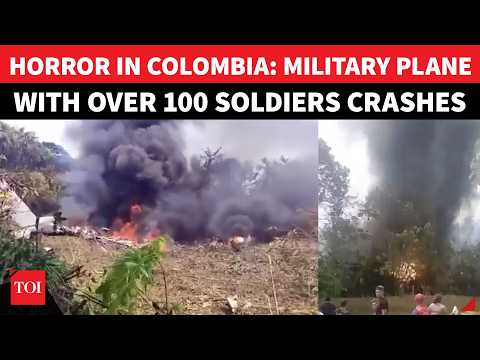
A catastrophic aviation disaster has struck the Colombian military, as a C-130 transport aircraft has crashed while carrying over 100 soldiers. Reports emerging from the Times of India indicate that the situation is dire, with many personnel feared dead following the incident. Emergency services and military recovery teams are currently grappling with the scale of the wreckage in what is rapidly becoming one of the most significant military aviation tragedies in recent regional history.
Background of the C-130 Fleet
The Lockheed C-130 Hercules is a staple of military transport worldwide, known for its rugged capabilities and ability to operate in challenging environments. However, the sheer volume of personnel on board this specific flight—exceeding 100 soldiers—highlights the critical nature of the mission. Military analysts are already looking into the maintenance logs and flight manifests to determine what led to this catastrophic failure. The Colombian military has historically relied on these airframes for troop deployment and logistics, making this loss a severe blow to their operational capacity.
Strategic Analysis of the Crash
This incident serves as a grim reminder of the inherent risks associated with high-capacity military transport. With over 100 soldiers on board, the loss of life potential is staggering. From a geopolitical perspective, the immediate grounding of similar airframes is expected as investigators search for mechanical failure, pilot error, or external interference. The loss of such a significant number of trained personnel will undoubtedly force a reassessment of troop transport protocols across the region, as the military community struggles to comprehend the magnitude of this sudden loss.
Impact on Regional Security
While this tragedy occurs in Colombia, the implications ripple outward to nations with similar military infrastructures, including those in Southern Africa. Military alliances often share data on aircraft performance and safety protocols. For countries in Southern Africa that utilize similar C-130 platforms for peacekeeping and domestic security, this crash necessitates an immediate review of safety standards. The loss of over 100 soldiers is not merely a tragedy for Colombia; it is a wake-up call for global military logistics departments to ensure that aging fleets are subjected to the most rigorous safety inspections possible to prevent further loss of life.
Global Reaction and Mourning
The international community is currently reacting with shock as news of the crash spreads. Military families and government officials are bracing for the confirmation of casualties. The sheer number of soldiers involved has triggered a massive search and rescue operation. As details continue to emerge, the focus remains on the families of the victims and the recovery of the flight data recorder. The gravity of the situation has left the international defense community in a state of mourning, as they await further updates from the crash site.
What Next for the Investigation
As the investigation unfolds, authorities will focus on the 'black box' data to determine the final moments of the flight. We are watching for official statements from the Colombian Ministry of Defense regarding the recovery efforts and the eventual identification of the soldiers. Furthermore, we expect a global directive regarding the airworthiness of the C-130 fleet. The coming days will be critical in determining whether this was an isolated mechanical accident or a systemic issue that could affect military aviation operations worldwide, including in Southern Africa.