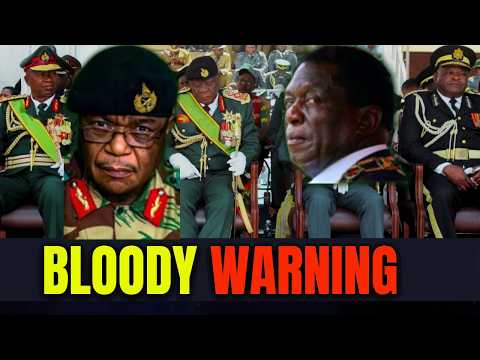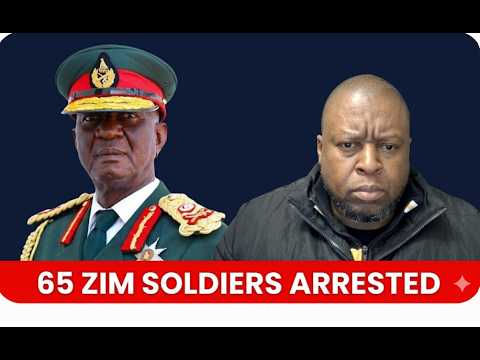
At least 65 Zimbabwe Defence Forces personnel have been arrested in a coordinated operation that sources describe as the largest single round-up of soldiers in more than a decade, raising urgent questions about stability inside President Emmerson Mnangagwa's security apparatus.
Neither the Zimbabwe Defence Forces nor the Ministry of Defence has issued a statement confirming or denying the detentions. Zimbabwe's state-controlled media, which rarely reports sensitive security developments without official clearance, has so far remained silent.
Analysts warn the incident could signal a dangerous internal fracture within an institution that has served as the ultimate arbiter of political power in Zimbabwe since independence.
The Military as Kingmaker
Zimbabwe's armed forces have historically operated as the country's most powerful political actor. In November 2017, the military removed Robert Mugabe from power and installed then-Vice President Emmerson Mnangagwa in what was formally a 'constitutional transition' but was widely viewed as a coup. Since then, Mnangagwa has relied heavily on loyalty inside the security sector to survive repeated political crises, including a contested 2018 election and the violent 2020 crackdown on dissent.
Any mass arrest of soldiers — especially 65 personnel — suggests either an attempted mutiny or a preemptive purge of officers deemed disloyal. 'When you see that many soldiers picked up at once, you are looking at the suppression of a movement, not just individual misconduct,' said a senior regional security analyst who monitors Zimbabwean defence structures for a Johannesburg-based think tank. 'This is not about petty crime. This is about control of the gun.'
The timing is particularly delicate. Zimbabwe is in the grip of a severe economic crisis — inflation has topped 170 percent, the Zimbabwean dollar has virtually collapsed on the black market, and basic goods such as bread and cooking oil are increasingly scarce. Discontent among ordinary soldiers over low pay and poor living conditions has been simmering for years. In 2020, a small mutiny over salary arrears was quietly suppressed. This mass arrest may indicate that the dissent has moved from junior ranks into the officer corps.
Regional Domino Effect
Southern Africa has watched Zimbabwe's military posture closely since the 2017 coup. The Southern African Development Community (SADC) has a policy of opposing unconstitutional changes of government, but it made an exception for Mugabe's ouster — a decision that still fuels debate in bloc capitals. If the current arrests point to an internal power struggle that could destabilise the Mnangagwa government, neighbours from South Africa to Botswana will face a fresh security dilemma.
Zimbabwe sits at the geographic heart of the region. Its rail and road corridors carry copper from Zambia and cobalt from the Democratic Republic of Congo to the ports of Durban and Beira. Any breakdown in command and control inside the Zimbabwean military risks disrupting those trade routes. Moreover, Zimbabwe hosts large numbers of refugees and economic migrants from Mozambique, Malawi, and the broader region; a security vacuum could trigger a humanitarian flow.
South Africa's Department of International Relations and Cooperation has not commented on the reported arrests. However, diplomatic sources in Pretoria say the South African government is 'tracking the situation closely' and has urged restraint on all sides.
Attempts to reach Zimbabwe's Defence Minister Oppah Muchinguri-Kashiri for comment were unsuccessful. Her office referred questions to the military public relations directorate, which did not respond to repeated calls.
The arrests also come as Zimbabwe deepens its military ties with Russia and China. In 2023, Harare signed a defence cooperation agreement with Moscow and received a shipment of Chinese armoured vehicles. Any instability inside the armed forces could complicate those partnerships and potentially draw foreign concern.
For ordinary Zimbabweans, the news has revived memories of the tense days before the 2017 coup, when armoured vehicles rolled through Harare's streets. 'People are scared,' said a civil society leader in Bulawayo who asked not to be named for safety reasons. 'We know what happens when the army splits. Last time it ended with a president being pushed out. No one knows where this ends.'
The lack of official transparency is itself a red flag. In previous incidents of military discontent, the government has either denied the problem or released a terse statement accusing 'disgruntled elements' of spreading rumours. The sustained silence suggests the situation is still unfolding — and that those at the highest levels of the Zimbabwean state are unsure how to manage the fallout.