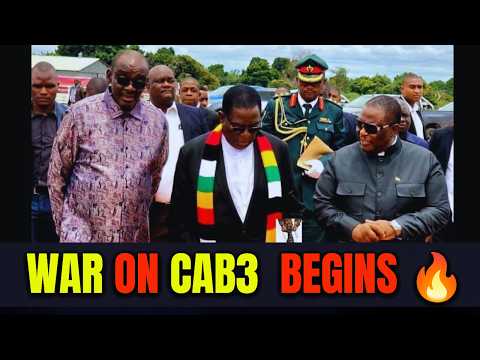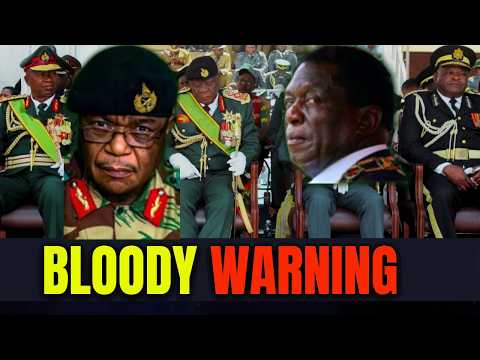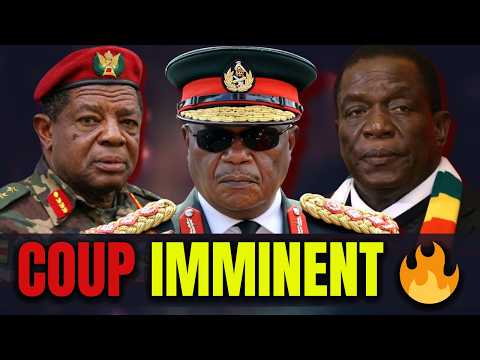
Harare, Zimbabwe – A wave of unverified but persistent claims that Zimbabwe’s military is preparing to strike again has rattled the country’s fragile political landscape, reigniting fears of a second coup in under a decade. The allegation, which has circulated widely on social media and in underground political circles, points to deepening fractures inside the ruling ZANU-PF party as President Emmerson Mnangagwa’s grip on power weakens amid an unprecedented economic collapse.
No official confirmation has emerged from the Zimbabwe Defence Forces or the government, and the claims remain uncorroborated by independent news organisations. But the very fact that such speculation is spreading with speed and intensity reflects the acute instability that has come to define the post-Mugabe era. For a region still scarred by the 2017 military intervention that ousted Robert Mugabe, the suggestion that soldiers may again be preparing to move is a deeply unsettling echo.
The Warning Signals
Zimbabwe has been locked in a prolonged political and economic crisis. Inflation is running above 500 percent, the Zimbabwe dollar has lost virtually all its value on the parallel market, and food insecurity now affects nearly half the population. Against this backdrop, a high-stakes succession battle has erupted between two dominant ZANU-PF factions: one loyal to Mnangagwa and the other to Vice President Constantino Chiwenga, the retired general who led the 2017 coup.
“Every coup in Zimbabwe’s history has been preceded by a period of intense factional infighting and a collapsing economy,” said Dr. Tafadzwa Chikwanha, a Harare-based political analyst. “We are now seeing both conditions simultaneously. It is not a question of if, but when the military decides it can no longer tolerate the chaos.” The 2017 intervention, officially called Operation Restore Legacy, was justified by the generals as a bid to stop Mugabe’s wife Grace from taking power. Today, analysts see parallels in the public feuding over succession, with Chiwenga’s allies openly challenging Mnangagwa’s leadership.
Regional Ripple Effects
Any military takeover in Zimbabwe would send shockwaves across Southern Africa. The region has seen a resurgence of coups in recent years—Mali, Burkina Faso, Niger, and Gabon have all fallen to soldiers since 2020. But Zimbabwe is not the Sahel; it is a much larger economy and a key player in the Southern African Development Community (SADC). A coup here would shatter the bloc’s longstanding taboo against unconstitutional changes of government and could trigger sanctions from Western powers that have slowly been easing restrictions.
For ordinary Zimbabweans, the prospect of another military intervention is a source of dread. Many still vividly recall the trauma of 2017, when soldiers patrolled the streets of Harare and the economy was placed under a de facto military command. “The army promised to restore democracy and prosperity, but we are worse off than under Mugabe,” said a Harare shopkeeper who asked not to be named for fear of reprisal. “Now they want to do it again. We are tired of strongmen in uniforms.”
The economic data backs up that frustration. Zimbabwe’s GDP has contracted by more than 10 percent since 2019. The World Bank estimates that over 70 percent of the population lives below the international poverty line. The health system has collapsed, and cholera outbreaks have become routine. In such conditions, the military may see itself as the only institution capable of restoring order—a rationale that has been used by putschists across Africa.
Yet a coup would not solve Zimbabwe’s structural problems. The country remains locked out of international capital markets due to a default on its debts. Corruption is endemic, and the rule of law is weak. Even if Mnangagwa were removed, his successor—whether Chiwenga or another general—would inherit a bankrupt state. “A change at the top without deep institutional reform will change nothing,” warned Piers Pigou, the Southern Africa director of the International Crisis Group. “What Zimbabwe needs is a genuine political settlement, not another palace coup.”
As the rumours swirl, Mnangagwa has been conspicuously absent from public view. He missed two scheduled appearances this week, including a planned address to farmers in Mashonaland. His office cited “scheduling conflicts,” but the silence has only fuelled speculation. On Wednesday, a pro-government newspaper carried a front-page photograph of the president meeting with service chiefs, a clear attempt to project unity. The headline read: “The President is in Charge.” Many readers were not convinced.
The coming days will be critical. If the military does move, it will likely happen at night, with soldiers securing Parliament, State House, and the national broadcaster. That is the pattern across Africa. But if the coup is merely a product of panic and rumour, the damage may already be done: the trust between the civilian leadership and the armed forces has been shattered, and Zimbabwe’s spiral of instability shows no sign of ending.
Sponsored: Stay informed with real-time updates from our Harare bureau.