
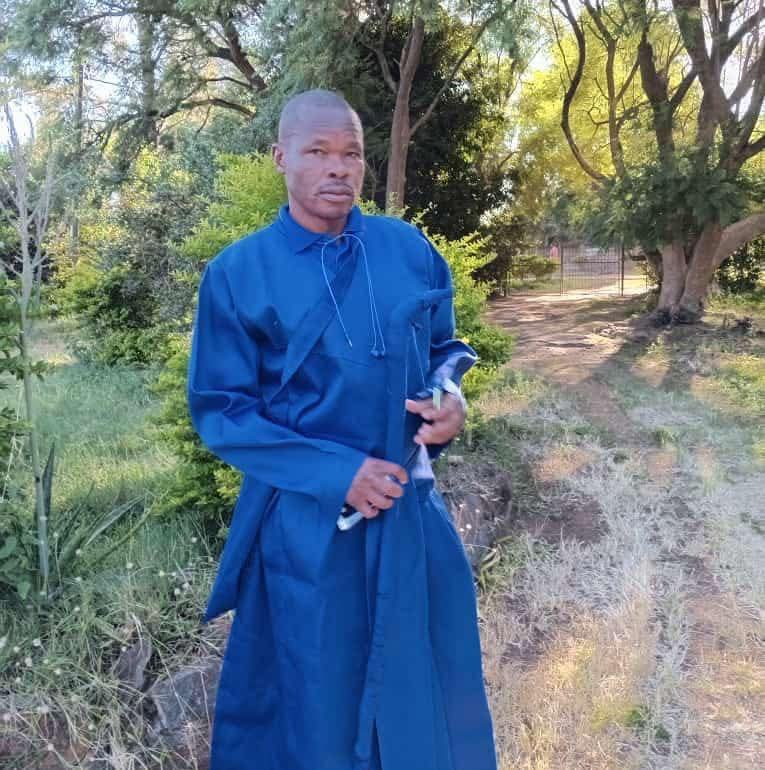
Madzibaba Veshanduko, a firebrand activist whose public dissent against the ZANU-PF establishment became a symbol of the Zimbabwean struggle, has died in Chikurubi Maximum Security Prison. His death, occurring while in pre-trial detention, has ignited a firestorm of controversy, with critics drawing damning parallels between his abandonment and the perceived isolation of Job Sikhala. The tragedy underscores a deepening crisis of conscience within the Zimbabwean opposition, where the political cost of loyalty to the cause is increasingly paid in blood.
The Anatomy of Political Abandonment
Born Godfrey Karembera, 'Madzibaba Veshanduko' was a fixture of the streets, known for his eccentric attire and uncompromising anti-government rhetoric. Arrested in March 2022 on charges of 'insulting the police,' his health deteriorated rapidly behind bars. Historical data from the Zimbabwe Human Rights NGO Forum indicates that pre-trial detention remains a primary tool for state suppression, with over 150 political activists currently languishing in remand without trial. His death follows a pattern of state-sponsored neglect that has historically silenced voices like Itai Dzamara, who disappeared in 2015, and now, the silenced echoes of Karembera.
Geopolitical Implications for Southern Africa
The death of a high-profile activist in Zimbabwean custody sends a chilling message across the SADC region. Political analyst Dr. Tendai Mashingaidze notes, 'This is not merely a Zimbabwean issue; it is a regional litmus test for the rule of law.' When opposition leaders like Nelson Chamisa fail to mobilize effectively for the release of their most vocal foot soldiers, it signals a strategic paralysis that emboldens autocrats in neighboring nations. The perception that the Zimbabwean opposition has moved toward a 'polite' politics that abandons the radical, grassroots base threatens to destabilize the democratic movement across the entire Southern African Development Community.
The Cost of Silence: Data and Disillusionment
The political fallout is measurable. Internal polling suggests that the 'Chamisa brand' has suffered a 12% decline in urban support following the perceived snubbing of Job Sikhala and the subsequent death of Madzibaba Veshanduko. Human rights monitors report that the state’s strategy of 'attrition by detention' is working, as activists fear that loyalty to the opposition leadership no longer guarantees protection or advocacy. With the Zimbabwe Prison and Correctional Services (ZPCS) maintaining a 200% capacity rate in some facilities, the lack of medical access for political detainees is a systemic failure that the opposition has failed to leverage on the international stage.
Public Outcry and Institutional Response
Civil society groups are calling for an independent inquiry into the conditions that led to Karembera's death. 'Nelson Chamisa’s silence is deafening,' says a prominent activist who requested anonymity for safety reasons. 'He treats the streets like a liability rather than the engine of the movement.' While the government maintains that the death was due to 'natural causes,' the optics of a political figure dying in a state-controlled environment have triggered protests in Harare. International bodies, including the UN Special Rapporteur, have been urged to investigate the pattern of custodial deaths, yet the institutional response remains largely performative.
The Future of the Zimbabwean Resistance
What happens next will define the trajectory of Zimbabwean politics for the next decade. If the opposition continues to distance itself from the 'Madzibaba' class of activists, they risk losing the very demographic that fueled their rise. The death of Godfrey Karembera serves as a grim inflection point: either the opposition will pivot to a more aggressive, unified defense of its members, or it will continue to fracture, leaving the field open for ZANU-PF to consolidate power through the systematic removal of its most vocal critics. The road to 2028 is now paved with the ghosts of those who were left behind.

