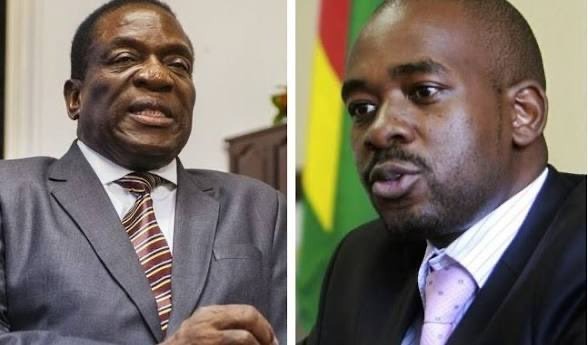
In a move that has sent shockwaves through the corridors of power in Harare and beyond, former opposition leader Nelson Chamisa has signaled a stunning alignment with President Emmerson Mnangagwa, effectively endorsing the controversial push to amend the Zimbabwean Constitution to extend the presidential term limit to 2030. This realignment marks the total collapse of the traditional 'Chamisa vs. Mnangagwa' binary that has defined Zimbabwean politics for over a decade, leaving millions of disillusioned voters in the lurch. The pivot, which signals a potential power-sharing arrangement, threatens to solidify ZANU-PF’s grip on power for the next six years, fundamentally altering the democratic trajectory of Southern Africa.
The Architecture of a Political U-Turn
The history of Zimbabwean opposition politics has been defined by the struggle against the ZANU-PF hegemony, which has held power since 1980. Nelson Chamisa, who rose through the ranks of the Movement for Democratic Change (MDC) under the late Morgan Tsvangirai, became the face of resistance following the 2017 coup that ousted Robert Mugabe. However, the 2023 general elections, marred by reports of voter suppression and judicial capture by the Zimbabwe Electoral Commission (ZEC), left the opposition fractured. Statistics from the Zimbabwe Election Support Network (ZESN) indicated that over 40% of urban voters experienced systematic disenfranchisement. Chamisa’s recent pivot follows months of internal party strife and the systematic dismantling of his political machinery, leading to his resignation from the Citizens Coalition for Change (CCC) in early 2024.
Geopolitical Implications for Southern Africa
This alignment is not merely a domestic affair; it is a regional tremor. The Southern African Development Community (SADC) has long struggled to mediate the Zimbabwean crisis, with the 2023 SADC Election Observer Mission (SEOM) report being one of the few to openly criticize the conduct of Zimbabwe’s polls. By endorsing the 2030 agenda, Chamisa effectively neutralizes the primary leverage point SADC had in pushing for democratic reforms. Political analyst Dr. Tendai Mashingaidze notes, 'This is a masterstroke of political survivalism that undermines the democratic aspirations of the entire SADC region. If the opposition in Zimbabwe concedes to constitutional term extensions, it sets a dangerous precedent for other leaders in the region, such as those in Eswatini and Mozambique, to pursue similar life-presidency agendas under the guise of national stability.'
Economic Consequences and Human Cost
The economic reality for Zimbabweans remains dire, with hyperinflation hovering near 30% and a currency that has lost over 70% of its value against the USD in the last fiscal year. The 2030 constitutional amendment is widely viewed as a mechanism to ensure policy continuity for the ruling elite, rather than a strategy for economic recovery. 'We are looking at a consolidation of the extractive economy,' says economist Gift Mugano. 'With the opposition now seemingly integrated into the 2030 framework, the oversight mechanisms that hold the government accountable for the looting of gold and lithium resources are effectively silenced. For the average citizen, this means the continued erosion of public services and a deepening of the brain drain that has seen over 3 million Zimbabweans flee to South Africa and beyond.'
The Public and Institutional Backlash
The reaction from the grassroots has been one of profound betrayal. Civil society organizations, including the Zimbabwe Human Rights NGO Forum, have condemned the move as a 'death knell for constitutionalism.' Conversely, ZANU-PF spokespersons have lauded the development as a 'unifying moment for national development.' One senior ZANU-PF official, speaking on condition of anonymity, stated, 'Chamisa has finally realized that the path to development is through consensus, not constant confrontation with the state.' However, this sentiment is not shared by the youth-led movements, which are increasingly calling for protests. The silence from the international community, particularly the EU and the US, suggests a pragmatic, albeit cynical, acceptance of the status quo as a means to prevent state collapse.
The Road to 2030
What lies ahead is the formalization of the 2030 amendment through a parliamentary process that is now virtually unopposed. With the opposition’s support, the required two-thirds majority in Parliament is a mathematical certainty. The focus will now shift to whether this 'Grand Coalition' can stabilize the economy or if it will simply accelerate the transition toward a one-party state. For Zimbabwe, the next six years will be defined by the struggle between the institutionalized power of the 2030 agenda and the increasingly desperate, unrepresented masses. As the regional geopolitical landscape shifts, the question remains: is this the end of opposition politics in Zimbabwe, or merely the beginning of a new, more radical phase of resistance?