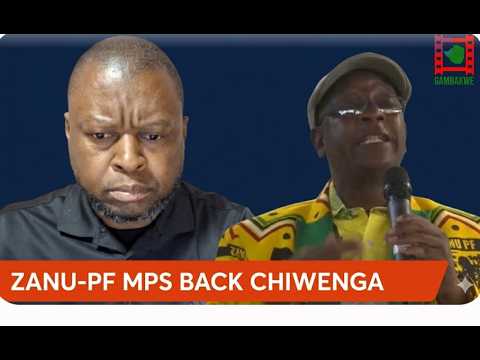
HARARE — Zimbabwe’s Vice President Constantino Chiwenga has been sighted in Singapore, a destination synonymous with high-level medical treatment for the country’s political elite, reigniting urgent questions about his health and the stability of President Emmerson Mnangagwa’s succession plan.
Video footage streamed live by a Harare-based media outlet on Wednesday showed Chiwenga, 67, walking through what appeared to be a hospital corridor in the Southeast Asian city-state. No official statement has been issued by the Zimbabwean government confirming the purpose of his travel. The sighting comes just weeks after Chiwenga abruptly cancelled a public appearance at a ruling ZANU-PF youth rally in Masvingo, citing what aides described at the time as ‘fatigue’.
Chiwenga, a former army general who led the 2017 coup that ousted Robert Mugabe, has been the subject of intense health speculation since at least 2021. He was airlifted to China for medical treatment in January of that year after reportedly collapsing at his Harare home. He also visited Singapore in 2022 for what was officially described as a ‘routine medical check-up’. The recurrence of Singapore in his travel pattern is deeply significant: Singapore’s Mount Elizabeth Hospital is the same facility where Mugabe’s successor, Morgan Tsvangirai, died of colon cancer in 2018.
The Singapore Sighting
The footage, which lasts just under two minutes, shows Chiwenga walking slowly but unaided, flanked by two men who appear to be Zimbabwean security personnel. The location has not been independently confirmed, but analysts point to the distinctive lighting and signage visible in the background, which matches previous images from the Mount Elizabeth medical complex.
‘When a senior Zimbabwean politician goes to Singapore, it is almost never for a holiday,’ said Dr. Knox Chitiyo, a Zimbabwean political analyst at the Royal Institute for International Affairs in London, in a statement. ‘Given Chiwenga’s history of abdominal surgery and his absence from public duties in recent weeks, this sighting will alarm both the ruling party and the security establishment. The state has an obligation to be transparent about the health of its leaders, but Zimbabwe has a culture of secrecy that fuels dangerous speculation.’
Chiwenga’s office has not responded to requests for comment. The Zimbabwean presidency has also remained silent, with acting spokesperson George Charamba telling reporters on Monday only that ‘routine international travel is not a matter for public debate’.
The lack of official communication has allowed unverified claims to flourish. Social media accounts linked to opposition figures have alleged that Chiwenga is suffering from a ‘serious recurrence of a long-term illness’ and that the government is ‘managing a crisis’. Pro-government accounts have dismissed the video as ‘old footage’ recycled to create panic, though the live-stream timestamp and weather conditions visible in the video — Singapore is currently in its monsoon season — suggest it was recorded recently.
Geopolitical Stakes for Zimbabwe and Southern Africa
The succession question is not merely a Harare drama. Zimbabwe is a key player in the Southern African Development Community (SADC), and its stability has direct repercussions for regional food security, mining investment, and migration patterns. Mnangagwa, 81, has indicated he will run for a second full term in 2028, but his health is also a subject of persistent rumour. If both Mnangagwa and Chiwenga were to become incapacitated, the constitution would trigger an emergency succession process that could pit powerful military and party factions against each other.
‘The ZANU-PF succession battle is the most dangerous variable in Southern Africa right now,’ said Professor Susan Nkomo, a political economist at the University of Pretoria who studies elite conflict. ‘Chiwenga represents the military wing, while Mnangagwa’s inner circle is dominated by civilian technocrats and former Mugabe loyalists. Any destabilisation at the top of the pyramid could lead to a violent power struggle that would destabilise the entire region, especially if it interferes with the Zimbabwean military’s role in SADC peacekeeping missions in Mozambique and the Democratic Republic of Congo.’
‘In Zimbabwe, health is never just health,’ said Dr. Chitiyo. ‘It becomes a currency of power. When a vice president disappears without explanation, every investor, every diplomat, and every soldier draws their own conclusions. The government can either manage that narrative or let it run wild.’
The video from Singapore may be brief, but its implications are vast. For now, the official silence leaves Zimbabweans and the Southern African region guessing about the man who was once the country’s de facto ruler — and who may yet be preparing for a return to power, or a departure from it.