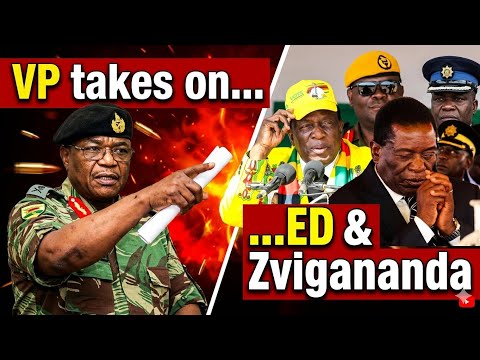
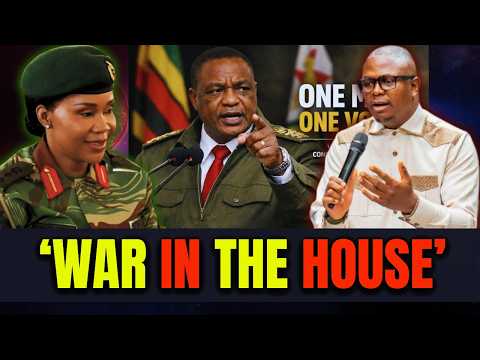
Vice President Constantino Chiwenga now chairs the party’s powerful Politburo meetings, approves ministerial appointments, and has direct command over the military and the Central Intelligence Organisation. President Emmerson Mnangagwa, 82, remains president in name but has not appeared at a cabinet meeting in the past six weeks. His last public speech, on 10 March, lasted barely 12 minutes and was delivered from a teleprompter without his characteristic ad‑libbing.
The shift marks the end of an uneasy alliance that began in 2017, when Chiwenga, then army commander, led the military intervention that ousted Robert Mugabe and installed Mnangagwa. For seven years, the two men governed under a fragile pact: Mnangagwa managed the economy and foreign relations; Chiwenga controlled the security apparatus. That pact has now broken.
The mechanics of a silent takeover
Chiwenga’s consolidation accelerated in December 2024 after a ZANU–PF Central Committee meeting in which Mnangagwa failed to secure a resolution extending his term beyond 2028. By February 2025, all 10 provincial chairpersons had been replaced with loyalists, a process that usually requires the president’s sign‑off but was executed by the vice president’s office.
Regional and geopolitical fallout
What happens next depends on whether Mnangagwa formally resigns, is forced into retirement on medical grounds, or simply fades from view. In ZANU–PF’s history, there is no precedent for a sitting president handing over power voluntarily. Mugabe was ousted. Mnangagwa now appears to be undergoing a similar fate—quietly, without tanks on the streets, but just as decisively.