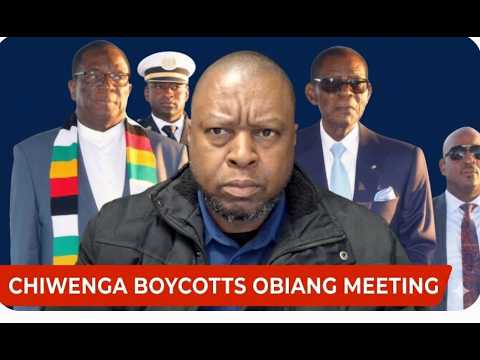
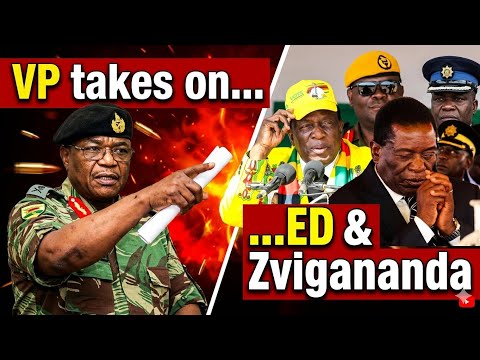
The video, published by MBIRE TV, claims that Chiwenga used his authority as Vice President to veto Chivayo’s attendance at a closed-door ZANU-PF strategy session, effectively sidelining a figure widely seen as a financial conduit for Mnangagwa loyalists. Chivayo, a flamboyant tycoon with a history of controversial government contracts, has been a lightning rod for accusations of corruption and influence-peddling. His exclusion from party proceedings suggests that Chiwenga is consolidating power and taking aim at the patronage networks that have sustained Mnangagwa’s presidency.
A Billionaire Proxy War
Wicknell Chivayo, known for his lavish social media posts and ties to the ruling elite, has long been viewed as a proxy for Mnangagwa’s ‘Generation 40’ (G40) faction, which lost out to Chiwenga’s ‘Lacoste’ faction during the 2017 coup that ousted Robert Mugabe. Chivayo’s contracts — including a controversial $60 million deal for a thermal power plant that was never completed — have earned him underworld-like notoriety. Political analyst and founder of the Zimbabwe Democracy Institute, Dr. Pedzisayi Ruhanya, described the blocking as “a clear signal that Chiwenga is preparing to assert his own claim to the presidency.”
“Chiwenga is systematically dismantling Mnangagwa’s financial support structures,” Ruhanya said during a recent interview. “By cutting off Chivayo, he is sending a message to other businessmen that their future lies with him, not with the sitting president.” The power of Zimbabwe’s ruling party has long been underpinned by a web of patronage that funnels state contracts to loyalists. Any disruption to that system, analysts warn, could trigger a violent rupture within the security forces, where Chiwenga retains deep loyalty from the army he once commanded.
Geopolitical Stakes for Southern Africa
The turmoil in ZANU-PF carries profound implications for the entire Southern African region. Zimbabwe, once the breadbasket of Africa, remains economically fragile — with hyperinflation, currency collapse, and an estimated 90% unemployment rate. A factional split in Harare could destabilize neighboring countries, particularly South Africa, which depends on Zimbabwe as a major trade partner and a buffer against migration flows. The African Union and Southern African Development Community (SADC) have both expressed concern about backsliding on democratic norms in the region.
“If ZANU-PF unravels, the whole SADC architecture is threatened,” said Dr. Mopeli Moshoeshoe, a political risk analyst based in Johannesburg. “No one wants a failed state on their doorstep — and a power struggle in Harare, if it turns violent, could send hundreds of thousands of refugees into Botswana and South Africa.” The timing is particularly sensitive: Mnangagwa has been positioning himself for a third term, a move that would require a constitutional amendment but which his allies argue is merely a technicality. Chiwenga, who led the military intervention that brought Mnangagwa to power, is seen as the only figure capable of blocking that amendment — or of forcing an early succession.
Chivayo’s Response and the Media Battle
Wicknell Chivayo has not publicly commented on the reported blocking, though his social media accounts have posted cryptic messages about “enemies” and “traitors.” The businessman’s legal team has denied any wrongdoing in past contracts, and Chivayo has previously sued journalists for defamation. The propaganda war between the two camps has been fought largely online, with pro-Chiwenga accounts accusing Chivayo of ‘state capture’ and pro-Mnangagwa accounts labelling Chiwenga a ‘power-hungry general’. The narrative presented by MBIRE TV is itself part of a growing independent media ecosystem that has increasingly challenged state-controlled ZBC, exposing factional rifts that the party leadership prefers to keep hidden.
ZANU-PF spokesperson Christopher Mutsvangwa — a known Mnangagwa loyalist — dismissed the reports of a Chiwenga-Chivayo confrontation as “baseless rumors” designed to weaken the party ahead of the next election. “There is no crisis in ZANU-PF,” Mutsvangwa told reporters in Harare. “The Vice President and the President work hand in glove.” But many seasoned observers are skeptical. The party’s own internal documents, leaked to The Zimbabwean last month, showed that Chiwenga’s allies had demanded a review of all “special-purpose contracts” awarded to individuals without competitive tender — a clear reference to Chivayo’s deals.
What Comes Next for Zimbabwe?
The standoff between Chiwenga and Chivayo is not merely a personal vendetta; it is a proxy battle for the soul of ZANU-PF — and for the future of Zimbabwe. If Chiwenga succeeds in marginalizing Mnangagwa’s financial backers, he could force the president into early retirement or precipitate a constitutional crisis. If he fails, Mnangagwa may attempt to purge Chiwenga’s supporters from the military and the party, risking a split that could lead to civil unrest.
For ordinary Zimbabweans, already grappling with power cuts, water shortages, and a crumbling healthcare system, the factional feud is a distant but dangerous game. “We are tired of these power struggles,” said Joyce Makoni, a street vendor in Harare’s Mbare township. “They fight for positions while we struggle to feed our children.” The international community, including the United States and European Union, maintains targeted sanctions on key ZANU-PF figures. Any sign of instability could tighten those restrictions further, shrinking the country’s already limited access to capital markets.
As the drama unfolds, attention turns to the ZANU-PF congress expected later this year. It will be there — in the smoke-filled rooms of Harare’s conference halls — that the fate of Chiwenga, Mnangagwa, and the businessman at the center of the storm will finally be decided. For now, the only certainty is that Zimbabwe’s ruling party remains as fractured and unpredictable as ever.