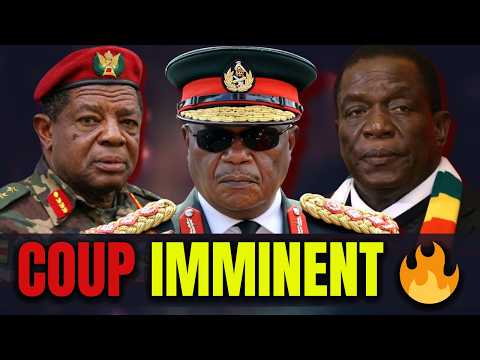
A dramatic new video circulating on social media alleges that Zimbabwean President Emmerson Mnangagwa has fled the country loaded with gold bars, just as warnings of imminent military strikes shake the region. The unverified claim—published on a platform known for political commentary—portrays a leader in full flight, abandoning a nation crippled by hyperinflation, food shortages, and a shadow economy built on illicit gold smuggling.
The video, titled 'Military Strikes Incoming...Mnangagwa ESCAPES Loaded With GOLD Bars!' does not provide verifiable evidence. Yet it taps into a deep well of suspicion inside Zimbabwe, where the ruling ZANU-PF party has been plagued by corruption scandals and where gold—the country’s top export—is widely believed to be siphoned off by political elites. The clip’s release comes at a moment of extraordinary tension: the Zimbabwean dollar has collapsed, opposition leaders are in hiding, and the Southern African Development Community (SADC) has issued veiled warnings about the deteriorating security situation.
Gold Smuggling Allegations Plague Mnangagwa Administration

Zimbabwe holds some of the world’s richest gold deposits, yet legal production has fallen sharply in recent years. The central bank’s gold reserves are opaque, and multiple investigative reports—including those from the Panama Papers and local journalists—have documented how gold is smuggled out via Mozambique and South Africa, often with complicity from state security agents. The video’s allegation that Mnangagwa personally escaped with gold bars fits a pattern of high-level looting. In 2023, a Zimbabwean parliamentary committee uncovered that over 600 kilograms of gold had gone missing from state-owned mines in a single year. No senior official has been prosecuted.
‘If the president himself is now reported to be fleeing with gold, it suggests the entire state apparatus is hollowed out,’ said a Harare-based political analyst who requested anonymity for fear of reprisal. ‘We are seeing a collapse of governance, not just an economic crisis.’ The analyst noted that the video’s timing—amid rumors of a pending military coup—mirrors the chaos that preceded Robert Mugabe’s ouster in 2017.
Regional Implications for Southern Africa
The fallout from any violent change in Zimbabwe would immediately destabilize its neighbors. South Africa, Botswana, and Mozambique all depend on calm in Harare for trade, energy, and cross-border security. Should Mnangagwa’s government fall, SADC would be forced to intervene—a prospect that alarms diplomats who recall the organization’s failure to prevent the 2008 post-election violence.
‘Zimbabwe is a tinderbox, and this video is just a match,’ said a senior researcher at the Institute for Security Studies in Pretoria, speaking on condition of anonymity. ‘If the gold bars story is even partly true, it confirms that the country’s mineral wealth is being used as a personal exit strategy for the ruling elite. That will enrage an already desperate public.’
The video’s claims are impossible to independently verify: no airport departure logs, no customs records, and no satellite imagery have surfaced. Zimbabwean state media has not commented. The president’s spokesman did not respond to requests for comment. But the very existence of the clip—and its rapid spread on WhatsApp, Telegram, and Twitter—reflects a profound crisis of confidence. In Zimbabwe, where official information is tightly controlled, rumor becomes reality.
Economic data paints a grim backdrop. The IMF projects Zimbabwe’s GDP will contract by 3.5% this year. Inflation has topped 400%. Meanwhile, gold exports—officially worth about $2 billion annually—are dwarfed by the billions smuggled out. The Reserve Bank of Zimbabwe has admitted it cannot account for over $1.5 billion in missing gold revenues since 2019. Two former central bank governors have been arrested, but both were later released without charge.
‘This is not just about one man’s escape,’ said a South African foreign policy expert who tracks Zimbabwe closely. ‘It’s about the collapse of a state that once fed Southern Africa. If Mnangagwa is truly gone or preparing to leave, the region needs a contingency plan—fast.’
What remains unclear is whether the video is a genuine leak by defecting security officials, a piece of strategic disinformation from opposition groups, or a fanciful rumor amplified by desperation. What is clear is that the story refuses to die. Within hours of the video’s upload, it was shared by thousands of Zimbabweans in the diaspora, each adding their own layer of fear and anger.
For now, the gold bars and the escape remain allegations. But in Zimbabwe, where the line between rumor and reality has long been blurred, even an unverified video can shake a government. SADC has not issued a formal statement. The United Nations has not commented. The world watches—and waits for either evidence or collapse.