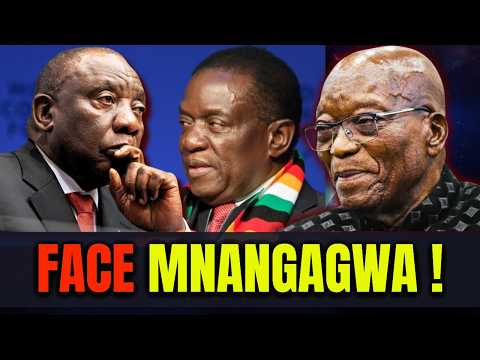
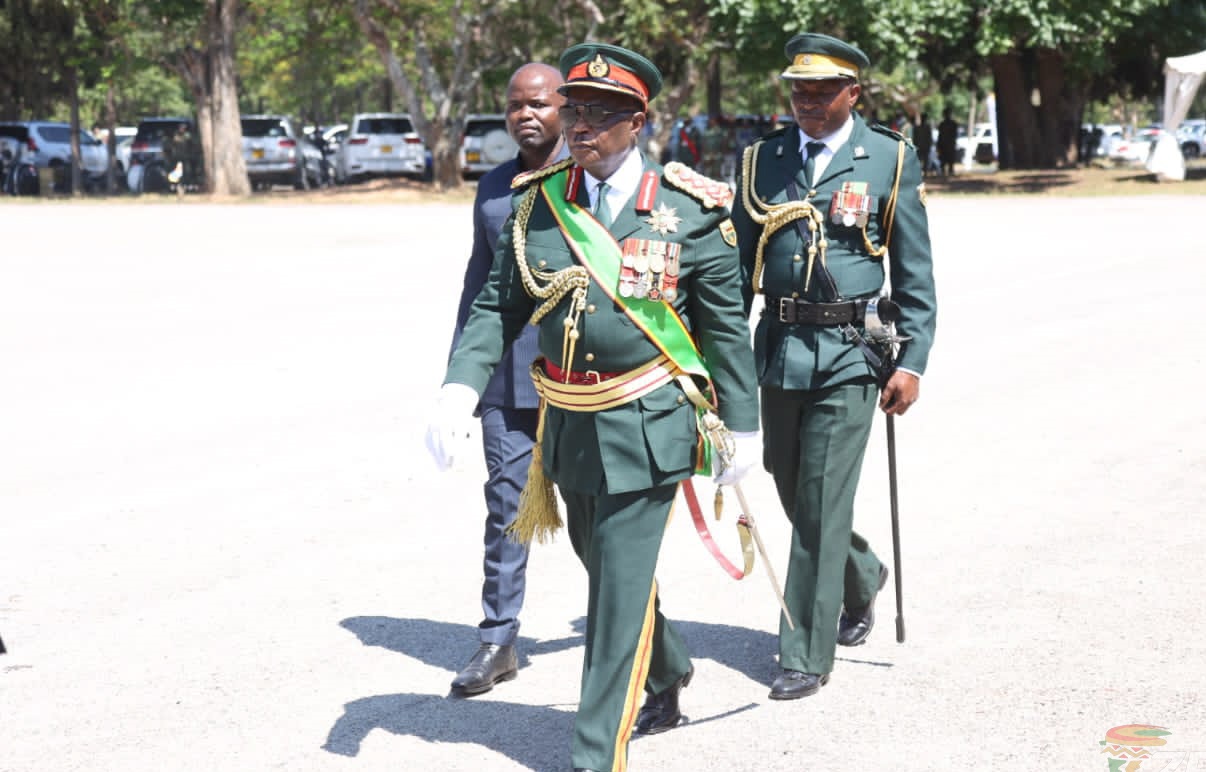
Harare, Zimbabwe – A dramatic and wholly unsubstantiated report sweeping across social media and fringe news platforms alleges that President Emmerson Mnangagwa has secretly fled Zimbabwe, leaving his precise whereabouts unknown. The claim, which first emerged late Wednesday, has no official confirmation from the Zimbabwean government, the military, or any diplomatic mission. Yet, in a country where information is tightly controlled and political survival is often a zero-sum game, even a baseless rumor can rattle markets, embolden rivals, and shake the foundations of the Southern African region.
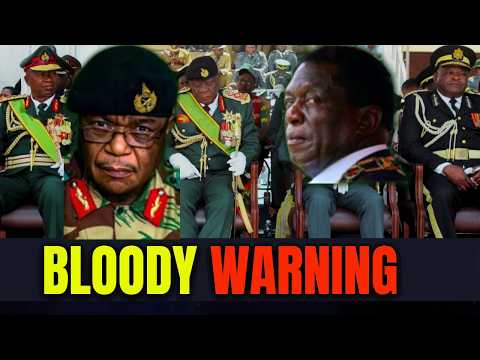
The allegation, carried by outlets with opaque sourcing, asserts that Mnangagwa departed Zimbabwe under cover of darkness, reportedly bound for an undisclosed location outside the continent. No satellite tracking, flight manifests, or official communications have corroborated the story. The president’s official Twitter account, typically active with ministerial appointments and SADC greetings, has been silent for more than 48 hours. That silence, combined with the cancelation of two scheduled public appearances this week, has amplified speculation.
‘This is either a disinformation operation designed to test the loyalty of security forces, or a genuine but unverified development,’ said Dr. Tendai Chikwanha, a political scientist at the University of Zimbabwe who studies regime durability. ‘Without a statement from State House or the Zimbabwe Defence Forces, we cannot treat this as fact. But we cannot ignore it either, because the social media echo chamber in Zimbabwe has repeatedly triggered real-world consequences, including the 2017 coup that ousted Mugabe.’
The claim lands at a particularly volatile moment. Mnangagwa, who took power after the 2017 military-assisted transition, has faced mounting internal resistance from factions within his own ZANU-PF party. Succession battles have intensified as the 81-year-old president’s health—never officially detailed—is rumored to be in decline. A leaked medical report circulated among diplomats in 2023 suggested treatment for complications arising from diabetes and hypertension. The government dismissed the memo as a forgery.
Connecting the story to its impact on Zimbabwe and Southern Africa requires understanding the regional web. Zimbabwe is landlocked, reliant on South Africa for port access, electricity imports via Eskom, and remittances from an estimated 3 million Zimbabweans living abroad. South Africa’s Department of International Relations and Cooperation has declined to comment on what it calls ‘unverified social media chatter.’ Botswana, which shares the Kazungula border and a tense relationship with Harare over diamond smuggling and political refugees, has not issued a security alert.
‘If the president indeed left the country without constitutional notice—meaning without formally handing over power to Vice President Constantino Chiwenga—then we are looking at a constitutional crisis that could trigger SADC intervention,’ warned Zibusiso Ndlovu, a security analyst at the Institute for Security Studies in Pretoria. ‘SADC’s protocol on democracy and governance requires member states to maintain constitutional continuity. Any gap could invite external mediation or even freeze Zimbabwe’s voting rights in the bloc.’
China, Zimbabwe’s largest creditor and strategic partner, has billions of dollars tied up in mining concessions, infrastructure loans, and the controversial lithium deal with Sinomine Resource Group. A sudden change in leadership could jeopardize those agreements or force renegotiation. Russia, which inked a military cooperation pact with Zimbabwe in 2023, watches closely as well. The Kremlin’s Wagner-linked entities have expanded influence in Zimbabwe’s gold sector. Any instability in Harare threatens to disrupt those supply chains.
The most immediate impact is on ordinary Zimbabweans. In Harare’s Mbare suburb, queues have formed outside banks and mobile money agents as people try to withdraw savings. ‘I heard the president has run away. If that is true, we are in big trouble,’ said Mercy Nyoni, a vendor selling tomatoes at a roadside stall. ‘Last time there was a coup, soldiers were on the streets for weeks and I couldn’t get my stock. I just want to know what is happening.’
To be clear: no credible evidence supports the claim that President Mnangagwa has escaped or that his whereabouts are unknown. State media has not broadcast any emergency statement. The Zimbabwe Republic Police has not activated any extraordinary security measures. But the fact that such a story spreads with viral intensity—and that authorities do not immediately debunk it—speaks to the fragile information environment and deep public distrust in institutions.
The video itself lacks any verifiable footage of the president departing or any authoritative source. The uploader’s channel description offers no credentials. This pattern is familiar: during the 2021 military reshuffle rumors, similar channels claimed the army had arrested Mnangagwa. That story proved false, but it temporarily spooked investors and triggered a 5 percent drop in the Zimbabwe Stock Exchange. This time, the ZSE’s industrial index fell 3.2 percent in early trading before partially recovering.
Regional Implications for Southern Africa
Southern Africa is already grappling with instability in Mozambique’s Cabo Delgado province, a tense election cycle in South Africa, and a cholera outbreak that has spread from Zimbabwe to Zambia and Malawi. The last thing the region needs is a leadership crisis in one of its most geopolitically sensitive nations. Zimbabwe sits on the Beira Corridor, a vital trade route for Botswana, Zambia, and the Democratic Republic of Congo. Any disruption to security along that route could delay mineral exports worth billions.
‘If the president has truly vanished—even temporarily—the SADC Organ on Politics, Defence and Security Cooperation would likely convene an emergency meeting,’ said Ndlovu. ‘But they need proof first. Right now, we have a rumor amplified by a low-credibility source. The danger is that it becomes a self-fulfilling prophecy if the military or ZANU-PF internal rivals start acting on the assumption that the seat is empty.’
Until either the president appears publicly or a formal statement is issued, the ‘whereabouts unknown’ claim will remain a potent political weapon. Opponents of Mnangagwa may use it to demand a transitional authority. Loyalists may use it to justify a crackdown on journalists and social media accounts spreading ‘false news.’ And foreign embassies will quietly activate contingency plans for the protection of their nationals and assets.
For now, the most shocking fact is not that the president may have fled, but that the information ecosystem has become so degraded that a single unverified video can trigger a regional security assessment. Zimbabwe—and Southern Africa—cannot afford another crisis built on rumor and silence.