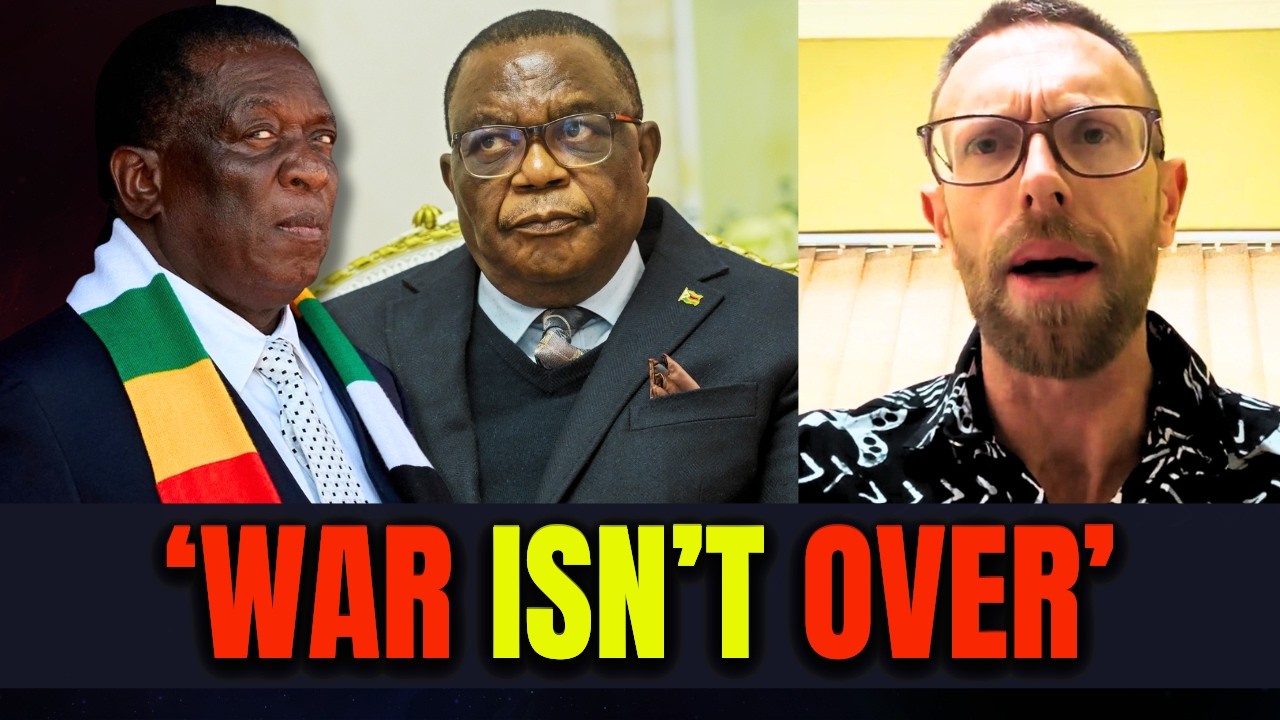
Nelson Chamisa has effectively checkmated President Emmerson Mnangagwa’s brazen attempt to extend his rule until 2030, leveraging internal ZANU-PF fractures and mounting international pressure to stall the constitutional amendment. The move, which centers on the legal impossibility of Mnangagwa serving beyond his two-term limit, has plunged the Zimbabwean state into a high-stakes standoff that threatens the stability of the entire SADC region. By mobilizing legal challenges and exposing the regime’s lack of a two-thirds parliamentary majority, the opposition has forced a retreat in a bid that analysts say would have cemented a de facto one-party state.
The Anatomy of a Constitutional Coup
The push for 'ED 2030'—a slogan pushed by provincial ZANU-PF structures—was designed to bypass the 2013 Constitution, which limits a president to two five-year terms. Mnangagwa, who took power in the 2017 coup against Robert Mugabe, is currently in his second term, which expires in 2028. The ZANU-PF machinery, led by hardliners within the party, sought to invoke Section 328 of the Constitution to amend term limits. However, the plan hit a wall of reality: the party lacks the requisite two-thirds majority in the National Assembly to pass such an amendment without opposition support. Chamisa’s strategic withdrawal from the parliamentary fray and his appeal to regional bodies have highlighted that the regime’s legislative math simply does not add up, leaving the 2030 project legally moribund for now.
Geopolitical Shockwaves Across Southern Africa
The implications of this power struggle extend far beyond Harare’s borders. Southern African Development Community (SADC) leaders, particularly in South Africa and Botswana, have grown increasingly weary of the 'Zimbabwean problem'—a cocktail of hyperinflation, human rights abuses, and mass migration. Political risk analyst Dr. Tendai Biti notes, 'If Mnangagwa successfully subverts the constitution to stay until 2030, it sets a dangerous precedent for democratic backsliding across the continent.' The regional bloc is now forced to confront a reality where the Zimbabwean leadership is prioritizing personal political survival over the economic integration of the SADC region, potentially triggering a new wave of migration as citizens flee the uncertainty of a prolonged autocratic tenure.
Economic Consequences of Political Paralysis
The uncertainty surrounding the 2030 bid has paralyzed foreign direct investment (FDI). Zimbabwe’s inflation rate, currently hovering near 30% in USD terms, is exacerbated by the perception that the rule of law is subordinate to the whims of the ZANU-PF elite. According to the Zimbabwe National Chamber of Commerce, the manufacturing sector has seen a 12% decline in output over the last two quarters, directly linked to the 'wait-and-see' approach of international investors. 'Capital is cowardly,' explains economist Professor Gift Mugano. 'When a government spends more time debating how to stay in power than how to fix the currency, the markets respond with a total freeze.' This stagnation directly impacts the livelihoods of millions, fueling a cycle of poverty that the regime attempts to mask with populist rhetoric.
Institutional Resistance and Public Outcry
The reaction from civil society and legal experts has been swift and unforgiving. The Law Society of Zimbabwe has issued warnings that any attempt to tamper with term limits would be a violation of the 'founding values' of the nation. Human rights lawyer Beatrice Mtetwa stated, 'The law is not a tool for the comfort of the incumbent. If they try to force this, they are effectively declaring war on the Zimbabwean people.' Meanwhile, ZANU-PF’s internal factions—specifically those aligned with Vice President Constantino Chiwenga—are reportedly lukewarm on the 2030 bid, fearing that an extended Mnangagwa presidency will permanently alienate the military establishment. The public mood remains volatile, with social media platforms becoming the primary battleground for discourse against the extension.
The Road to 2028: A Nation at a Crossroads
As the dust settles on the immediate 2030 bid, the focus shifts to the 2028 election cycle. Mnangagwa’s camp is expected to pivot toward a 'succession plan' that keeps his influence intact, even if he is forced to step down. However, the opposition, emboldened by the failure of the 2030 project, is regrouping to capitalize on the ZANU-PF fragmentation. The next 24 months will be defined by whether the regime opts for a managed transition or doubles down on repression to silence dissent. For Zimbabwe, the path forward is narrow: either a return to constitutionalism and democratic reform, or a continued slide into isolationism that threatens to destabilize the entire Southern African landscape for a generation.