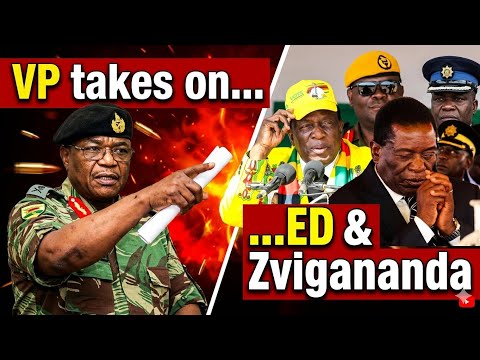
The confirmation from Belarus—unaccompanied by any prior statement from State House or the Ministry of Foreign Affairs in Harare—has fuelled speculation that Zanu PF’s internal coordination is fraying. ‘For a foreign government to announce a head-of-state visit before the host government has even briefed its own citizens is highly unusual,’ said Dr. Tendai Chikwanha, a Harare-based political analyst. ‘It suggests either a breakdown in communication or, more concerning, that the Mnangagwa administration is being led by external timetables rather than its own strategic planning.’
Why Belarus? The Geopolitics of Survival
Belarus, under President Alexander Lukashenko, is one of the few remaining allies of Russia’s Vladimir Putin and sits under a thicket of Western sanctions imposed after the 2020 disputed election and the 2022 Russian invasion of Ukraine. For Mnangagwa, a visit to Minsk sends a deliberate message: Zimbabwe is willing to deepen ties with pariah states to bypass the economic strictures imposed by the United States, Britain, and the European Union since the violent 2018 Mt Darwin crackdown and the disputed 2023 elections.
Trade between Zimbabwe and Belarus has grown modestly, centred on agricultural machinery, military cooperation, and technical assistance. Belarusian tractors are a common sight on farms in Mashonaland. But the symbolic weight of a presidential visit far exceeds the economic figures. ‘This is not about trade volume—it is about diplomatic signalling,’ said Professor Susan Nyamande, a researcher on African international relations at the University of Zimbabwe. ‘Mnangagwa wants to show that he has alternatives to the West. But the cost is that he becomes even more entangled with regimes that are themselves isolated.’
The visit had been rumoured for weeks, with Zanu PF insiders telling local media that a trip to Eastern Europe was being negotiated. But Belarus’s premature confirmation caught party leaders off guard. ‘There was no internal memo, no preparation for a press conference,’ said a senior Zanu PF member who spoke on condition of anonymity due to the sensitivity of internal party dynamics. ‘We learned about it from the news. That is not how a ruling party that prides itself on discipline should operate.’
Impact on Zimbabwe and Southern Africa
The timing could not be worse for Harare. Southern African Development Community (SADC) leaders are already divided over Zimbabwe’s electoral integrity and human rights record. South Africa, the region’s economic engine, has grown increasingly frustrated with Mnangagwa’s refusal to implement meaningful reforms under the terms of the long-stalled ‘re-engagement’ roadmap. A presidential visit to Belarus—a state that has been condemned by the African Union for its role in the Ukraine war—risks further alienating Zimbabwe from its most crucial regional partners.
‘South Africa and Botswana are watching closely,’ said Kudzai Marembo, a former Zimbabwean diplomat now at the Institute for Security Studies in Pretoria. ‘Every time Mnangagwa travels to Moscow or Minsk, it confirms the worst fears of those who argue that Zimbabwe has abandoned its non-aligned posture. This makes it harder for SADC to defend Zimbabwe against Western criticism, because the region cannot afford to be seen as endorsing an axis of authoritarian states.’
For ordinary Zimbabweans, the diplomatic theatre offers little relief. The economy is in freefall: the Zimbabwean dollar lost more than 80% of its value against the US dollar in the past 12 months, inflation is running above 55%, and the worst cholera outbreak in a decade is overwhelming already dilapidated health facilities. While Mnangagwa prepares to fly to Minsk, thousands of civil servants—including nurses and teachers—are striking for wages that cannot keep pace with the cost of bread and transport.
‘The disconnect is staggering,’ said Nqobile Dlamini, a trade unionist in Bulawayo. ‘The president is spending public money to shake hands with Lukashenko while our hospitals are running out of gloves. People are not stupid—they see where the priorities lie.’
What the Belarus Statement Actually Says
Official wording from Belarus’s state run news agency BelTA stated that the visit was ‘being organised at the invitation of President Alexander Lukashenko’ and that discussions would focus on ‘strengthening bilateral ties in trade, investment, and industrial cooperation.’ No dates were given, but diplomatic sources in Harare estimate the visit will take place within the next four to six weeks. Neither Mnangagwa’s office nor Zanu PF’s spokesman Christopher Mutsvangwa responded to requests for comment.
The rushed confirmation also raises questions about the role of Belarusian intelligence and security liaison with Zimbabwe. The two countries have a long-standing military cooperation agreement, and reports from Minsk suggest that Belarusian defence contractors have been training Zimbabwean troops in counter-insurgency tactics used against protests and armed groups in Mozambique’s Cabo Delgado province. ‘The security dimension is the real story here,’ said Dr. Chikwanha. ‘This visit is not about tractors. It is about ensuring that Zimbabwe’s security apparatus can survive without Western support, and that Minsk gets a foothold in Southern Africa.’
For now, Zanu PF is left scrambling to manage the narrative. Party loyalists have begun circulating talking points that frame the Belarus visit as a triumph of ‘engagement and re-engagement’—the very same phrase Mnangagwa used to sell his rapprochement with the West. But that pitch is harder to make when the host country is under harsher sanctions than Zimbabwe. ‘This is a gamble,’ warned Professor Nyamande. ‘If the visit delivers tangible benefits—fuel, fertiliser, cheap credit—Mnangagwa can claim victory. If it is just a photo op, the political cost will be felt in the 2028 succession battle.’
The succession battle itself is intensifying. Vice President Constantino Chiwenga, a former general, is widely seen as positioning to take over, and any sign of weakness from Mnangagwa is fuel for the internal Zanu PF war. The Belarus fumble may be a small incident, but in Zimbabwe’s hyper-personalised politics, every stumble matters.
This article was based on official statements, interviews with political analysts, and diplomatic sources in Harare and Pretoria. The video report from MBIRE TV that first highlighted the discrepancy can be viewed for further context.