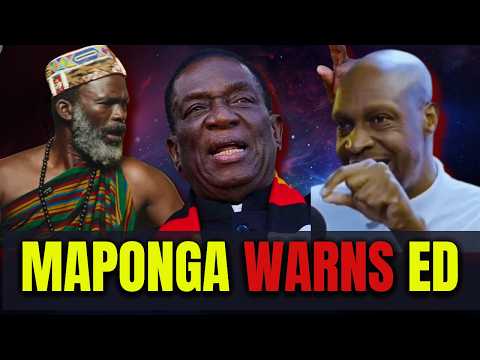
In a blistering public critique that has sent shockwaves through the political landscape, Joshua Maponga has launched a brutal assault on the administration of President Emmerson Mnangagwa and the ruling ZANU PF party. The commentary, featured on the Rumbie Uncensored YouTube channel, centers on the government’s systemic inability to deliver basic services to the citizens of Zimbabwe. Maponga’s remarks represent a significant escalation in the public discourse surrounding the current state of governance and the perceived collapse of essential infrastructure under the incumbent leadership.
The Crisis of Governance and Service Delivery
The core of Maponga’s argument rests on the premise that the ZANU PF government has abandoned its primary responsibility to the Zimbabwean people. By failing to provide the most fundamental basics—ranging from clean water and electricity to stable economic conditions—the administration has, according to Maponga, effectively abdicated its duty. This critique is framed within the broader context of Zimbabwe’s ongoing economic struggle, where the disconnect between government rhetoric and the lived reality of the average citizen has reached a breaking point. The video serves as a stark indictment of the status quo, highlighting a governance model that Maponga suggests is fundamentally broken.
Analyzing the Political Fallout
From an analytical perspective, Maponga’s intervention is more than just a vocal protest; it is a diagnostic assessment of the legitimacy of the Mnangagwa administration. By focusing specifically on the 'failure to deliver,' Maponga taps into the deep-seated frustrations of a populace weary of empty promises. This analysis suggests that the political stability of the ZANU PF regime is increasingly fragile, as the social contract between the state and the people continues to erode. The rhetoric employed in the video signals a shift toward more aggressive, uncensored discourse that challenges the traditional narratives maintained by state-aligned media outlets.
Regional Implications and Economic Consequences
The inability of Zimbabwe to provide basic services does not exist in a vacuum; it carries profound implications for the Southern African region. As a key player in the regional economy, Zimbabwe’s internal instability ripples outward, affecting trade, migration patterns, and diplomatic relations. Maponga’s critique underscores the regional concern that a failing state on their borders poses a threat to collective prosperity. The failure to deliver basics is not merely a domestic policy issue but a geopolitical liability that threatens to destabilize the broader economic ecosystem of Southern Africa, forcing neighboring nations to contend with the fallout of Zimbabwe’s internal governance failures.
Public Sentiment and the Digital Resistance
The reaction to Maponga’s video has been swift and polarized, reflecting the deep divisions within the Zimbabwean diaspora and the domestic population. Platforms like Rumbie Uncensored have become digital town squares where grievances are aired and the government is held to account in ways that traditional, state-controlled media cannot facilitate. The viral nature of the video indicates a growing appetite for unfiltered, hard-hitting commentary that dares to name the architects of the current crisis. For many, Maponga’s words provide a voice to the silent majority who feel ignored by the current political establishment.
The Trajectory of Political Accountability
Looking ahead, the question remains whether such high-profile critiques will force a change in policy or merely intensify the existing political friction. As the pressure mounts on Mnangagwa and ZANU PF to address the systemic failures highlighted by figures like Maponga, the government faces a choice: reform or further alienation. Observers should monitor the administration’s response to these mounting criticisms, as well as any potential shifts in public policy that may be forced by the sheer weight of public dissatisfaction. The discourse surrounding this video is likely to serve as a bellwether for the political climate in Zimbabwe in the months to come.