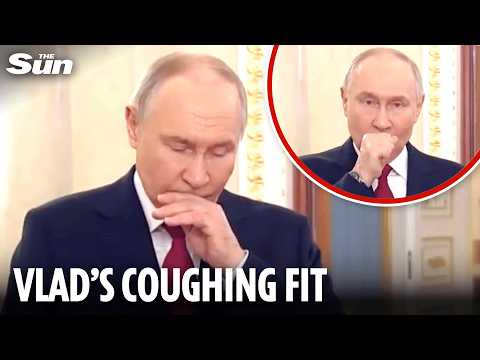
Vladimir Putin, 73, was captured in a new video struggling to deliver a speech, an event that has ignited intense speculation regarding the Russian leader's health. The footage, released by The Sun, shows the tyrant visibly battling a persistent cough, raising urgent questions about his physical stability as he attempts to maintain his public image. This rare display of vulnerability during an official address has prompted observers to revisit persistent rumors concerning his long-term well-being and fitness to lead.
The Anatomy of a Struggling Leader
The incident captured in the video highlights a stark contrast to the carefully curated image of strength that Putin has projected for decades. As a 73-year-old head of state, any visible sign of illness is scrutinized by global observers for potential implications on policy and governance. The footage shows the Russian leader pausing mid-speech, visibly hindered by his physical condition, which has led to widespread debate about whether this is an isolated incident or a broader sign of declining health that could impact the stability of his administration.
Analyzing the Geopolitical Vulnerability
From an investigative standpoint, the sight of a long-standing leader struggling to maintain the cadence of a speech is a significant indicator of potential internal fragility. When a leader who relies on an image of absolute, iron-fisted control falters, the ripple effects are felt across global markets and diplomatic channels. The analysis of this video suggests that the narrative of Putin’s invincibility is being challenged not by political opposition, but by the physical reality of his age and reported health struggles, which are now being documented and shared with the international public.
Impact on Regional Stability and Zimbabwe
The health status of major world leaders has direct consequences for nations in Southern Africa, including Zimbabwe, which maintains complex diplomatic and economic ties with Russia. For Zimbabwe, any leadership transition or instability in the Kremlin creates uncertainty regarding existing trade agreements, military partnerships, and geopolitical alignment. As the international community watches Putin, the government in Harare must calibrate its own foreign policy to account for the possibility of a power vacuum or a shift in Russian leadership, which would fundamentally alter the geopolitical landscape of Southern Africa.
Public and Stakeholder Reaction
The reaction to the video has been swift, with international analysts and the public alike dissecting every frame of the recording provided by The Sun. Social media and news platforms have become hubs for speculation, with stakeholders questioning the transparency of the Russian state regarding the health of its leader. In Zimbabwe, political observers are closely monitoring these developments, recognizing that the health of global superpowers dictates the flow of international capital and the strength of bilateral alliances that are crucial for regional economic recovery and stability.
Future Implications and What to Watch
Moving forward, the focus will be on how the Kremlin manages the fallout from this latest video. We must watch for any changes in the frequency of Putin's public appearances and whether the state media continues to broadcast events where his health could be scrutinized. For Zimbabwe and the wider Southern African region, the critical metric is the continuity of Russian foreign policy. Any sign that the leader’s health is preventing him from fulfilling his duties will likely trigger a period of intense diplomatic maneuvering, necessitating a cautious and strategic approach from all international partners.