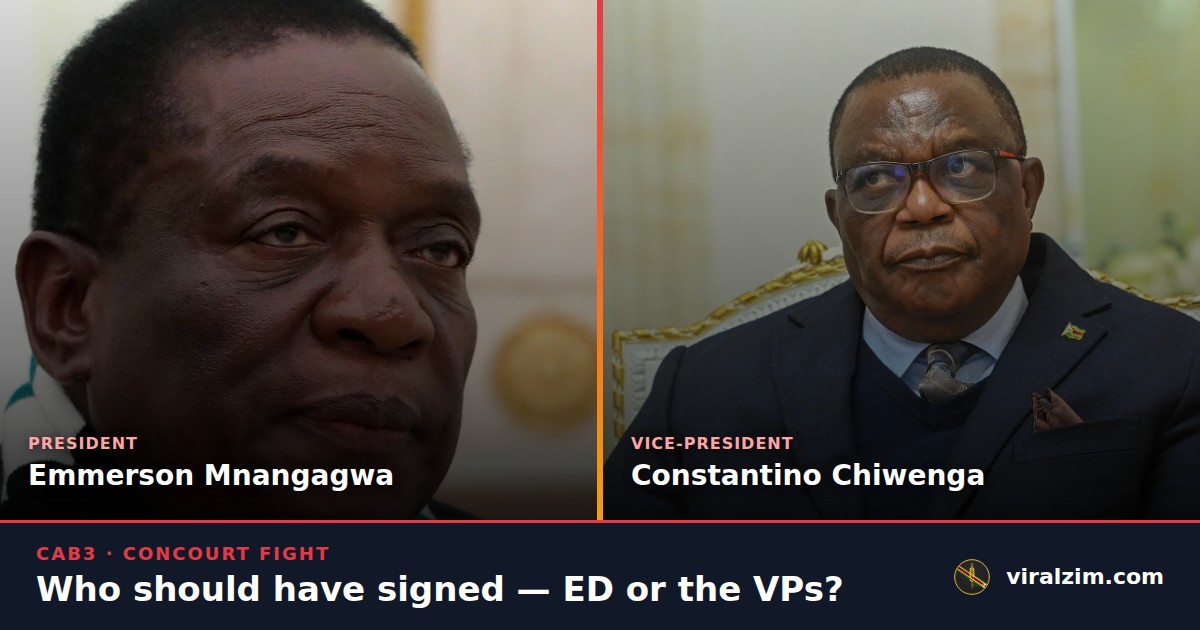
Mabhiza told the lawmakers that cabinet members ‘who cannot bend to the will of the party and the people must vacate their seats for those who can.’ The remark was aimed directly at Chiwenga, who has privately voiced misgivings about the amendment’s central provision: the elimination of the two-term limit that would clear a path for Mnangagwa to stand for a third term in 2028. The confrontation marks the first time a senior government law officer has publicly questioned the Vice President’s fitness to serve.
Chiwenga, a former army general who led the 2017 military intervention that ousted Robert Mugabe, has long been considered Mnangagwa’s eventual successor. But the proposed bill, which requires a two-thirds parliamentary majority, has stalled in recent weeks as defections from within ZANU-PF’s own ranks have denied leaders the numbers needed for passage.
A Direct Challenge to the Second-in-Command
The ultimatum followed a tense cabinet meeting last week where Chiwenga, Minister of Defence Oppah Muchinguri, and two other unnamed ministers reportedly questioned the timing and legality of the amendment. In response, Mabhiza’s office issued a legal opinion asserting that the amendment is fully compliant with the existing constitution and that ‘any minister who publicly casts doubt on its validity while serving in government is in breach of collective responsibility.’
ZANU-PF currently holds 179 of 270 parliamentary seats, giving it the two-thirds majority needed to pass any constitutional change on paper. However, at least 12 ruling-party lawmakers are believed to be aligned with Chiwenga’s faction, and party whip operations have struggled to secure a quorum for the amendment’s second reading. Losing even a handful of votes could force Mnangagwa to seek backing from opposition MPs, a politically humiliating step that would expose the party’s internal divide.
The amendment would delete Section 91(2) of the constitution, which limits a president to two terms. Supporters argue that the provision is a colonial-era relic that stifles continuity. Critics warn that removing term limits would entrench authoritarian rule and trigger a succession crisis. Mnangagwa, who took office after Mugabe’s ouster and won a second term in 2023, has not publicly commented on the bill. The silence has only deepened speculation that he is the driving force behind the change.
Regional Repercussions for Southern Africa
The confrontation between Mabhiza and Chiwenga is far from resolved. The Vice President retains a strong base within the military and war veterans’ associations. If the amendment fails, Mnangagwa’s authority will be critically weakened. If it passes, Chiwenga and his allies face a choice between resigning or bending at the cost of their political futures.