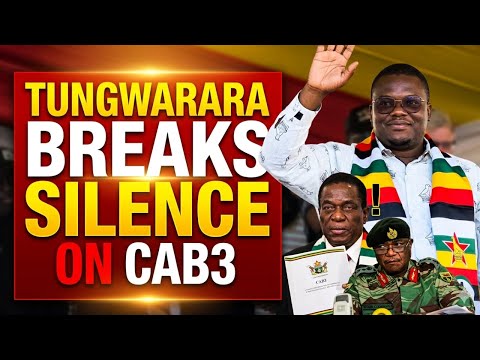
Tungwarara’s position is being advanced through grassroots mobilisation and public hearings. Supporters frame the bill as a technical constitutional adjustment that will prevent policy resets tied to election cycles. Opponents argue the government is using the language of development to sell a political outcome: changing the rules that govern who leads and how leadership is selected.
Tungwarara’s case: continuity, stability, and development delivery
Tungwarara’s argument for backing CAB3 is consistent: the amendment is intended to ensure uninterrupted implementation of government programmes and reduce disruptions that, supporters say, accompany election periods. In official messaging, the bill is repeatedly described as a mechanism to “enhance political stability and policy continuity to allow development programmes to be implemented to completion.”
That narrative is being paired with visible, targeted spending and empowerment rhetoric designed to convert constitutional debate into tangible benefits. In Manicaland, for example, empowerment messaging linked to the Mnangagwa “2030” agenda has included disbursements of US$425,000 across 17 constituencies, with US$25,000 allocated to grassroots projects in each constituency.
Supporters of CAB3 use such programmes to argue that the state is delivering real improvements and therefore should be allowed to plan beyond the current electoral timetable. In this framing, Tungwarara is positioned as a bridge between presidential priorities and local needs—an adviser whose role is to ensure communities receive empowerment benefits while the constitutional process unfolds.
Critics say this is precisely the danger. They argue that constitutional change is being marketed as development continuity while the political consequence—altering the constitutional framework that shapes leadership selection—remains the real prize. When citizens are offered benefits in parallel with a high-stakes constitutional vote, opponents argue the debate becomes less about persuasion and more about pressure.
Zimbabwe’s hearings: support is loud, dissent is contested
During public hearings, the atmosphere has been contested, with supporters and opponents clashing over who gets to speak and how the process is conducted. In Chitungwiza, an exchange captured the tension: a supporter claimed to represent “seven million supporters” of the bill without providing evidence, while a heckler interrupted the session. In Epworth, opponents described disruptions during hearings, including allegations that microphones were snatched away when critics attempted to speak.
Opposition civic organisations argue the hearings are exclusionary and inconsistent with the spirit of constitutional consultation. A coalition of groups including the National Constitutional Assembly (NCA), the Defend the Constitution Platform (DCP), and the CDF says it stopped participating after concluding the process was fundamentally flawed.
Legal and human-rights concerns have also intensified. A detailed record of the CAB3 process describes intimidation and disruption directed at opponents, including violent attacks on constitutional activists and arrests of prominent figures involved in anti-bill mobilisation. The core issue is not only whether people disagree, but whether they can disagree safely and effectively in a forum meant to test legitimacy.
Constitutional amendments are supposed to be about legitimacy—about persuading citizens, not pressuring them. When the consultation environment becomes coercive, critics argue, the debate shifts from deliberation to control. That is the context in which Tungwarara’s continuity argument is being tested: whether the public is being engaged or managed.
Tungwarara’s support for CAB3 is therefore not just a statement of preference. It signals strategic alignment with a government plan that has moved from political messaging into formal constitutional machinery. After cabinet approval enabled consultative hearings, the debate shifted into parliamentary processes. With the ruling party’s majority, the outcome is likely to be determined through legislative votes unless the process is forced into a referendum or blocked through court challenges.
That is why Tungwarara’s message—stability, continuity, development delivery—must be read as more than policy rhetoric. It is a political strategy to shape public consent before the decisive parliamentary phase, while opponents warn that the same strategy is being used to entrench power and constrain political choice.