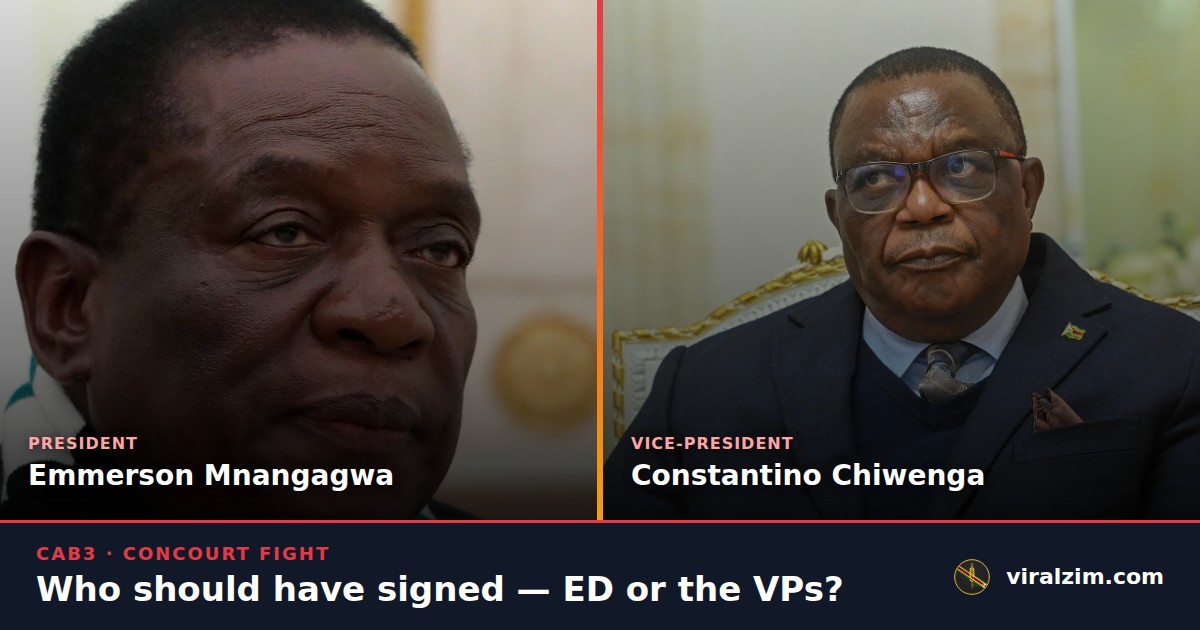
HARARE, Zimbabwe – Temba Mliswa, a former ZANU-PF heavyweight who has often served as a lightning rod for internal party tensions, has directly confronted the explosive allegations that Vice President Constantino Chiwenga is plotting a coup, a development that threatens to deepen the ruling party’s factional warfare and unsettle an already fragile Southern African region.
The Allegations and Their Roots
Rumors of a Chiwenga-led coup have circulated since early 2024, fueled by the vice president’s increasing isolation from Mnangagwa’s inner circle, military reshuffles at key bases, and the sudden relocation of armored units in Harare. Chiwenga’s faction, drawn largely from the security establishment and war veterans, has long been at odds with the civilian wing of ZANU-PF loyal to Mnangagwa. Mliswa, who served as a ZANU-PF member of parliament before becoming an independent critic, has deep ties to both camps. His intervention suggests that the tension has moved beyond whispered conspiracies into open political conflict.
“Mliswa does not make statements like this without calculation,” said a senior Harare-based political analyst who spoke on condition of anonymity due to the sensitivity of the matter. “He knows that by speaking out he risks retaliation from the security apparatus, but he also knows that silence would allow the situation to spiral. This is a signal that the rift is now public.”
Zimbabwe has a long history of military interference in civilian rule. The 2017 coup—legally recast as a “transition” by the military—ended Mugabe’s 37-year reign and installed Mnangagwa. To many, the current crisis feels like a replay of that playbook. Chiwenga, still revered by the rank-and-file of the Zimbabwe Defence Forces, is seen as the only figure capable of marshaling the military against Mnangagwa’s civilian faction. “The question is not whether Chiwenga has the capacity to launch a coup,” said a former senior intelligence official in Harare. “It is whether he has the political will and the backing of the generals. That is what Mliswa is trying to gauge with this statement.”
Regional Repercussions and Economic Fallout
Southern Africa is watching Zimbabwe closely. The Southern African Development Community (SADC), already grappling with instability in Mozambique’s Cabo Delgado province and post-election tensions in the Democratic Republic of Congo, cannot afford a major political crisis in its second-largest economy. A coup in Zimbabwe would likely trigger a fresh wave of international sanctions, deepen the country’s economic meltdown, and send thousands more refugees across borders into South Africa, Botswana, and Zambia.