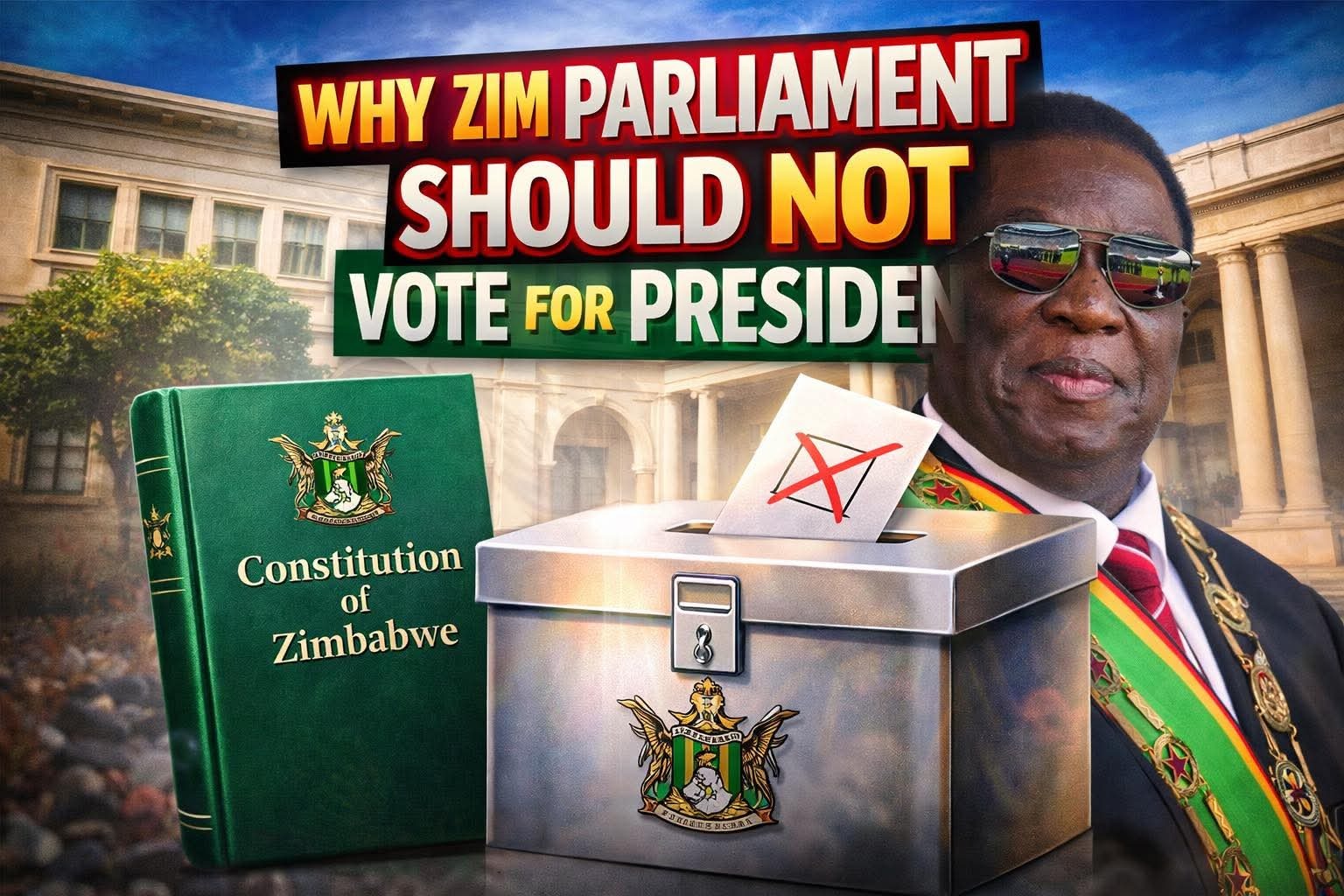
President Emmerson Mnangagwa is orchestrating a constitutional pivot that would strip millions of Zimbabweans of their right to directly elect their leader, effectively consolidating power within a closed circle of ZANU-PF elites. By moving to have Parliament—rather than the electorate—choose the head of state, the administration is signaling a transition toward a Chinese-style party-state model, ensuring the President remains in power well beyond the 2028 constitutional limit. This shift is not merely a procedural change; it is a calculated maneuver to bypass the increasingly narrow margins of victory that have plagued Mnangagwa’s legitimacy since he took power in 2017.
The Arithmetic of Fragile Legitimacy
The urgency behind this proposal is rooted in cold, hard electoral data. In the 2018 general election, Mnangagwa secured 50.3% of the vote, barely avoiding a runoff. By 2023, despite a massive state-sponsored apparatus and the weaponization of the judiciary, he managed only 52.6%. These figures reveal a leader whose mandate is perpetually contested by nearly half the population. Historically, ZANU-PF has relied on the 'first-past-the-post' system to maintain a veneer of democratic stability, but the 2008 election—where the late Morgan Tsvangirai forced a runoff—demonstrated that direct voting remains the single greatest threat to the party’s hegemony. By shifting the selection process to Parliament, the ZANU-PF leadership aims to insulate the presidency from the volatility of the ballot box, replacing public mandate with internal party patronage.
Geopolitical Shifts and the China Model
The proposed parliamentary election system mirrors the political architecture of the Chinese Communist Party, where the National People’s Congress functions as a rubber-stamp body for pre-ordained leadership decisions. For Southern Africa, this represents a dangerous precedent. Experts argue that if Zimbabwe successfully adopts this model, it could embolden other autocratic-leaning regimes in the SADC region to dismantle direct electoral processes. Professor Stephen Chan, a specialist in African international relations, notes: 'The move to parliamentary selection is a classic authoritarian survival strategy. It eliminates the need to manage public perception during campaigns and shifts the entire political focus to internal party discipline and the management of elite factions.' This transition would effectively turn the Zimbabwean Parliament into a boardroom, where the 'Mbinga'—the wealthy, politically connected elite—hold more sway over the head of state than the citizens they ostensibly represent.
The Financial Vulnerability of the Legislature
The integrity of the Zimbabwean Parliament is already under siege from systemic corruption and economic desperation. With MPs among the lowest-paid officials in the region, the legislature has become a theater for 'loan-based' influence peddling, most notably seen in the controversial $40,000 parliamentary loans that critics argue were designed to ensure loyalty. When the power to choose a president is concentrated in the hands of 270 individuals, the cost of 'purchasing' a presidency drops significantly. Political analyst Dr. Ibbo Mandaza warns that this structure invites unprecedented levels of bribery: 'We are looking at a system where the presidency is no longer a public trust but a commodity to be traded among those who control the legislative purse strings. It is the final nail in the coffin of the 2013 Constitution.' For the average Zimbabwean, this means the distance between their grievances and the seat of power is about to become infinite.
Regional Backlash and Institutional Silence
Regional bodies, including SADC, have faced intense scrutiny for their tepid response to the 2023 election irregularities. However, the prospect of a parliamentary-chosen president is forcing a shift in diplomatic rhetoric. Several SADC observer mission members have privately expressed alarm, noting that such a change would violate the spirit of the SADC Principles and Guidelines Governing Democratic Elections. Opposition figures, including those from the CCC, have labeled the proposal a 'constitutional coup.' Civil society groups are currently mobilizing, arguing that if the electorate is removed from the equation, the government loses its last shred of international credibility. 'We are witnessing the death of the social contract,' says human rights lawyer Beatrice Mtetwa. 'If the people cannot choose their leader, the government has no authority to govern.'
The Road to 2030 and Beyond
As the 2030 deadline for President Mnangagwa’s term approaches, the legislative agenda in Harare will be dominated by constitutional amendments designed to cement his longevity. The strategy is clear: bypass the voters, bribe the gatekeepers, and institutionalize the party-state. For Southern Africa, the fallout will be profound. A Zimbabwe that abandons the ballot box risks further isolation from Western democratic partners, potentially pushing the country deeper into the orbit of non-democratic powers. The question for Zimbabweans is no longer about who will win the next election, but whether the concept of an election will survive the next five years. If the power to elect the president is transferred to Parliament, the transition from a contested democracy to a de facto dictatorship will be complete, leaving the people as mere spectators in their own political demise.