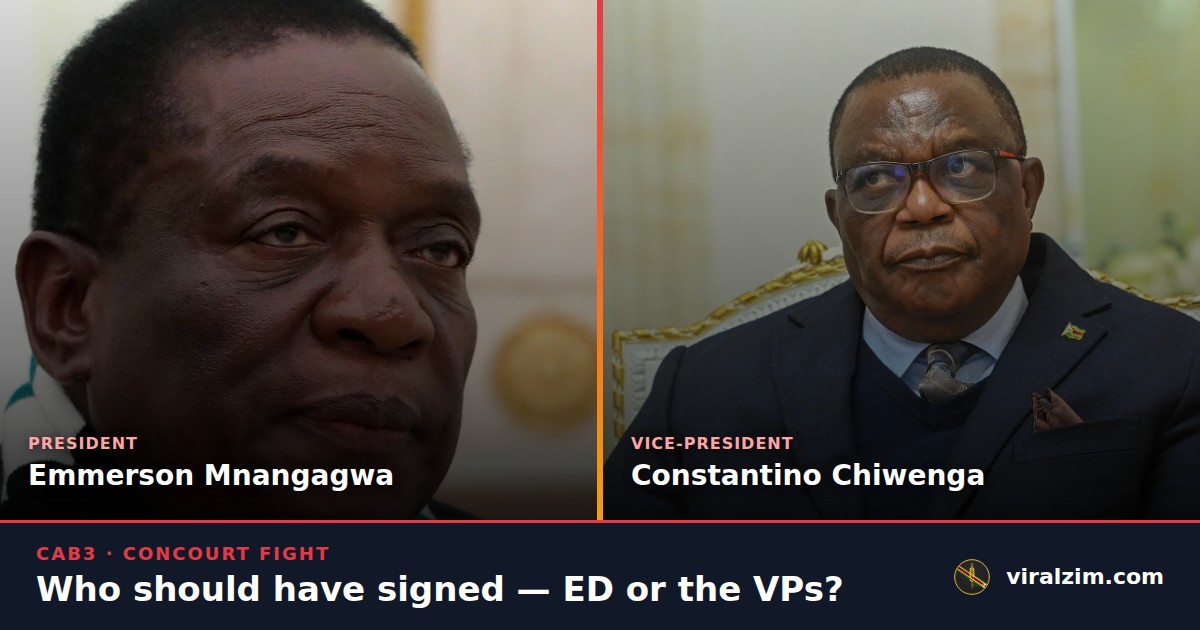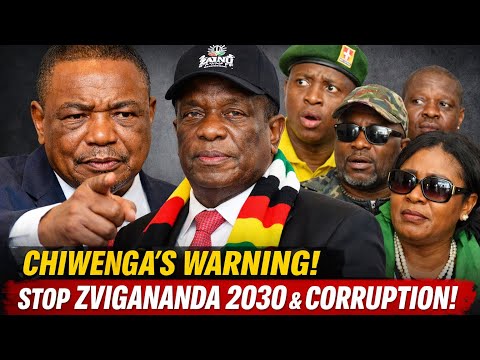
Vice President Chiwenga has issued a high-stakes ultimatum to a splinter faction within the ZANU PF party, explicitly condemning their support for the 'Zvigananda 2030' agenda and their involvement in systemic corruption. The warning, broadcast via the Verified SA channel, marks a significant escalation in internal party tensions, signaling a potential crackdown on those aligning themselves with the controversial 2030 movement. This public rebuke underscores a deepening rift within the political establishment as the Vice President moves to consolidate authority and address allegations of graft that threaten the party's stability.
The Roots of Internal Party Discord
The friction within ZANU PF has been simmering for months, centered largely on the 'Zvigananda 2030' platform, which has become a lightning rod for internal disagreement. According to the report, the faction in question has been actively campaigning for this agenda, which many within the party hierarchy perceive as a challenge to established leadership protocols. This movement, coupled with persistent reports of corruption, has provided the Vice President with the justification needed to issue a formal warning. The intersection of political maneuvering and allegations of financial misconduct has created a volatile environment, forcing the leadership to choose between party unity and the purging of dissenting elements.
Analyzing the Political Strategy
This intervention by Vice President Chiwenga is not merely a disciplinary measure; it is a calculated political maneuver to reassert control over the party's trajectory. By explicitly linking the 'Zvigananda 2030' supporters to corruption, the Vice President is effectively delegitimizing their platform in the eyes of the public and the party faithful. This strategy serves to isolate the faction, stripping them of their political capital and making it increasingly difficult for them to garner support for their 2030 objectives. The analysis suggests that the leadership is prioritizing the containment of this movement to prevent it from gaining further traction as the political landscape shifts toward the next election cycle.
The Broader Impact on Governance
The consequences of this internal conflict extend far beyond the walls of ZANU PF, impacting the broader governance of the nation and the stability of Southern Africa. When a ruling party is embroiled in such public infighting, the resulting uncertainty can stifle policy implementation and erode public trust in state institutions. The specific mention of corruption as a primary grievance suggests that the Vice President is attempting to address concerns that have long hampered economic progress. If this crackdown succeeds, it could lead to a significant reshuffling of power, but if it fails, it risks deepening the divisions that have historically hindered effective governance in the region.
Stakeholder and Public Reaction
The reaction to the Vice President's warning has been swift, with various stakeholders closely monitoring the fallout. Political analysts are scrutinizing the language used in the address, looking for signs of potential disciplinary hearings or structural changes within the party. Meanwhile, the public remains skeptical, as the mention of corruption touches on a sensitive issue that has affected the daily lives of citizens for years. The tension between those who support the 2030 agenda and those who align with the Vice President's stance continues to polarize opinion, with many waiting to see if these words will be followed by concrete legislative or administrative action.
Charting the Path Forward
Looking ahead, the primary question remains whether this warning will be enough to dismantle the 'Zvigananda 2030' faction or if it will inadvertently galvanize them into further resistance. Observers should watch for any upcoming party meetings or official statements that may clarify the extent of the crackdown. Furthermore, the handling of the corruption allegations mentioned by the Vice President will be a litmus test for the party's commitment to accountability. As the situation develops, the focus will remain on whether ZANU PF can maintain its cohesion or if this internal struggle will lead to a more permanent fracture within the political landscape of the nation.