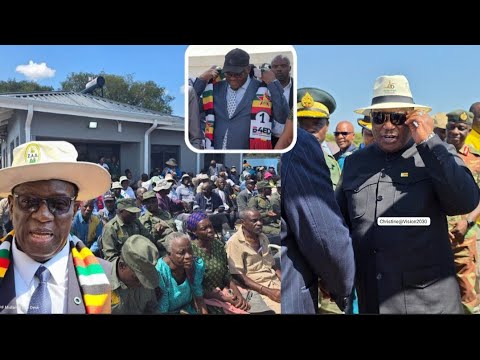
Zimbabwean Vice President Constantino Chiwenga and his wife, Miniyothabo Chiwenga, arrived in Maphisa, Matabeleland South, this week to spearhead a government initiative aimed at supporting war veterans. The visit, which precedes the country’s 46th Independence Day celebrations, focused on the distribution of housing units and bicycles to veterans residing in the region.
The event, held at Maphisa Primary School, served as a platform for the government to demonstrate its commitment to the welfare of those who fought for the nation's independence. The administration has positioned these efforts as a core component of its broader “Vision 2030” agenda, which emphasizes national development and the integration of war veterans into the country’s socio-economic framework.
Strategic Outreach in Matabeleland South
The visit included high-level engagement with local officials and community leaders, including Presidential Advisor Paul Tungwarara, who accompanied the Vice President. The presence of senior government figures in rural districts like Maphisa is viewed by political analysts as a strategic move to consolidate support in Southern Zimbabwe. By linking the distribution of tangible assets—such as housing and transport—to the narrative of national liberation, the ZANU-PF government seeks to reinforce its historical legitimacy while addressing modern infrastructure gaps.
“The initiative is aimed at improving the welfare of our war veterans and supporting their livelihoods,” a government representative noted during the proceedings. The focus on Matabeleland South, a region that has historically faced economic marginalization, underscores the government’s intent to project a unified national identity ahead of the upcoming Independence Day commemorations.
Geopolitical Context and National Development
The event takes place against a backdrop of ongoing discussions regarding Zimbabwe’s economic trajectory and the role of liberation war history in contemporary politics. As the country prepares to mark 46 years of independence, the government is intensifying efforts to engage the younger generation while honoring the contributions of the older cadre. This dual approach is essential for the ruling party as it navigates a complex political landscape defined by calls for economic reform and social stability.
The distribution of assets in Maphisa is not merely a local event; it is a signal of the administration's broader policy to leverage state resources to maintain grassroots ties. As the government continues to push forward with its development goals, the success of these initiatives remains a critical indicator of its ability to deliver on promises of national prosperity and social cohesion across Southern Africa.