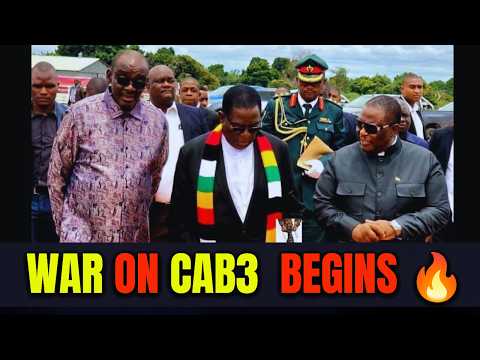
In a public post, Mliswa argued that Chiwenga’s recent sermon—delivered through a biblical narrative about King Hezekiah—was not spiritual communication but a calculated political signal. Mliswa said the vice president used scripture to send a message aimed at weakening President Emmerson Mnangagwa and to elevate Chiwenga as a credible alternative within the party’s power structure.
Chiwenga delivered the sermon during a Roman Catholic Church event in Murewa over the weekend. In his address, he drew from the Book of Isaiah and the story of Hezekiah, focusing on the warning to ‘put his house in order’ and the consequences of refusing to accept the message. Mliswa seized on that framing, insisting it functioned as a veiled rebuke—one that, in his view, was aimed at the president and the political trajectory of the ruling party.
‘Content creation’ or coded opposition: Mliswa’s accusation
Mliswa’s critique was blunt and deliberately political. He accused Chiwenga of ‘pandering to social media narratives and opposition sentiment’ by treating political messaging as ‘content creation.’ The charge is not simply that Chiwenga spoke publicly; it is that he allegedly tailored his message to audiences outside the party’s official discipline—while still remaining inside the party machinery.
In Mliswa’s framing, if Chiwenga truly disagrees with what ZANU-PF has decided, then the vice president should exit the party’s internal system rather than stay within it while attacking its direction. The demand therefore functions as a test of loyalty: either align fully with the party’s decisions, or step aside from the structures that govern succession and leadership.
Mliswa also escalated the confrontation by describing Chiwenga as ZANU-PF’s ‘principal internal opposition figure.’ He claimed the vice president failed to block resolutions from party structures and has instead been fueling instability through veiled attacks. The implication is that Chiwenga is not merely disagreeing—he is allegedly undermining the party from within, using religious language and public messaging to create political leverage.
Constitutional pressure: succession and term extension at the center
The resignation demand is tied to a broader constitutional fight. Critics describe a bill that would erode automatic succession by the vice president if the president resigns, dies, or is incapacitated—closing a pathway that has historically kept succession within the executive chain of command.
Opponents also argue the bill proposes extending presidential and parliamentary terms from five to seven years. They contend that such a shift would require a referendum and could be unconstitutional in effect. These are not abstract legal questions. They determine whether succession becomes a matter of voters and electoral legitimacy—or a matter of parliamentary arithmetic and internal coalition management.
That distinction is central to why Mliswa’s call for Chiwenga to resign lands with force. If succession rules are being redesigned to reduce the vice president’s automatic route to the presidency, then the political value of being ‘next in line’ changes dramatically. The struggle moves from national elections to internal party alignment and parliamentary control—exactly the arena Mliswa claims Chiwenga is being positioned to influence.
In this context, Mliswa’s demand reads as a pressure valve being released inside the ruling structure. It signals that factional disagreement is no longer confined to closed-door debate. It is being pushed into public confrontation, using religion, social media narratives, and constitutional timelines as weapons.
Chiwenga’s political future is therefore being framed as a choice between two paths. If he believes constitutional redesign is blocking his route to power, resigning would be a way to reposition himself outside the party’s internal constitutional process. If he does not resign, Mliswa’s message is that Chiwenga is complicit—accepting the party’s direction while publicly signaling disagreement through symbolic messaging.