NEWS 🔴 BREAKING

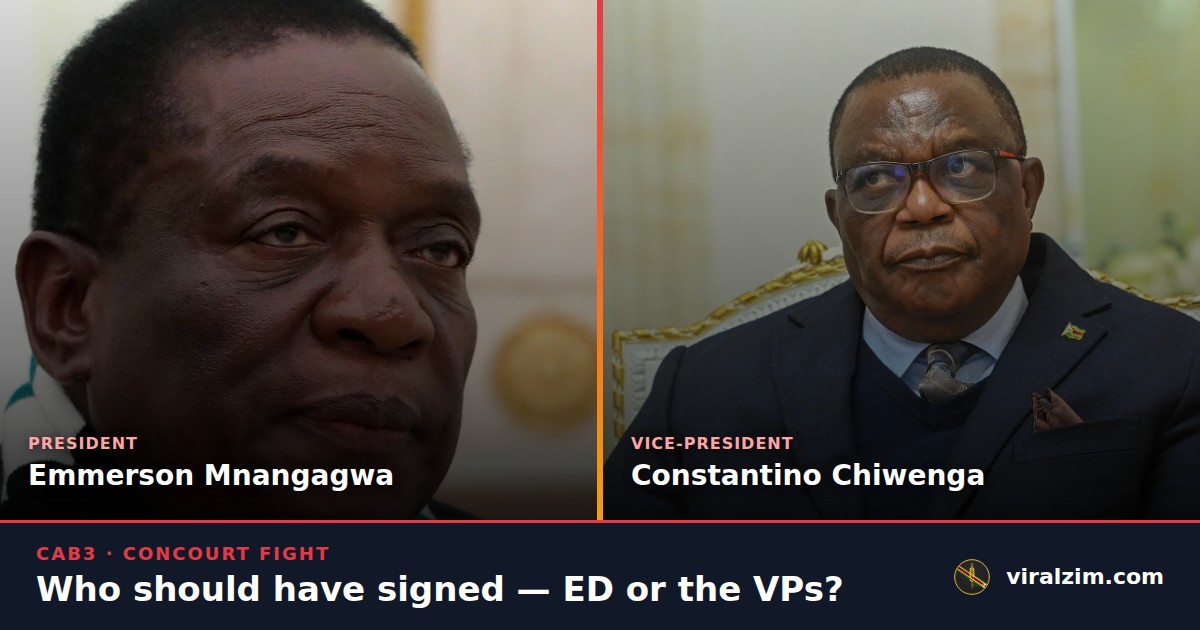
Themba Mliswa calls for the arrest of VP Chiwenga

Reader action

Open the featured link before you leave this story.

Watch Live Video Now Send to WhatsApp
5 Shares
Zimbabwe Vice President Constantino Chiwenga in a formal setting
Zimbabwe’s succession politics is being tested by factional manoeuvres that could destabilise governance.

The most urgent warning is not philosophical—it is operational. A political voice has cautioned that politically unruly factions are attempting to construct a secondary centre of power around Vice President Constantino Chiwenga, a manoeuvre framed as a direct effort to weaken President Emmerson Mnangagwa’s authority and to reorder command inside the ruling coalition before any constitutional process can do so.

The argument is blunt: when rival centres of authority emerge inside one political system, ambition stops being disciplined by institutions and starts being enforced through coercion. The warning invokes Thomas Hobbes’ concept of a “state of nature” to describe what happens when loyalty becomes contested, command becomes ambiguous, and the fear of violent outcomes becomes a constant background risk rather than a remote contingency.

Story follow-up Get the next angle on Themba Mliswa calls for the arrest. The argument is blunt: when rival centres of authority emerge inside one political system, ambition stops being disciplined by institutions and sta...

Factional power-brokering is a security risk, not just politics

The warning draws a straight line from factional talk to instability. The mechanism is familiar in systems where internal command is contested: structures are challenged, cadres are mobilised, and the ruling party’s internal chain of command becomes unclear. In that environment, the state’s coercive capacity—police, intelligence networks, and military-linked enforcement—can be pulled into factional calculations even without any formal announcement of a plot.

That is the core danger being flagged. A secondary centre of power does not need to declare itself as a rival government to destabilise the system. It only needs to convince enough actors—political, administrative, and security-linked—that loyalty should be redirected. Once that belief spreads, the state’s ability to act coherently erodes. Decisions become slower, enforcement becomes selective, and political disputes begin to carry the weight of existential threat.

The warning also rejects the idea that this kind of internal power engineering is “democratic.” The argument is that genuine democracy depends on internal stability and predictable institutional processes—conditions that are undermined when factions attempt to pre-position an alternative authority pole. In this framing, the problem is not leadership ambition itself; it is the attempt to manufacture a competing command centre inside the same ruling structure.

Trending angle Open the fuller picture behind this update. The warning also rejects the idea that this kind of internal power engineering is “democratic.” The argument is that genuine democracy depends on i...

Importantly, the warning is not limited to the current presidential term. The political voice states that opposition to building a rival centre of authority would persist even if Vice President Chiwenga were to assume the presidency. The principle being asserted is that the system should not be reorganised through factional manoeuvre—because once the precedent is set, it becomes easier for future actors to repeat the same destabilising pattern.

Regional consequences: instability travels through security, trade, and diplomacy

Those questions are not academic. They influence diplomatic engagement, the willingness of regional partners to mediate disputes, and the conditions attached to aid and investment. They also shape the risk assessments of neighbouring states that must plan for spillover effects—refugee flows, cross-border criminal networks, arms trafficking risks, and disruptions to trade corridors that depend on predictable governance.

The warning therefore lands as a geopolitical message: internal power engineering is not merely a Zimbabwean party matter. It becomes a regional stability variable. When command structures are contested, the probability of miscalculation rises—especially in environments where security institutions are expected to respond quickly to threats but are also vulnerable to factional influence.

What readers open next See the latest reaction around Themba Mliswa calls for the arrest. The warning therefore lands as a geopolitical message: internal power engineering is not merely a Zimbabwean party matter. It becomes a regional st...

Zimbabwean politics has long carried the tension between constitutionalism and succession realities. The warning points to a recurring contradiction: public insistence that leadership succession should follow constitutional processes can coexist with factional networks testing alternative power poles. That contradiction is where danger concentrates—because it allows manoeuvres to proceed under the cover of constitutional language while the underlying power architecture is being reshaped.

ViralZim | Sponsored
🔥 Trending Now
🎥
LIVE VIDEO 👁 12K views
Watch Live: What's Happening in Zimbabwe Right Now
Stream live coverage of breaking stories, events and trending moments across Zimbabwe — right now.
▶ Watch Live
🎬
LATEST VIDEO
Zimbabweans Can't Stop Watching This — See Why It's Going Viral
This video is spreading like wildfire across Zimbabwe. Find out what everyone's talking about before you're the last to know.
▶ Watch Latest
📲
FREE DOWNLOAD FREE
Download Zimbabwe's Most Popular App — Thousands Already Have It
Join thousands of Zimbabweans already using this app. 100% free — no hidden charges, no sign-up required.
⬇ Download Free
🎁 🔥 HOT
EXCLUSIVE OFFER
Limited Time Deal — Don't Miss Out
This exclusive offer is available for a limited time only. Grab it before it expires tonight — hundreds have already claimed theirs.
→ Claim Offer