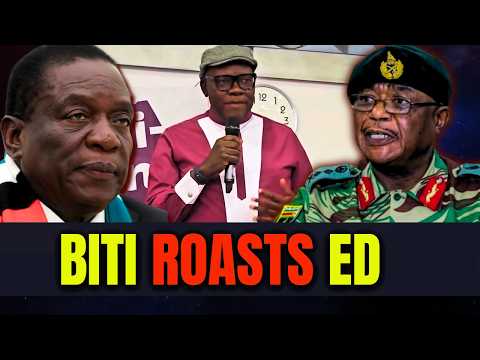
“The state has reproduced violence continuously from 1890 in a bid to reproduce itself,” Biti stated, emphasizing that the current political climate is not an anomaly but a continuation of deep-seated governance failures. He pointed to the “so-called Second Republic” as a regime that has institutionalized violence, making it a fundamental component of state survival. Biti further asserted that the current administration finds “pleasure in inflicting violence” on its citizens, citing historical instances like the Gukurahundi massacres as evidence of a pattern that remains unbroken.
The Economic Toll of State Corruption
Biti’s critique extends beyond political violence to the economic mismanagement that has left the nation on a “knife-edge.” He highlighted the recent fuel price hikes as an example of unnecessary economic strain placed on the populace, noting that Zimbabwe holds over 3 million cubic meters in reserve. Despite this, the government has maintained heavy levies, including carbon and petroleum taxes, which Biti argues are being used to enrich a small, corrupt elite.
“The state is now owned by syndicates and cartels,” Biti said, noting that state capture has been “redefined” and “refocused” to serve the interests of a select few. He specifically pointed to the digitization of title deeds and road construction contracts as areas where these cartels operate with little to no accountability, siphoning off millions of dollars while the average citizen suffers.
Biti concluded that the only way forward is for the ruling party to withdraw controversial constitutional amendments and engage in a genuine, national dialogue. He warned that if the current trajectory continues, the country faces a high risk of total collapse, urging the international community to pay closer attention to the deteriorating situation in Southern Africa.