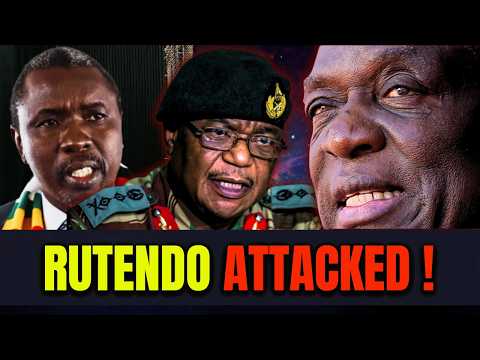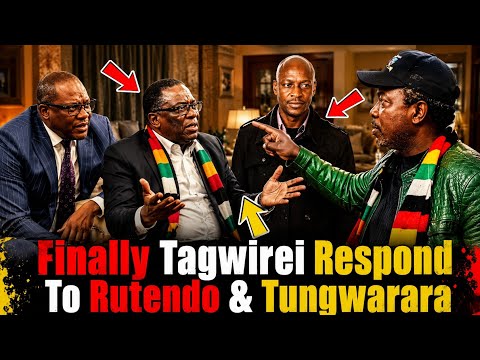
For the first time, Zimbabwean businessman Kudakwashe Tagwirei has publicly responded to corruption allegations leveled by prominent activists Rutendo Matinyarare and Philip Tungwarara. The response, delivered through a rare statement, threatens to destabilize the fragile alliance between President Emmerson Mnangagwa and the influential tycoon, while exposing deep fractures in Zimbabwe's political economy.
In the widely circulated response — reportedly recorded on video — Tagwirei denied all wrongdoing, calling the accusations a 'politically motivated campaign' aimed at tarnishing his reputation and destabilizing Zimbabwe ahead of crucial elections. While the authenticity of the video could not be independently verified, analysts say the tone and content align with his previous defensive posture. 'This is a man who has never spoken openly to the media or activists,' said Tendai Chikwanha, a Harare-based political economist. 'The fact that he is breaking his silence now suggests either extraordinary pressure or a calculated attempt to reset his public image.'
The Allegations and the Response
Matinyarare, founder of the #ZimbabweanLivesMatter movement, has led a sustained campaign to expose Tagwirei's alleged role in plundering state funds. Tungwarara, a former government advisor turned whistleblower, recently released documents purportedly showing Sakunda's use of front companies to siphon proceeds from fuel imports. Both activists have faced harassment and legal threats. In his response, Tagwirei dismissed the documents as forgeries and vowed to initiate defamation proceedings.
The timing is critical. With the country facing hyperinflation, a collapsing currency, and widespread shortages, Tagwirei's economic influence has become a lightning rod for public anger. International lenders, including the International Monetary Fund, have repeatedly cited corruption as a key barrier to debt relief. Tagwirei's response may be an attempt to preempt further sanctions or legal action, particularly as the United States and European Union tighten financial restrictions on his network.
However, critics question his sincerity. 'We've seen this playbook before,' said Vimbai Nyahora, a governance researcher at the University of Zimbabwe. 'Tagwirei only engages when cornered. His response contains no specific rebuttals, no independent audit, no new evidence. It's a public relations maneuver, not a genuine reckoning.'
Geopolitical Implications for Southern Africa
The repercussions extend beyond Zimbabwe's borders. Tagwirei's business interests are deeply intertwined with regional energy and mining supply chains. Sakunda is a major supplier of fuel to Mozambique and Zambia, and his mining ventures in the Democratic Republic of Congo and South Africa have drawn scrutiny from anti-corruption bodies across the continent.
Southern African Development Community (SADC) member states, already alarmed by Zimbabwe's worsening crisis, are watching closely. 'This case is a stress test for regional governance,' said Dr. Kwame Nkosi, a senior fellow at the South African Institute of International Affairs. 'If Tagwirei can operate with impunity, it signals to other elites that the region has no appetite for accountability. It also undermines efforts to attract foreign investment into a bloc that desperately needs it.'
For Mnangagwa, the stakes could not be higher. The president has relied on Tagwirei's cash to fund election campaigns and co-opt rivals. Yet the growing public outrage — fueled by activists like Matinyarare and Tungwarara — has made that alliance toxic. 'Mnangagwa must choose between a loyal but toxic financier and the legitimacy he needs to hold onto power,' said Chikwanha. 'His silence on Tagwirei's response speaks volumes.'
The full transcript and video of Tagwirei's statement are being circulated on social media, though state-controlled media have largely ignored it. Meanwhile, Matinyarare and Tungwarara have called on Zimbabwe's anti-corruption commission to open a formal investigation. The commission, widely seen as toothless, has not yet commented. As the standoff intensifies, one thing is clear: the Zimbabwean people — and the region — are demanding answers.
For more in-depth analysis and exclusive interviews, subscribe to our newsletter.
What remains unclear is how Tagwirei's response will affect the ongoing legal proceedings in South Africa, where a case linked to alleged money laundering is pending. Regional observers are urging SADC to convene an extraordinary session to address the widening corruption scandal. With elections in Zimbabwe scheduled for next year, the Tagwirei affair is far from over.