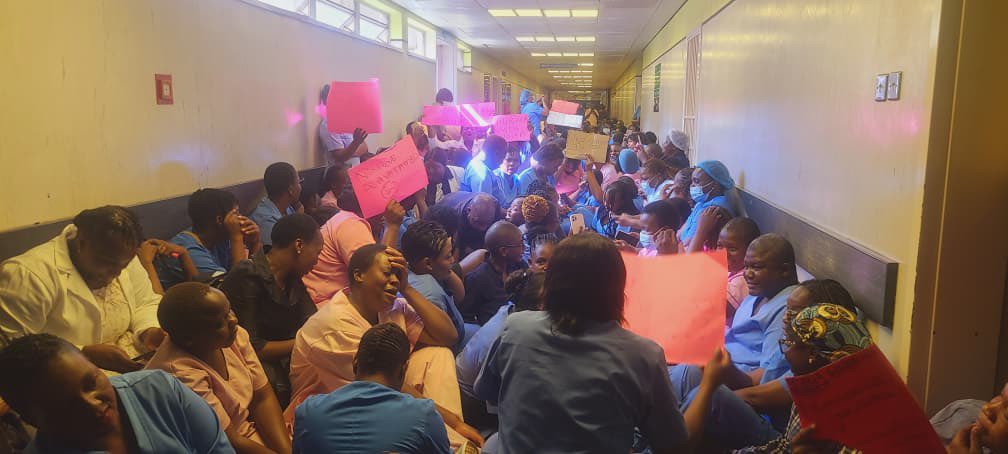
Hundreds of nurses at Parirenyatwa Group of Hospitals, Zimbabwe’s largest referral center, marched this week in a desperate bid for survival, demanding an urgent salary review as hyperinflation and skyrocketing fuel costs render their $450 monthly earnings practically worthless. The protest, which paralyzed outpatient services, underscores a deepening collapse in the public health sector where frontline workers are now choosing between feeding their families and paying for the transport required to reach their wards. This is not merely a labor dispute; it is a systemic failure that threatens to hollow out the nation’s medical infrastructure entirely.
The Anatomy of a Healthcare Collapse
The current unrest at Parirenyatwa is the culmination of years of economic mismanagement dating back to the post-2017 transition. Zimbabwe’s inflation rate, which has consistently ranked among the highest globally, has eroded the purchasing power of the local currency. According to the Zimbabwe Nurses Association (ZINA), the average nurse’s salary of $450 is insufficient to cover basic rent, let alone the recent 150% hike in fuel prices that has pushed public transport costs beyond the reach of civil servants. Historically, Zimbabwe’s health sector was the envy of Southern Africa; today, it is characterized by chronic drug shortages, dilapidated equipment, and an exodus of skilled professionals seeking better wages in the United Kingdom and the Gulf states.
Regional Implications for Southern Africa
The instability in Zimbabwe’s health sector creates a dangerous domino effect across the Southern African Development Community (SADC). As Zimbabwean nurses flee the country, the regional brain drain places an unsustainable burden on neighboring health systems, particularly in South Africa and Botswana, which are already grappling with their own post-pandemic recovery challenges. Geopolitically, the failure of the Harare administration to stabilize the economy forces a continued migration flow that fuels xenophobic tensions and strains regional diplomatic relations. If Zimbabwe’s healthcare system reaches a point of total non-functionality, the resulting humanitarian crisis could trigger a mass exodus that would reshape the demographic and economic landscape of the entire Southern African region.
The Human Cost of Economic Stagnation
For the patients at Parirenyatwa, the math is lethal. Data from the hospital indicates that staffing levels have dropped by 40% in the last two years, leading to longer wait times and higher mortality rates for treatable conditions. 'I am a nurse, not a beggar, yet I cannot afford a loaf of bread for my children,' says one senior nurse who requested anonymity for fear of state retribution. The economic data is equally damning: with inflation consistently outstripping wage adjustments, the $450 salary is effectively a poverty trap. When the state prioritizes debt servicing and fuel subsidies for the political elite over the salaries of those responsible for public health, the social contract is effectively dissolved.
Government Stance and Public Reaction
The government’s response has been one of characteristic deflection. Finance Minister Mthuli Ncube has repeatedly cited 'fiscal consolidation' as the reason for the freeze on significant salary hikes, a stance that has drawn sharp criticism from labor unions and civil society organizations. 'The government is playing a dangerous game with the lives of the poor,' says Tendai Biti, a prominent opposition figure and former Finance Minister. Meanwhile, the Ministry of Health has threatened disciplinary action against striking nurses, labeling the protests as 'politically motivated.' This adversarial approach has only deepened the resentment among staff, who view the government’s rhetoric as a distraction from the fundamental failure to manage the national economy.
The Road Ahead: A System on the Brink
Without a radical shift in fiscal policy—specifically, the dollarization of civil servant salaries or a massive subsidy on essential goods—the protests at Parirenyatwa are likely to be the first of many. The government faces a binary choice: continue to prioritize austerity at the cost of public service collapse, or engage in a genuine, inflation-indexed wage negotiation that acknowledges the reality of the Zimbabwean market. As the country moves toward the next electoral cycle, the health sector will remain a flashpoint for broader discontent. For Southern Africa, the message is clear: the instability in Harare is not a local issue, but a regional threat that requires urgent, high-level diplomatic intervention before the healthcare system becomes entirely irreparable.