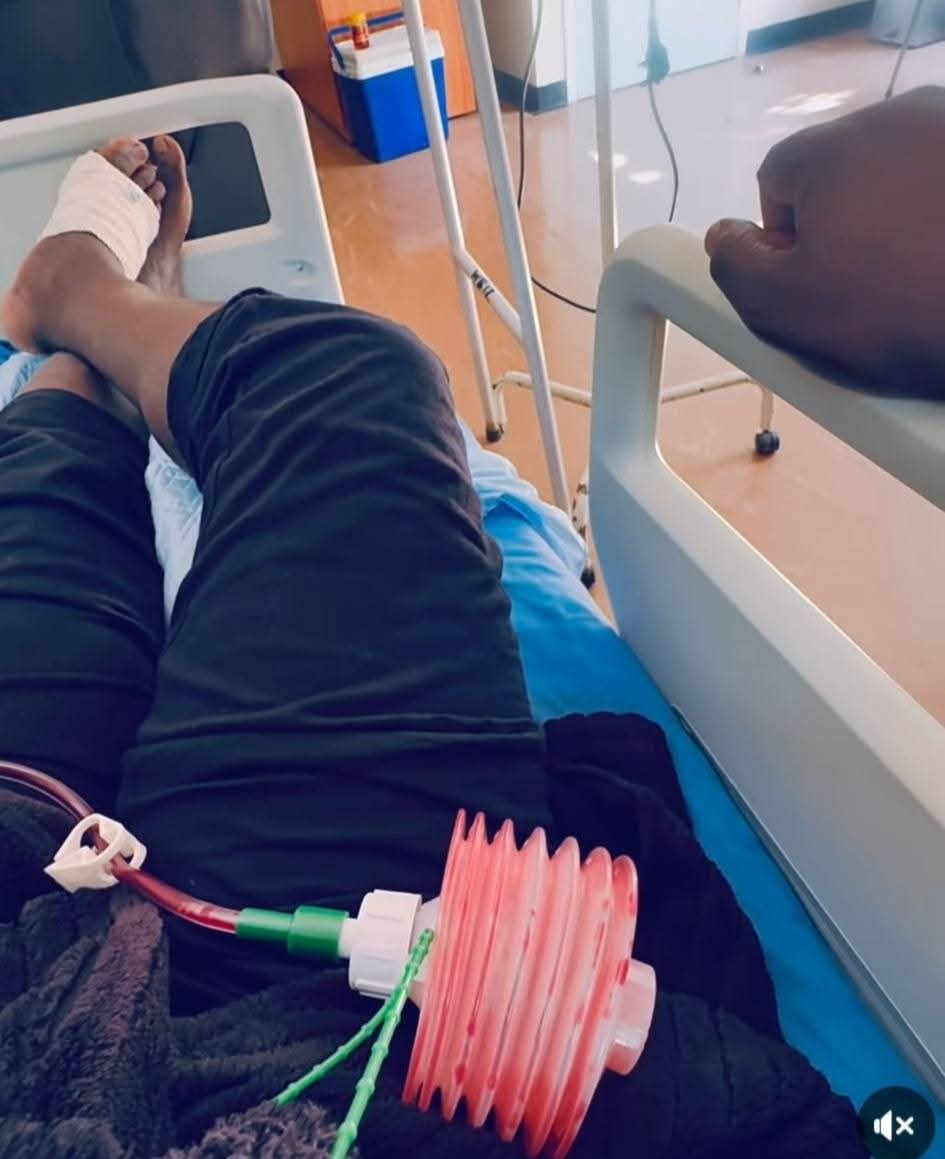
In a move designed to overhaul decades of systemic decay, the Zimbabwean government has poured millions into the modernization of Parirenyatwa Group of Hospitals, the nation’s largest referral center. President Emmerson Mnangagwa’s administration claims this facelift—featuring state-of-the-art diagnostic equipment and renovated wards—marks the end of 'medical tourism' for the elite, yet critics argue the infrastructure remains a hollow shell without addressing the critical brain drain of medical professionals. As the facility reopens its doors, the focus shifts to whether this high-tech investment can actually serve the millions of impoverished citizens who rely on it for survival.
A Legacy of Decline: The Parirenyatwa Context
Established in the colonial era as the Andrew Fleming Hospital, Parirenyatwa was once the crown jewel of Southern African medicine. However, by 2010, the hospital had become a symbol of Zimbabwe’s economic collapse, plagued by broken CT scanners, lack of basic pharmaceuticals, and a decaying physical plant. Following the 2017 transition of power, the Mnangagwa administration faced immense pressure to restore the institution. Data from the Ministry of Health indicates that under the 'Vision 2030' framework, the government has injected over $20 million into refurbishing the radiology department and intensive care units. This is a critical pivot for a country that previously saw its high-ranking officials fly to South Africa or Singapore for routine medical care.
Geopolitical Implications for Southern Africa
The modernization of Parirenyatwa is not merely a domestic policy win; it is a calculated geopolitical maneuver. By positioning Harare as a regional medical hub, Zimbabwe seeks to reclaim its status within the SADC (Southern African Development Community) bloc. If successful, this could reduce the reliance of Southern African nations on South African hospitals, shifting the regional balance of medical power. Dr. Tendai Mashingaidze, a regional health economist, notes: 'If Zimbabwe successfully stabilizes its tertiary care, it mitigates the outward flow of capital to foreign private hospitals, a trend that has historically drained the region’s economic resources. However, this hinges on whether the hardware can be sustained without foreign currency reserves.'
The Human Cost: Data vs. Reality
While the hardware is new, the human element remains fragile. According to the Zimbabwe Medical Association, over 2,000 doctors and nurses have emigrated since 2021, citing poor working conditions and stagnant wages. The upgrade at Parirenyatwa currently faces a paradox: the hospital possesses top-tier MRI machines, yet it struggles to retain the radiologists required to interpret them. Without competitive salaries and a stable economic environment, these machines risk becoming 'white elephants' within five years. The government’s challenge is proving that this investment is more than a public relations campaign, but rather a sustainable commitment to public health.
Institutional and Public Response
Public sentiment remains deeply divided. While the ruling ZANU-PF party touts the upgrades as a triumph of the 'Second Republic,' civil society groups remain skeptical. 'A hospital is not just bricks and high-tech scanners; it is the nurses who stay and the patients who can afford the service,' stated an official from the Zimbabwe Nurses Association. International observers, including representatives from the World Health Organization (WHO) country office, have lauded the technical improvements but emphasized the need for a comprehensive policy that addresses rural-urban health disparities. The government maintains that this is only phase one of a national rollout.
The Road Ahead: Sustainability and Governance
The next 24 months will be the true litmus test for the Parirenyatwa upgrades. For the project to succeed, the government must move beyond capital expenditure and address the operational budget—specifically, the cost of maintenance contracts and pharmaceutical supply chains. If the facility can maintain high standards, it may slow the 'brain drain' by providing a viable, functioning environment for medical professionals to work at home. Failure, however, would reinforce the narrative of governance mismanagement. Ultimately, the success of this hospital will serve as a bellwether for the Mnangagwa administration’s ability to deliver on its promise of a 'prosperous and empowered upper-middle-income society' by 2030.