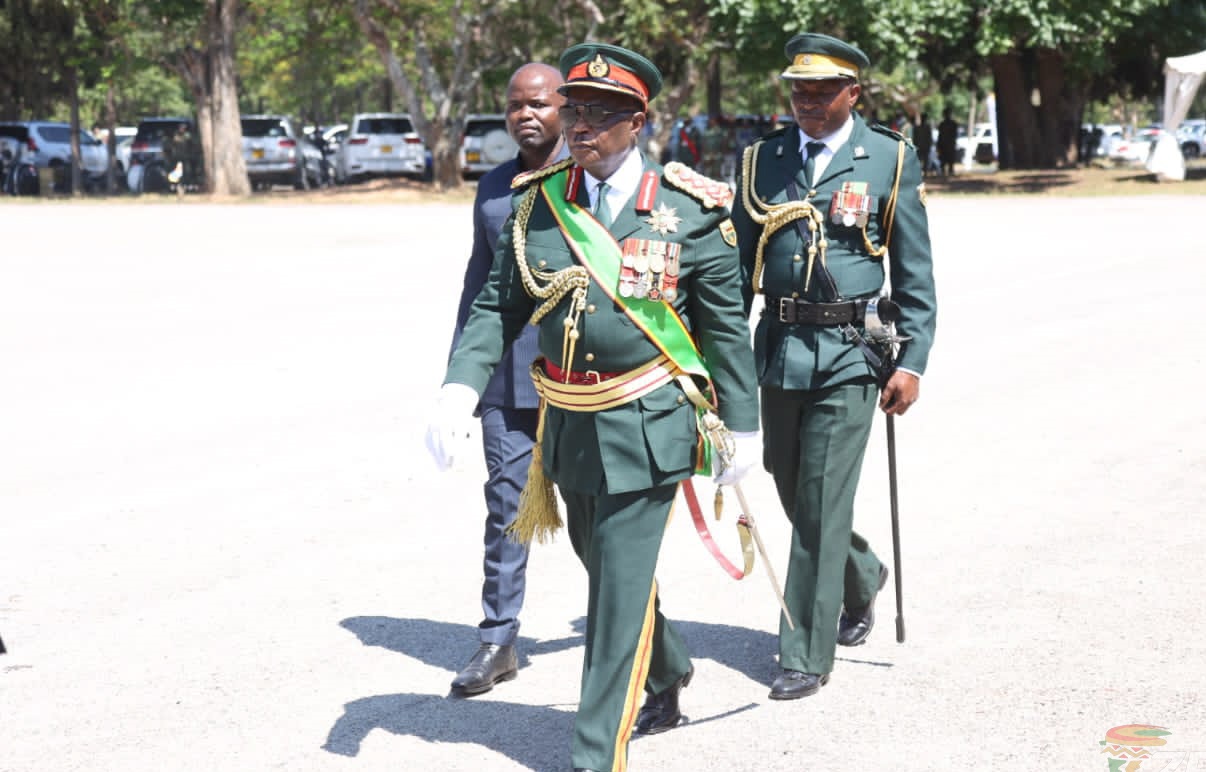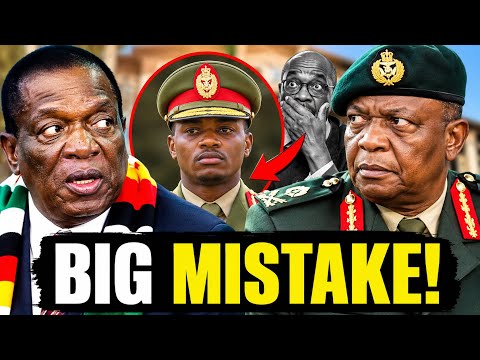
Harare, Zimbabwe – A dramatic power struggle inside Zimbabwe’s ruling ZANU-PF party has erupted into public view, with the president accused of making a deadly miscalculation that could destabilize the country and reverberate across Southern Africa. The explosive allegations, circulating widely among political circles, claim that Emmerson Mnangagwa has dangerously underestimated his deputy, Constantino Chiwenga, and that Chiwenga’s son—a serving officer in the Zimbabwe Defence Forces—faces imminent career termination as a direct consequence.
The specific timing and source of these claims remain unverified, but they have ignited intense debate about the fault lines within a party that has controlled Zimbabwe since independence. At the heart of the narrative is a long-simmering rivalry between Mnangagwa and Chiwenga, two men who once stood together during the 2017 military-assisted transition that ousted Robert Mugabe. That alliance has frayed, and the video circulating online alleges that Mnangagwa’s latest move against Chiwenga’s son marks a turning point that may trigger a severe backlash.
The Alleged Power Play
“The president’s camp may believe that moving against Chiwenga’s son is a low-risk move to weaken the vice president’s influence without triggering a wider crisis,” said a Zimbabwean security analyst who spoke on condition of anonymity due to the sensitivity of the matter. “But that calculation ignores the deep respect Chiwenga commands in the military and the potential for a backlash from younger officers.” The analyst added that such a miscalculation could erode Mnangagwa’s own support among the armed forces, a pillar of his authority since 2017.
Geopolitical Fallout for Southern Africa
Zimbabwe’s internal political stability has direct implications for the Southern African Development Community (SADC). As landlocked country heavily dependent on South African trade routes and regional energy grids, any sustained unrest would disrupt cross-border commerce and investment. The International Monetary Fund projects Zimbabwe’s economy will grow by just 2 percent in 2025, constrained by currency volatility, hyperinflation that has eroded consumer confidence, and a debt burden exceeding $14 billion. A political crisis would scare off the foreign capital needed to revive mining and agriculture sectors.
South Africa, the region’s economic hegemon, has watched the Mnangagwa-Chiwenga tensions with growing concern. Pretoria has mediated previous Zimbabwean political crises but has limited appetite for another intervention. “A rupture at the top of ZANU-PF would create a vacuum that could be exploited by criminal networks and further destabilize cross-border crime routes,” warned a researcher at the Institute for Security Studies in Pretoria. “It also complicates SADC’s efforts to maintain a unified stance on regional security issues, from Mozambique’s insurgency to the Democratic Republic of Congo’s conflicts.”
Other Southern African states, including Zambia and Botswana, rely on Zimbabwe as a transit corridor for goods traveling to and from the ports of Beira and Durban. Any breakdown in Zimbabwean governance would threaten supply chains already fragile after years of economic mismanagement and extreme weather events.
The Chiwenga camp has not publicly reacted to the allegations. But those close to the vice president describe him as methodical and patient—traits he displayed during the 2017 military takeover. They warn that underestimating him could be Mnangagwa’s “deadly mistake,” as the video title suggests. Whether this results in an actual political earthquake or remains a factional rumor will depend on the next few weeks.
International observers note that the timing is particularly risky. Zimbabwe is still recovering from the contested 2023 elections, which saw Mnangagwa win a second term amid opposition allegations of fraud. The country’s currency has lost more than 80 percent of its value since the start of 2024, and basic goods prices have soared. Public anger could be easily directed at a leadership feud seen as prioritizing personal power over national survival.
With no clear succession plan in place, the alleged move against Chiwenga’s son may be a calculated gamble. But analysts caution that in a nation where the military has historically been the ultimate arbiter of political change, any threat to a general-turned-vice-president’s family could unify both active and retired officers against the president. The stakes could not be higher for Zimbabwe and the broader Southern African region.