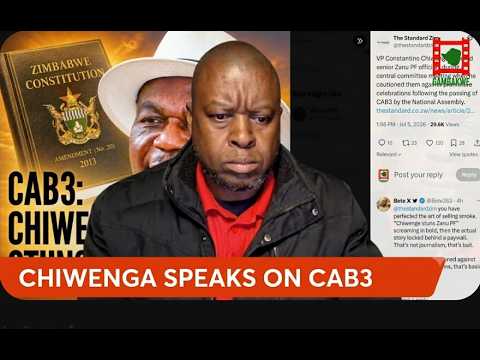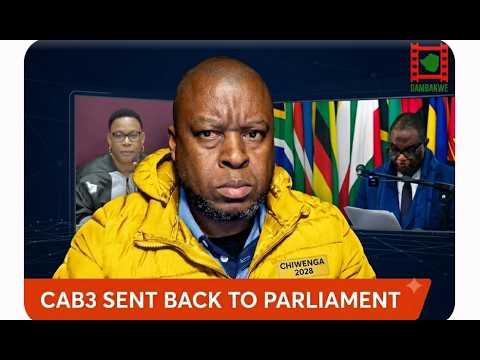
Zimbabwean lawmakers are demanding an immediate escalation in state security for upcoming public hearings on controversial constitutional amendments, citing credible intelligence of organized political violence designed to silence dissent. The request, tabled in Parliament this week, underscores a deepening crisis of democratic legitimacy in Harare, where the ruling ZANU-PF party faces accusations of attempting to consolidate executive power through legislative maneuvering. As the nation prepares for these high-stakes consultations, the threat of state-sponsored intimidation looms, casting a shadow over the fundamental right of citizens to participate in the governance of their country.
The Historical Shadow of Constitutional Manipulation
The current tension is rooted in a long-standing pattern of constitutional erosion that has defined Zimbabwe’s political landscape since the 2013 Constitution was adopted. That document, which was hailed as a landmark achievement for human rights, has been subjected to multiple amendments, most notably the 2021 changes that granted the President unilateral power to appoint senior judges. According to data from the Zimbabwe Human Rights NGO Forum, political violence in the country has historically spiked during public consultation periods, with over 150 documented cases of assault and intimidation reported during previous legislative outreach programs. The current push for further amendments—which critics argue will weaken parliamentary oversight—is viewed by legal analysts as a strategic effort to insulate the executive branch from judicial and legislative accountability.
Geopolitical Implications for Southern Africa
The instability in Harare is not contained within its borders; it represents a significant contagion risk for the Southern African Development Community (SADC). As Zimbabwe’s economy continues to struggle with hyperinflation and a 40% unemployment rate, the political volatility surrounding these hearings threatens to trigger further cross-border migration into South Africa and Botswana. Regional experts warn that if Zimbabwe abandons its democratic commitments, it undermines the SADC Principles and Guidelines Governing Democratic Elections. The erosion of constitutional norms in Harare provides a dangerous template for autocracy in a region already grappling with democratic backsliding, potentially destabilizing the entire Southern African trade bloc.
The Real-World Cost of State-Sanctioned Fear
The impact of this climate of fear is quantifiable. Independent observers note that when citizens are too intimidated to attend public hearings, the resulting legislation lacks the 'public buy-in' required for stability. 'We are seeing a systematic chilling effect,' says Dr. Tendai Mupfumi, a constitutional law expert. 'When MPs require armed guards to discuss the law, the law itself ceases to be a social contract and becomes a tool of coercion.' Recent data from the Zimbabwe Election Support Network (ZESN) indicates that in districts where political violence was reported during previous hearings, voter participation in subsequent elections dropped by an average of 18%, suggesting that the violence is effectively disenfranchising the most vulnerable segments of the population.
Institutional Reactions and the Battle for Legitimacy
The response from the political establishment has been sharply divided. While ZANU-PF spokespersons have characterized the security concerns as 'exaggerated' and 'politically motivated,' opposition MPs remain steadfast in their demands for neutral, non-partisan protection. 'We cannot have a situation where the very people sent to intimidate the public are the ones providing security,' stated a senior opposition lawmaker who requested anonymity for safety reasons. Civil society organizations, including the Law Society of Zimbabwe, have issued urgent calls for the Zimbabwe Republic Police to remain strictly non-partisan, warning that any failure to protect citizens at these hearings will be viewed as a direct violation of the state’s constitutional obligations to uphold the rule of law.
The Road Ahead: A Test for Zimbabwe’s Future
The coming weeks will serve as a definitive litmus test for Zimbabwe’s democratic trajectory. If the government proceeds with the hearings under heavy military or police presence, it risks further isolating itself from the international community and damaging its prospects for debt restructuring and foreign investment. Conversely, if the state fails to ensure a safe environment for free expression, the constitutional amendments—regardless of their content—will be viewed as illegitimate by both the Zimbabwean electorate and the global community. The international eyes of the African Union and the United Nations will be fixed on these hearings, as they represent a pivotal moment in determining whether Zimbabwe will continue to slide toward authoritarianism or attempt to reclaim the democratic promises of its 2013 charter.