NEWS 🔴 BREAKING

Mnangagwa Promotes Nine ZNA Majors to Lieutenant Colonels

Reader action

Open the featured link before you leave this story.

Watch Live Video Now Send to WhatsApp
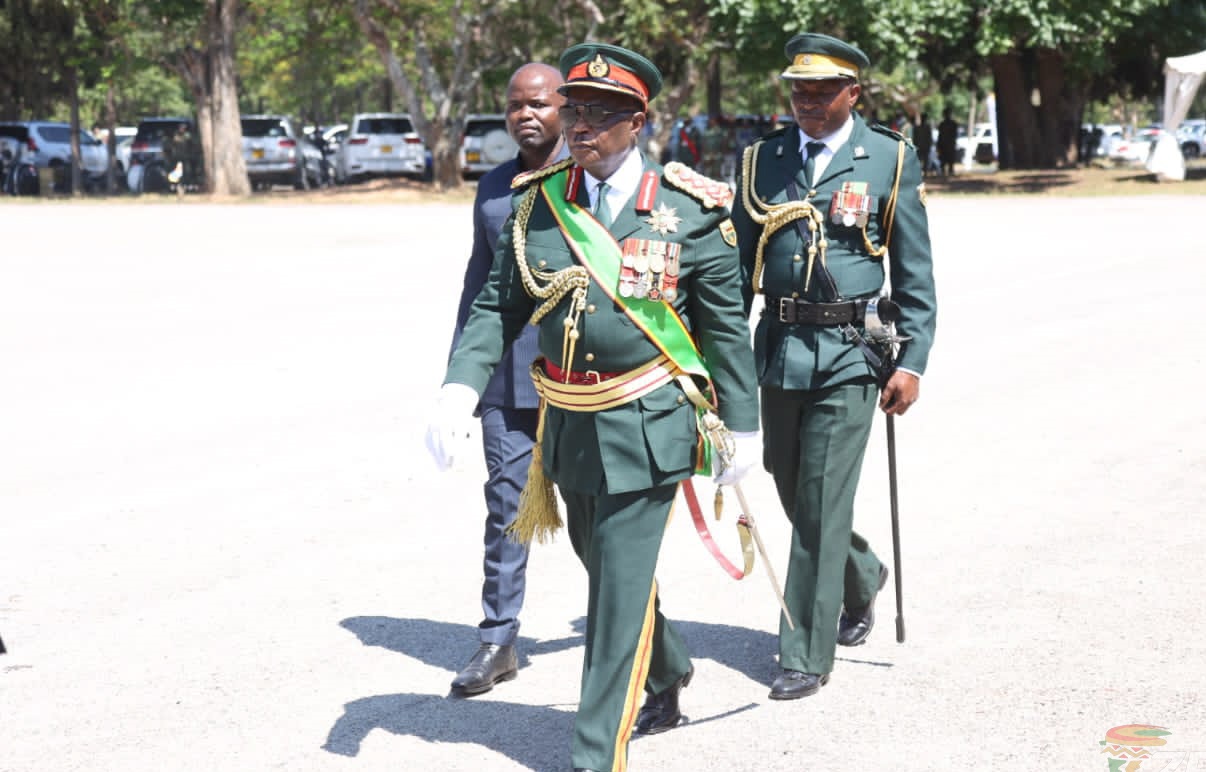
Zimbabwe National Army officers during a formal investiture ceremony at Josiah Magama Tongogara Barracks in Harare
Newly promoted ZNA officers receive rank insignia at Josiah Magama Tongogara Barracks in Harare.

President Emmerson Mnangagwa has promoted nine Zimbabwe National Army officers from Major to Lieutenant Colonel—an elevation that reshuffles the command layer responsible for enforcing discipline, directing operational planning, and translating national directives into action.

The promotions were conferred at Josiah Magama Tongogara Barracks in Harare, with the investiture framed as a formal, assessment-based advancement under Zimbabwe’s Defence Act rank framework. The message is clear: this is not a ceremonial courtesy. It is a command decision that strengthens authority at a sensitive level just below the senior general-officer tier—where loyalty, competence, and political alignment can quickly become inseparable.

Story follow-up Get the next angle on Mnangagwa Promotes Nine ZNA Majors to Lieutenant. The promotions were conferred at Josiah Magama Tongogara Barracks in Harare, with the investiture framed as a formal, assessment-based advancement...

For Zimbabwe, the stakes are immediate. Lieutenant Colonels typically command battalion-sized formations or occupy senior staff roles that influence how orders are executed across training, personnel management, logistics, and compliance. In a security sector that has repeatedly been pulled into national political contestation, promotions at this level do not merely reward careers—they recalibrate who holds influence over day-to-day command decisions.

Rank elevation at the point where command becomes control

Zimbabwe’s President is Commander-in-Chief of the Zimbabwe Defence Forces. That constitutional reality makes military promotions more than internal human resources. They are instruments of state governance—used to consolidate command structures, set performance expectations, and signal to the wider force that the chain of command is being tightened.

Lieutenant Colonel is a pivotal rank. It is where officers move from mid-level command into roles that can determine operational readiness and institutional discipline. These officers are positioned to shape how directives are implemented, how standards are enforced, and how quickly the army responds to crises—whether those crises are internal unrest, security incidents, or enforcement actions tied to national priorities.

Trending angle Open the fuller picture behind this update. Lieutenant Colonel is a pivotal rank. It is where officers move from mid-level command into roles that can determine operational readiness and inst...

The investiture’s official framing emphasised that promotion is earned through assessment rather than lobbying. That language matters because it is designed to pre-empt the most damaging narrative in any politicised security environment: that advancement is driven by patronage. When the state insists on assessment-based promotion, it is also implicitly acknowledging the risk that the public and the force may otherwise interpret rank changes as rewards for alignment.

In Zimbabwe’s context, that risk is not theoretical. The country has faced recurring political tension in which security institutions have been central to power dynamics. Even when no overt attempt to seize power is underway, the perception of military alignment can influence political calculations and external assessments of stability.

That is why this promotion cycle lands where it does. Strengthening the middle command layer can improve operational coherence—but it can also concentrate authority among officers viewed as trusted by the top leadership. The difference between those outcomes is not the insignia. It is what happens after the ceremony: whether newly promoted officers enforce discipline and accountability, or whether command authority becomes a tool for internal factional leverage.

What readers open next See the latest reaction around Mnangagwa Promotes Nine ZNA Majors to Lieutenant. That is why this promotion cycle lands where it does. Strengthening the middle command layer can improve operational coherence—but it can also conc...

Regional security pressure turns Zimbabwe’s personnel moves into geopolitical signals

Zimbabwe does not operate in isolation. Southern Africa faces overlapping security pressures that are increasingly transnational: cross-border criminal networks, illicit trafficking routes, and the movement of armed actors and destabilising spillovers across porous boundaries. Even when Zimbabwe is not the epicentre of a crisis, regional instability affects border management, policing demands, and the political cost of security failures.

Because of that, military appointments and promotions carry weight beyond Harare. Neighbouring states and regional security stakeholders watch how Zimbabwe manages internal security, protects strategic infrastructure, and positions its forces for cooperation—whether through training engagements, intelligence coordination, or participation in regional peace and security frameworks.

External partners also read changes in Zimbabwe’s security leadership as signals. Defence cooperation, procurement relationships, and diplomatic leverage are often influenced by perceptions of continuity or shift within command structures. When the leadership changes at ranks that control implementation, it can affect how partners assess the reliability of Zimbabwe’s security posture and the predictability of its decision-making.

For Zimbabwean civilians, the most urgent question is not the number of officers promoted. It is whether the promotions translate into measurable improvements in professionalism, restraint, and accountability. A security sector that becomes politicised imposes costs that extend far beyond barracks: public trust erodes, human rights risks rise, and donor confidence can weaken—dampering investment stability and governance credibility.

The state’s narrative insists these promotions are about capability and service. That claim must be tested by outcomes. Promotions without visible improvements in discipline, transparency, and operational oversight do not reduce risk; they can simply redistribute influence within the command structure.

Zimbabwe’s next test will not be the investiture itself. It will be performance: how the newly promoted Lieutenant Colonels manage personnel, enforce standards, and respond to both internal and regional pressures without turning command authority into political currency.

ViralZim | Sponsored
🔥 Trending Now
🎥
LIVE VIDEO 👁 12K views
Watch Live: What's Happening in Zimbabwe Right Now
Stream live coverage of breaking stories, events and trending moments across Zimbabwe — right now.
▶ Watch Live
🎬
LATEST VIDEO
Zimbabweans Can't Stop Watching This — See Why It's Going Viral
This video is spreading like wildfire across Zimbabwe. Find out what everyone's talking about before you're the last to know.
▶ Watch Latest
📲
FREE DOWNLOAD FREE
Download Zimbabwe's Most Popular App — Thousands Already Have It
Join thousands of Zimbabweans already using this app. 100% free — no hidden charges, no sign-up required.
⬇ Download Free
🎁 🔥 HOT
EXCLUSIVE OFFER
Limited Time Deal — Don't Miss Out
This exclusive offer is available for a limited time only. Grab it before it expires tonight — hundreds have already claimed theirs.
→ Claim Offer