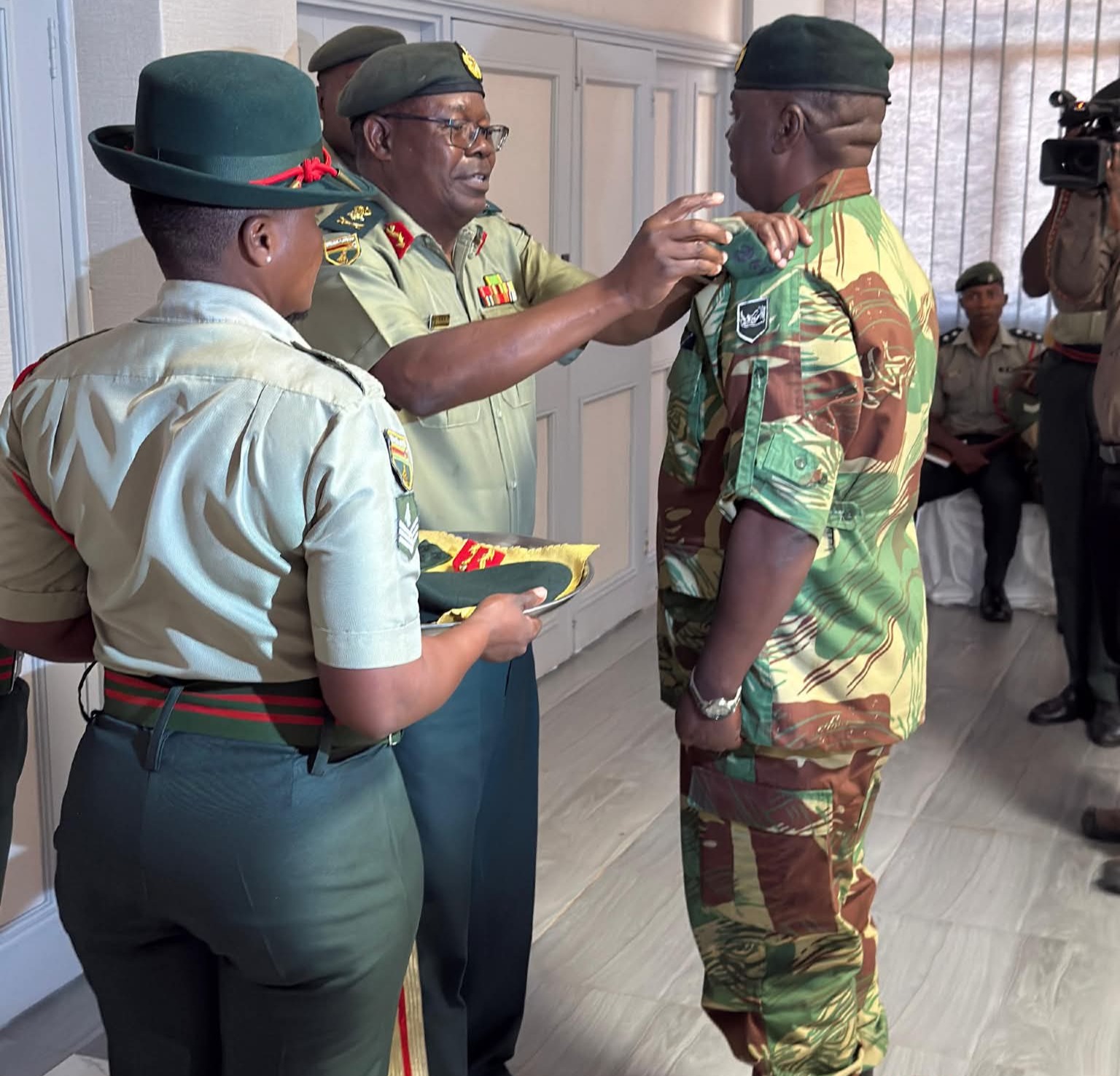
President Emmerson Mnangagwa has promoted two senior Zimbabwe National Army (ZNA) colonels to the rank of Brigadier General, a move that consolidates his grip on the military apparatus amidst mounting internal party friction and economic instability. The promotion, gazetted this week, places loyalist commanders in key strategic positions within the ZNA, effectively tightening the executive’s control over the nation’s primary security organ. This elevation comes at a time when the administration faces international scrutiny over human rights and a crumbling domestic economy that continues to bleed the Southern African region.
A History of Military-Executive Symbiosis
The Zimbabwe National Army has historically functioned as the bedrock of the ruling ZANU-PF party since the 2017 coup that ousted the late Robert Mugabe. Since taking power, President Mnangagwa has meticulously curated the military leadership to ensure that the security sector remains an extension of the presidency. The promotion of these two officers is not merely an administrative routine; it is a calculated maneuver to replace aging guard members with officers whose career trajectories are inextricably linked to the current administration’s survival. By elevating these individuals, Mnangagwa is reinforcing a chain of command that prioritizes political loyalty over traditional military meritocracy, a trend that has been observed since the 2018 post-election violence that left six civilians dead.
Geopolitical Implications for SADC Stability
For the Southern African Development Community (SADC), the militarization of the Zimbabwean state is a source of profound anxiety. As Zimbabwe grapples with hyperinflation—currently hovering above 300% in real terms—and a migration crisis that sees thousands of citizens fleeing to South Africa, the military’s role in governance becomes a regional security concern. Security analyst Dr. Tendai Mupfumi notes, 'When the military becomes the primary arbiter of political power, the democratic space shrinks, and the regional contagion of instability becomes inevitable.' The promotion suggests that the government is preparing for a period of heightened internal surveillance, which could lead to further regional friction as neighboring states struggle to manage the spillover of Zimbabwean political volatility.
Economic Consequences and the Cost of Loyalty
The financial burden of maintaining an expanded top-heavy military hierarchy is significant. With a defense budget that consumes an outsized portion of the national fiscal envelope, these promotions exacerbate the country’s inability to fund essential social services. Data from the Ministry of Finance indicates that while health and education sectors face chronic underfunding, the security sector receives priority allocation. This resource misallocation directly impacts the lives of ordinary Zimbabweans, who face a 90% unemployment rate and crumbling infrastructure. The promotion of these officers signals that the administration is prioritizing the maintenance of a loyal security apparatus over the urgent need for structural economic reform, further isolating Zimbabwe from international credit markets.
Institutional Resistance and Public Outcry
Opposition figures and civil society organizations have reacted with alarm, interpreting the promotions as a signal of impending crackdowns on dissent. 'This is the militarization of the state by stealth,' says Gift Ostallos Siziba, a prominent opposition voice. 'By placing his hand-picked loyalists in the brigadier general rank, Mnangagwa is insulating himself from both internal party challenges and public protest.' International observers, including representatives from the European Union and the United States, have expressed concern that these moves undermine the rule of law. The government, however, maintains that the promotions are standard operational procedure, dismissing criticism as the work of 'detractors' and 'foreign-funded agents' attempting to destabilize the nation.
The Trajectory of a Securocrat State
Looking ahead, the promotion of these two officers suggests that President Mnangagwa is bracing for a contested political landscape in the coming years. By embedding loyalists within the ZNA, the presidency is effectively neutralizing potential dissent within the barracks. The next 18 months will be critical, as the administration navigates a potential succession battle within ZANU-PF and mounting pressure from a disenfranchised youth population. For Southern Africa, the message is clear: Zimbabwe is moving further away from democratic norms and deeper into a securocratic model of governance. The international community will be watching closely to see if these new commanders prioritize the defense of the state or the protection of the ruling elite, as the country teeters on the edge of further isolation.