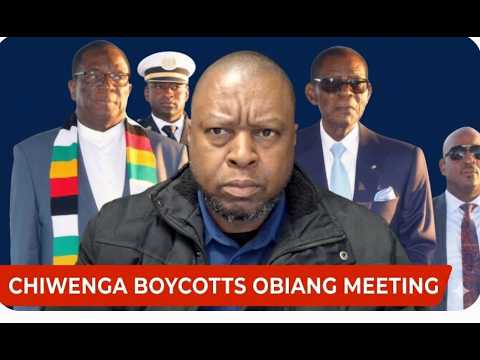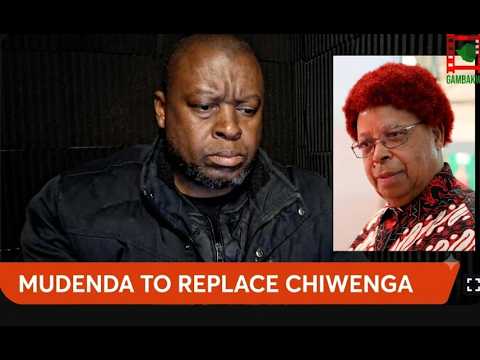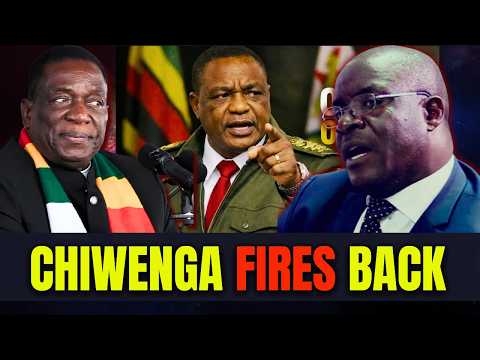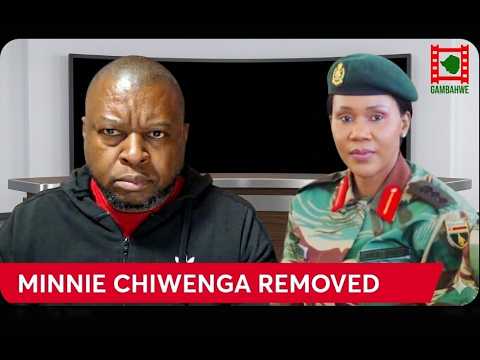
‘This is a political decapitation, not a governance reform,’ said Dr. Pedzisayi Ruhanya, a political analyst at the University of Zimbabwe. ‘By targeting Minnie Chiwenga, Mnangagwa is sending a clear message to the Chiwenga faction that no one, not even the vice president’s family, is untouchable. The question now is whether Constantino Chiwenga will retaliate or retreat.’
Inside the Factional War
The Chiwenga-Mnangagwa rift has simmered since the 2017 coup that ousted Robert Mugabe. Constantino Chiwenga, a former army general, was the military architect of that transition and expected a smoother path to the presidency. Instead, Mnangagwa has systematically sidelined allies of the vice president, reassigning loyal generals and stripping Chiwenga of key ministerial oversight.
Minnie Chiwenga’s board position was widely seen as a sop to the Chiwenga camp, allowing the vice president’s family to benefit from Zimbabwe’s lucrative mining sector, which accounts for over 70% of export earnings. Her removal cuts off that revenue stream. ‘Control over mining licences is control over party financing,’ noted Zvakwana Moyo, a Harare-based economist. ‘When you remove the VP’s wife from ZMDC, you are starving his faction of the cash they need to build campaign war chests.’
The timing is critical. Zimbabwe is grappling with hyperinflation that reached 576% in late 2024, a collapsing currency, and widespread food insecurity. The Southern African Development Community (SADC) has watched nervously as Zimbabwe’s internal strife hampers regional trade and migration flows. South Africa, Botswana, and Zambia all depend on Zimbabwe’s railway corridors for mineral exports. A prolonged political crisis in Harare could disrupt supply chains from the Copperbelt to Durban.
Economic Shockwaves
Immediately after the announcement, the Zimbabwe Stock Exchange’s mining index fell 2.3 percent on Wednesday, reflecting investor anxiety over policy unpredictability. The parallel market rate for the US dollar also widened, with the Zimbabwean dollar losing another 5 percent of its informal value. ‘Markets hate uncertainty, and a factional war inside ZANU-PF is the worst kind of uncertainty,’ said Tapiwa Mhishi, an investment analyst at Imara Capital.
For ordinary Zimbabweans, the political drama distracts from urgent needs. The country’s wheat harvest has fallen by 40% due to drought, and the government is scrambling for foreign currency to import grain. Western donors, already wary of Mnangagwa’s human rights record, are unlikely to step in while the leadership remains fractured. ‘The only people who benefit from this infighting are the informal traders who profit from arbitrage,’ said Ruhanya. ‘Everyone else pays the price.’
Regional Fallout
Southern Africa’s diplomatic corps is bracing for a deepening rift. SADC’s troika, led by Zambian President Hakainde Hichilema, has quietly urged both Mnangagwa and Chiwenga to de-escalate. But behind closed doors, diplomats warn that Zimbabwe’s instability could become the bloc’s next major crisis, overshadowing the conflict in eastern DR Congo and Mozambique’s Cabo Delgado insurgency.
‘If the Zimbabwean military decides to side with Chiwenga, we could see a slow-motion coup or a repeat of 2017,’ said a senior SADC official who spoke on condition of anonymity. ‘That would be catastrophic for investment in the entire region. No one wants a second Zimbabwe crisis.’
Meanwhile, China, Zimbabwe’s largest bilateral lender and investor, has remained publicly neutral but privately concerned. Beijing has over $2 billion in mining and infrastructure projects at stake, and a power struggle could delay critical construction at the Hwange thermal power plant and the Beitbridge-Harare highway.
What Comes Next
Constantino Chiwenga has not publicly commented on his wife’s removal. However, sources close to the vice president suggest he is weighing options, including a direct challenge to Mnangagwa at the next ZANU-PF central committee meeting, scheduled for March. A more drastic scenario—a parliamentary no-confidence motion—remains unlikely given Mnangagwa’s control over the party machinery and security forces.
Yet the removal of Minnie Chiwenga may prove to be a miscalculation. ‘Mnangagwa has drawn a line in the sand,’ said Moyo. ‘But he has also awakened a general. Constantino Chiwenga did not get to be vice president by being passive. We are now in a dangerous game of chess, and the pawns are Zimbabwean citizens.’
The international community, including the African Union and the United Nations, has thus far remained silent. But as Zimbabwe’s political temperature rises, the silence may not hold. For the people of Harare, Bulawayo, and the rural villages where drought and inflation are daily realities, the battle at the top is distant but devastatingly consequential.
Stay Informed About Zimbabwe's Power Struggle
Read exclusive analysis and breaking updates on the political crisis reshaping Southern Africa.