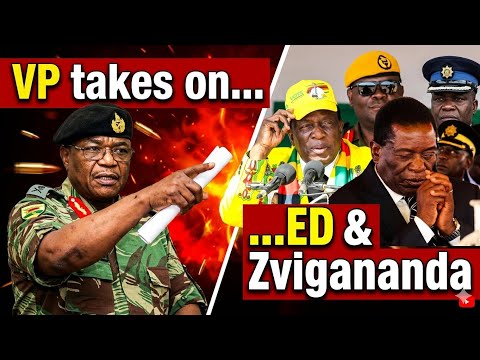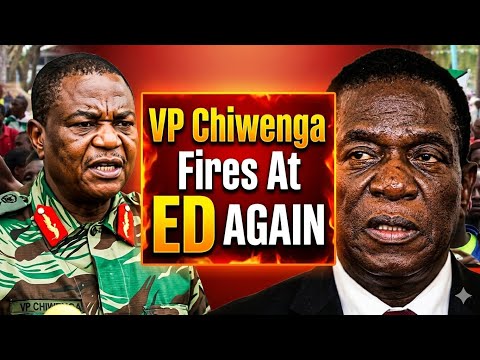
Harare, Zimbabwe — Vice President Constantino Chiwenga’s unannounced address at a homestead in Chimhini, a rural outpost in the Mashonaland East province, has sent shockwaves through Zimbabwe’s political establishment. Delivered in front of hundreds of supporters who had gathered for what was described as a ‘community event,’ the speech was laced with sharp references to loyalty, discipline, and the fate of those who ‘betray the struggle.’ Political analysts and insiders say the remarks were aimed squarely at President Emmerson Mnangagwa, exposing a rift that has been simmering since the 2017 coup that brought the current administration to power.
‘A Direct Declaration’
The speech, which lasted nearly 40 minutes, was recorded by local supporters and quickly circulated on social media platforms, including the now-viral clip posted by an independent media outlet. In it, Chiwenga makes no direct mention of Mnangagwa by name, but his references to ‘those who forget the tree that gave them shade’ and ‘leaders who surround themselves with empty praise-singers’ were immediately decoded by party insiders as attacks on the president’s inner circle. ‘This was not a routine community address. It was a direct declaration that Chiwenga is positioning himself for the succession,’ said Professor Tendai Murisa, executive director of the Zimbabwe Institute for Strategic Studies, in an interview. ‘The imagery of a homestead is deliberately traditional — it signals that he has roots in the land, that he is not a Harare elite. That is powerful in a country where rural votes decide elections.’
The timing is critical. Zimbabwe is facing its worst economic crisis in a decade — hyperinflation, chronic power outages, and a collapse of public health services — while Mnangagwa’s government has increasingly relied on security forces to suppress dissent. The internal ZANU-PF succession battle, long a rumor in diplomatic circles, is now playing out in plain sight. Chiwenga’s Chimhini address follows a pattern of public engagements that hint at a break with the president: he has recently toured military barracks, visited mining communities, and held closed-door meetings with traditional chiefs.
Geopolitical Ripple Effects
For Southern Africa, a power struggle in Zimbabwe is more than a domestic concern. Harare is a linchpin of the region’s stability, and any prolonged political crisis could destabilize neighboring Mozambique, where Zimbabwean troops are deployed against an Islamist insurgency, and Zambia, which relies on Zimbabwe for electricity imports under the Kariba Dam agreement. ‘The SADC bloc is watching Harare closely,’ said Wellington Mbofana, a regional security analyst based in Pretoria. ‘If the factional fight turns violent, it would set back the entire region’s economic recovery. Investors are already nervous about the legal uncertainty around land reform and mining contracts. A coup rumor is the last thing they need.’
Chiwenga’s camp has publicly denied any ambitions to unseat Mnangagwa. In a statement issued by his office after the Chimhini video went viral, the vice president’s spokesperson described the address as ‘a routine engagement with the people to discuss development challenges.’ But few in Harare’s political circles are buying that explanation. ‘A sitting vice president does not fly to a remote homestead, give a speech that sounds like a rally, and then claim it was about boreholes and roads,’ a senior ZANU-PF official said, speaking on condition of anonymity for fear of being frozen out of party patronage. ‘This is a declaration of intent.’
The response from the presidency has been notably muted. Mnangagwa’s press office has not issued a direct rebuttal. Instead, state-controlled media have run editorials praising ‘party unity’ without mentioning Chiwenga. The silence, analysts say, is strategic. Mnangagwa cannot afford to alienate the military, which still largely backs Chiwenga. But he also cannot appear weak. ‘The real question is whether the generals will stay neutral if Chiwenga makes a move,’ noted Professor Murisa. ‘In Zimbabwe, the army’s loyalty is not guaranteed by the constitution — it is earned by the leader who controls the purse and the patronage. Right now, that leader’s grip is slipping.’
For ordinary Zimbabweans, the succession drama is a distant distraction from daily survival. In Chimhini, the homestead where Chiwenga spoke, locals expressed mixed reactions. ‘We are tired of politicians fighting for power while we cannot afford mealie-meal,’ said Alice Moyo, a 52-year-old mother of six. ‘But if the VP comes here and promises change, we will listen.’ That ambivalence may be the most dangerous signal of all for the Mnangagwa administration: a public that has stopped believing in any leader’s ability to deliver.