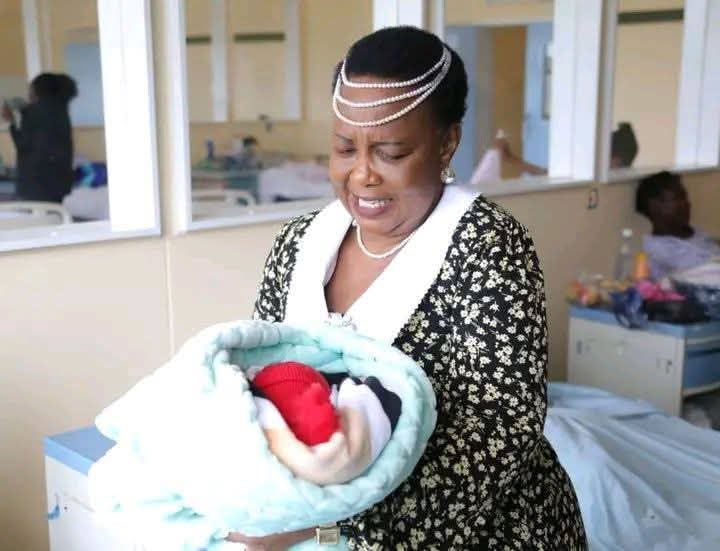
On March 21, 1963, a figure was born whose trajectory would eventually mirror the turbulent, hopeful, and complex evolution of the Zimbabwean state. Today, as supporters across the nation celebrate the birthday of 'Amai Venyika,' the occasion serves as a poignant reminder of the enduring influence of maternal and matriarchal archetypes in Southern African politics. Her 61st birthday is not merely a personal milestone; it is a cultural touchstone that highlights the intersection of public service, national identity, and the persistent struggle for social cohesion in a nation grappling with economic volatility.
The Historical Tapestry of a Nation's Matriarch
Born in 1963, just two years before the Unilateral Declaration of Independence (UDI) by the Ian Smith regime, Amai Venyika’s life spans the entirety of Zimbabwe’s modern history. The mid-1960s were a period of profound upheaval, characterized by the hardening of colonial racial hierarchies and the nascent stirrings of the liberation struggle. Statistics from the era indicate a population under extreme duress, with the 1960s serving as the crucible for the nationalist movements—ZANU and ZAPU—that would define the next six decades. Her public persona, often framed as 'Amai vedu' (our mother), draws heavily from the Shona tradition of the 'mother of the nation,' a role that carries significant political weight in a country where traditional authority often intersects with modern governance.
Geopolitical Implications for Southern Africa
The elevation of figures like Amai Venyika within the public consciousness reflects a broader trend in the SADC (Southern African Development Community) region, where the 'mother figure' is frequently utilized to stabilize political narratives during times of crisis. Dr. Tendai Mashingaidze, a regional political analyst, notes, 'In Southern Africa, the maternal figure is often the last line of defense against total social fragmentation. When the economy falters—as we see with Zimbabwe’s current inflation rates exceeding 50%—the public turns to symbolic figures to provide a sense of continuity.' This reliance on symbolic leadership is not unique to Harare; it is a recurring theme in the political theater of South Africa, Zambia, and Botswana, where the cult of personality often dictates the pace of democratic reform.
Real-World Consequences of Symbolic Leadership
The impact of such figures on the ground is palpable, though often difficult to quantify. In rural provinces, the endorsement or mere presence of a figure like Amai Venyika can shift local sentiment regarding government initiatives, from agricultural subsidies to health mandates. Data from the Zimbabwe Vulnerability Assessment Committee (ZimVAC) suggests that community-led initiatives, often spurred by influential local figures, have a higher success rate than top-down government mandates. However, critics argue that this reliance on 'mother figures' can distract from structural failures. 'We are celebrating birthdays while the youth unemployment rate hovers near 80%,' says human rights activist Sarah Moyo. 'The symbolism is powerful, but it cannot pay for the bread that has become unaffordable for the average family.'
Institutional and Public Reaction
The response to her birthday has been a microcosm of the country’s deep political polarization. While state-aligned media outlets have hailed the day as a moment of national unity, opposition voices remain skeptical, viewing the celebration as a diversionary tactic. 'It is a calculated move to humanize a political system that many feel has become detached from the suffering of the masses,' says a senior diplomatic source in Harare. Conversely, supporters argue that the warmth expressed for Amai Venyika is a genuine grassroots sentiment, untainted by the machinations of the elite. 'She represents the endurance of the Zimbabwean spirit,' says one supporter on social media, 'a spirit that refuses to break despite the economic sanctions and internal mismanagement.'
The Road Ahead: Beyond the Celebration
As Amai Venyika moves into her 62nd year, the question remains: what substantive role will she play in the future of the nation? The coming months will be critical for Zimbabwe, with mounting pressure for electoral reform and the ongoing struggle to stabilize the ZiG currency. For observers in Southern Africa, the trajectory of such figures is a bellwether for the region's broader democratic health. If the focus remains on personality-driven politics, the structural reforms necessary for long-term prosperity may continue to languish. The challenge for Zimbabwe is to translate the communal affection for figures like Amai Venyika into a unified push for the institutional changes that will finally allow the next generation to thrive.