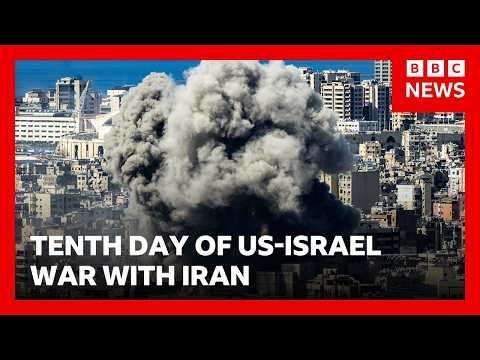
The simmering conflict between the US-Israel alliance and Iran has escalated, reaching its tenth day according to a BBC News report highlighted on YouTube. The escalating tensions, visible in the video posted by BBC News, raise immediate concerns about regional stability and the potential for wider international involvement, impacting nations like Zimbabwe already grappling with economic challenges.
Deepening Roots of the US-Israel-Iran Conflict
The current tensions are rooted in decades of geopolitical maneuvering, ideological clashes, and proxy wars. The US withdrawal from the Iran nuclear deal (JCPOA) in 2018 under the Trump administration, followed by the reimposition of sanctions, significantly heightened animosity. Israel's ongoing concerns about Iran's nuclear program and its support for groups like Hezbollah and Hamas further fuel the conflict. Historically, the relationship between the US and Iran, once relatively cordial, deteriorated sharply after the 1979 Iranian Revolution. The Israeli-Palestinian conflict, with Iran backing Palestinian factions, adds another volatile layer to the already complex situation. UN Security Council Resolution 2231, endorsing the JCPOA, has been a constant point of contention, with differing interpretations shaping international responses.
Analyzing the Implications for Zimbabwe and Southern Africa
The US-Israel-Iran conflict poses significant economic and political risks for Zimbabwe and the broader Southern African region. As a net importer of fuel, Zimbabwe is particularly vulnerable to disruptions in global oil supply chains caused by regional instability in the Middle East. Any spike in oil prices would exacerbate Zimbabwe's already crippling inflation and foreign currency shortages. Politically, the conflict could further polarize opinions within Zimbabwe, potentially exacerbating existing divisions along religious and ideological lines. Moreover, it could divert international attention and resources away from pressing development challenges facing the region, such as food security and climate change adaptation. The conflict also risks further destabilizing countries in the Horn of Africa, where Iranian influence is growing, potentially leading to an influx of refugees and increased security risks for neighboring countries.
Real-World Consequences and Economic Impact
Dr. Thandiwe Dube, an economist at the University of Zimbabwe, warns of dire economic consequences. "A prolonged conflict will inevitably lead to higher fuel prices, pushing Zimbabwe's inflation into hyperinflation territory," she stated. "This will erode purchasing power, deepen poverty, and further destabilize the economy." According to the Reserve Bank of Zimbabwe, the country's import bill for fuel already constitutes a significant drain on its scarce foreign currency reserves. A 20% increase in global oil prices, as predicted by some analysts, could add an estimated US$300 million to Zimbabwe's annual fuel import costs, severely impacting its ability to import essential goods and services. The Confederation of Zimbabwe Industries (CZI) has expressed concerns about the potential impact on manufacturing and agricultural production, warning that higher energy costs could lead to factory closures and reduced crop yields.
Reactions from Governments and Markets
The Zimbabwean government has so far maintained a neutral stance, calling for de-escalation and a peaceful resolution to the conflict. However, privately, officials are reportedly concerned about the potential economic fallout. Other African nations, including South Africa and Nigeria, have echoed calls for restraint and diplomatic engagement. Market reactions have been swift, with the Zimbabwe Stock Exchange experiencing increased volatility as investors adopt a risk-averse approach. The Zimbabwean dollar has weakened against major currencies, further fueling inflationary pressures. Regionally, the Southern African Development Community (SADC) is expected to issue a statement urging all parties to prioritize dialogue and avoid actions that could further destabilize the region.
The Uncertain Future of the US-Israel-Iran Conflict
The trajectory of the US-Israel-Iran conflict remains highly uncertain. While diplomatic efforts are underway to de-escalate tensions, the underlying issues remain unresolved. The possibility of further escalation, either through direct confrontation or proxy warfare, cannot be ruled out. The international community, including African nations, must actively engage in promoting dialogue and seeking a peaceful resolution to this protracted conflict. Failure to do so could have devastating consequences for regional and global stability, with far-reaching implications for Zimbabwe and the rest of Southern Africa.