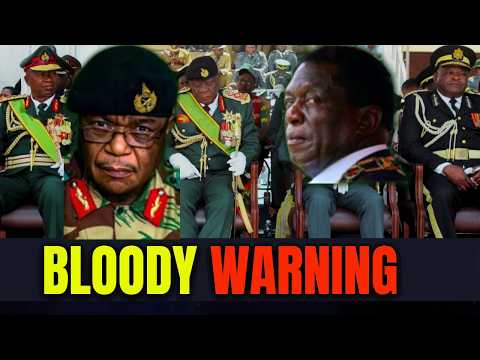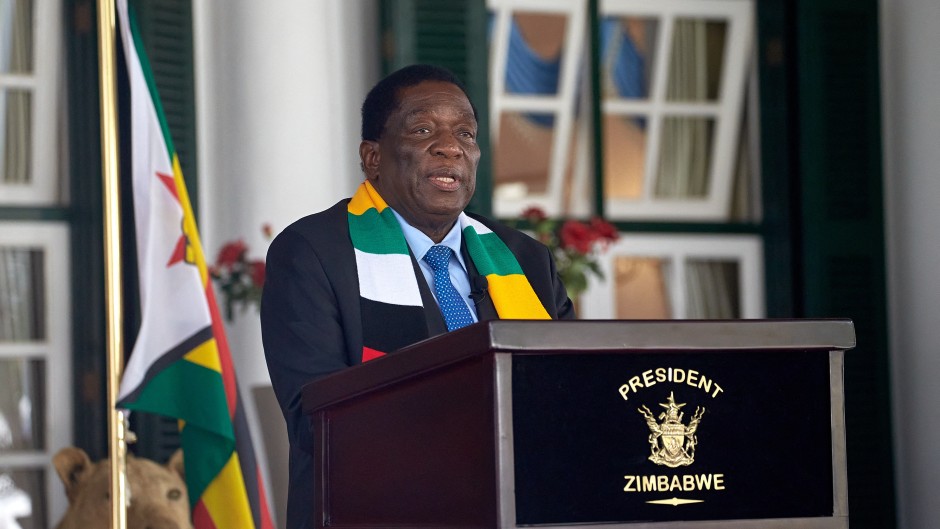
A high-stakes power struggle has erupted within the Zimbabwean state apparatus as a faction of influential retired army generals has launched a direct, unprecedented challenge against President Emmerson Mnangagwa’s maneuvers to extend his constitutional term in office. This internal revolt, surfacing in the shadow of the ruling ZANU-PF party, threatens to dismantle the fragile post-coup coalition that brought the President to power in 2017. As the military establishment—the traditional kingmaker of Zimbabwean politics—shows signs of fracturing, the prospect of state instability now looms over a nation already buckling under hyperinflation and systemic corruption.
The Architecture of Control: A Historical Precedent
Since the 2017 military-assisted transition that ousted the late Robert Mugabe, the ZANU-PF government has relied on a symbiotic relationship between the civilian presidency and the Zimbabwe Defence Forces (ZDF). Emmerson Mnangagwa, who consolidated power with the backing of the 'securocrats,' has governed through a delicate balance of military patronage and political suppression. However, the current tension stems from the President's reported desire to bypass the two-term constitutional limit, a move that veterans of the liberation struggle view as a betrayal of the democratic principles they claim to have fought for. Historical data indicates that ZANU-PF’s grip on power has historically depended on internal consensus; when that consensus fails, as seen in the lead-up to the 2008 election crisis, the risk of violent state fracture increases exponentially.
Geopolitical Implications for Southern Africa
The instability in Harare is not contained within its borders; it poses a direct threat to the regional security architecture of the Southern African Development Community (SADC). Southern Africa has long feared a collapse of the Zimbabwean state, which would trigger a massive refugee influx into South Africa, Botswana, and Zambia. Analysts note that if the military factions turn on one another, SADC’s ability to mediate becomes severely compromised. 'The Zimbabwean military is the spine of the state; if the spine breaks, the region suffers the neurological shock of a failed neighbor,' says Dr. Tendai Mupfumi, a regional security analyst. For countries like South Africa, already struggling with domestic xenophobic tensions, a destabilized Zimbabwe is a worst-case scenario that would further derail the regional economic recovery agenda.
Economic Consequences of the Political Standoff
The economic impact of this infighting is immediate and devastating. With Zimbabwe’s inflation rate persistently hovering near triple digits and the local currency in a state of freefall, investors require political certainty to inject capital. Instead, they are witnessing a government distracted by internal succession battles. According to recent World Bank data, Zimbabwe’s GDP growth is projected to remain stunted as long as policy uncertainty persists. The retired generals, who hold significant stakes in mining and agricultural conglomerates, are signaling that their financial interests are being threatened by the President’s inner circle. This fight is not just about constitutionalism; it is about the control of the country’s remaining mineral wealth, including gold and lithium deposits that are currently being leveraged to sustain the ruling elite.
The Reaction: A Nation on Edge
The public reaction has been one of wary anticipation, while the institutional response from ZANU-PF has been one of predictable denial. State media continues to portray the President as the sole guarantor of stability, yet the cracks are visible. 'We fought for a Zimbabwe that respects the constitution, not for a kingdom where one man rules until his death,' stated a high-ranking retired officer who spoke on the condition of anonymity for fear of reprisal. Meanwhile, civil society groups and opposition leaders are watching the infighting with a mix of hope and terror, fearing that a desperate Mnangagwa might resort to a 'scorched earth' policy to maintain his grip, further eroding the fundamental human rights of the Zimbabwean citizenry.
What Next: A Path Toward Transition or Conflict?
As the deadline for the constitutional extension debate approaches, all eyes are on the barracks. The coming months will determine whether President Mnangagwa can co-opt the dissenting generals through further patronage or if the military will force a transition. If the current trend of defiance continues, the likelihood of a forced early exit for the President increases. For the citizens of Zimbabwe and the wider Southern African region, the next chapter in this saga will likely define the trajectory of the country for the next decade. Whether this results in a democratic opening or a deepening of the security state remains the most critical question facing Southern Africa today.