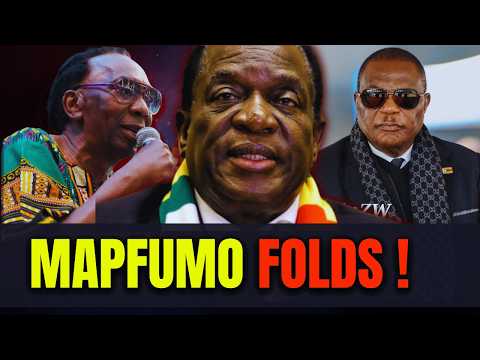
Critics frame the story as a direct contradiction of Chamisa’s public narrative, insisting he is “not telling you the truth” about his political trajectory. The allegations name Wicknell Chivhayo and Kudakwashe (Kuda) Tagwirei as key figures in a chain of payments described as an “8 million per year” pledge for “Chamisa welfare,” a “5 million” lump sum, and a separate claim that “Scott Kuda” secured a transportation contract connected to chrome mining—followed by an NDA and an agreement to “retire.”
These are not vague insinuations. They are presented with specific figures, named individuals, and a sequence: welfare payments, a mining-linked logistics contract, then secrecy and withdrawal. If even part of this is accurate, it would strike at the core of how opposition politics is financed, how business interests intersect with political power, and how trust is maintained—or destroyed—in a region where credibility is a currency.
Money, mines and the shadow contract economy
What makes the allegations particularly dangerous is the way they connect three high-sensitivity domains: political leadership, private funding, and extractive-sector logistics.
The claim that a transportation contract tied to chrome mining was secured, then sealed with an NDA, points to a classic pattern: secrecy used to prevent scrutiny of who benefits, how pricing is set, and whether the contract serves public interest or private influence. Non-disclosure agreements are not inherently illegal, but in political contexts they become a red flag—especially when they are paired with claims of payments framed as “welfare.”
“Welfare” language is also politically loaded. It can be used to describe legitimate support for communities or security-related needs. But when “welfare” is described as a structured annual pledge to a political figure, it raises a hard question: is this philanthropy, or is it influence operations designed to buy loyalty, mute internal dissent, and build a parallel patronage network?
Even if the allegations are ultimately disproven, the damage can still be systemic. The mere perception that political outcomes can be engineered through private agreements—rather than public mandates—erodes trust. In fragile democracies, that erosion does not stay confined to one party or one leader. It spreads into voter behaviour, civic mobilisation, and the willingness of citizens to demand accountability.
Authoritarian resilience thrives on that vacuum. When people believe politics is for sale, they stop expecting accountability from leaders and start focusing only on survival. That shift is not theoretical; it is the behavioural outcome of repeated credibility failures.
Proof, transparency and the credibility test for opposition
Investigative journalism cannot treat allegations as facts. The public record must be confronted with evidence: documents, payment trails, contract records, and verifiable timelines. At this stage, the claims circulating include figures and mechanisms that have not been established through publicly verifiable documentation in open channels.
But the responsibility does not fall only on those accused. The opposition—like any political movement seeking power through legitimacy—must be able to withstand scrutiny. If there was an NDA, the question is not whether secrecy exists; it is what the NDA covers, why it was necessary, and whether it shields wrongdoing or simply protects legitimate commercial confidentiality.
If there was a “retire” agreement, the question is equally direct: retire from what, under what terms, and with what public disclosure—if any? Political leadership is not a private employment contract. Citizens are entitled to know the basis on which leaders claim authority, and whether that authority was shaped by private deals.
That is why this is not a partisan spectacle. It is a national accountability test. The allegations—whether true or false—demand a response that is specific, evidence-based, and timely. Voters cannot be asked to choose between competing narratives built on insinuation. They need facts.
For now, the story’s central claim remains stark: that a structured “welfare” funding arrangement and a chrome-linked transportation contract were allegedly followed by an NDA and a retirement outcome for Chamisa. If the opposition cannot force clarity—through documentation, contract verification, and transparent timelines—then the region will be left with the worst possible result: not just a disputed allegation, but a durable loss of trust.