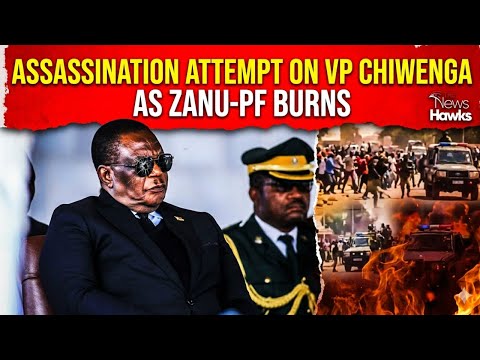
A chilling security breach has sent shockwaves through Zimbabwe’s political establishment, with reports emerging of an intelligence officer apprehended while allegedly armed in a plot targeting Vice President Constantino Chiwenga. The incident, which has yet to be officially confirmed by state security services, has intensified speculation regarding internal fractures within the ruling ZANU-PF party.
While the specifics of the arrest remain shrouded in secrecy, the incident has drawn immediate parallels to the volatile political climate that has defined Zimbabwe’s post-independence era. For the people of Southern Africa, where political stability in Harare is a critical barometer for regional economic health, such reports are deeply unsettling. The potential for internal power struggles to spill over into public instability remains a persistent concern for the Southern African Development Community (SADC), which often relies on a predictable political environment in Zimbabwe to maintain cross-border trade and security cooperation.
The Shadow of Political Instability
The alleged incident serves as a stark reminder of the fragility of power dynamics in the region. Observers note that any threat to a high-ranking official like Chiwenga—a central figure in the post-Mugabe transition—could trigger a cascade of uncertainty. The historical context of Zimbabwe’s political landscape, marked by intense factionalism, suggests that such claims are rarely isolated events but rather indicators of deeper, underlying tensions.
‘The security of the leadership is inextricably linked to the stability of the state,’ says an analyst familiar with regional security. ‘When reports of armed operatives within the intelligence apparatus surface, it signals a breakdown in the chain of command, which is a red flag for the entire Southern African bloc.’
As the situation develops, the international community continues to watch closely. The implications of this alleged plot extend far beyond Zimbabwe’s borders, as any significant shift in Harare’s political hierarchy could disrupt regional diplomatic efforts and economic integration initiatives that have been years in the making.
The silence from official channels has only fueled more aggressive speculation, leaving the public to parse through conflicting narratives. As citizens across Southern Africa look on, the demand for transparency and a swift, credible investigation into these claims has become a central point of concern for those invested in the region’s long-term peace and prosperity.