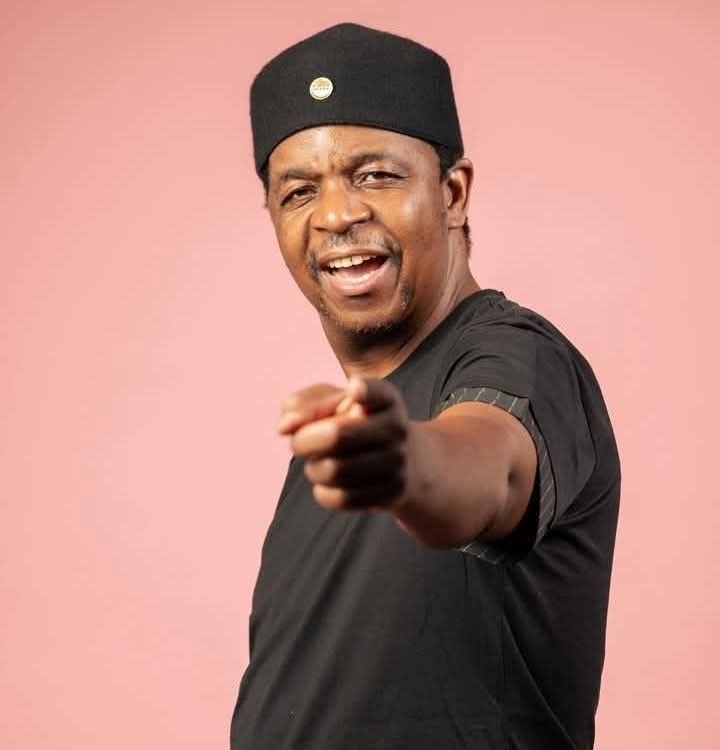
The most explosive part of DJ Oskido’s public identity dispute is not the music. It is the politics of belonging—who gets to be called Zimbabwean, who qualifies for recognition, and what that decision signals in a region where citizenship and diaspora status are routinely weaponised.
In 2019, Oskido’s management rejected a nomination connected to the Roil Bulawayo Arts Awards on the grounds that he “doesn’t qualify” as Zimbabwean. The reasoning was direct: Oskido was born in South Africa and raised in Bulawayo, Zimbabwe, but his eligibility for a Zimbabwean awards category was denied on the basis that he is South African.
That refusal ignited a debate that goes far beyond one artist’s biography. In Zimbabwe and across Southern Africa, citizenship is not only a legal status—it is a political identity. The question of who counts as “one of us” is never neutral. It lands in the middle of a long-running regional fault line: diaspora life versus national legitimacy; cultural influence versus formal recognition; and, increasingly, how political families and opposition histories intersect with modern celebrity.
Born in South Africa, raised in Bulawayo—then rejected as ‘not Zimbabwean’
Oskido’s real name is Oscar Sibonginkosi Mdlongwa. His life story places his birth in South Africa and his upbringing in Bulawayo, Zimbabwe. But when the Bulawayo Arts Awards nomination came, his side rejected the framing that he qualified as Zimbabwean for that honour.
That decision mattered because awards are not just trophies. They are gatekeeping mechanisms. They decide who is celebrated as a national cultural asset and who is treated as an outsider—even when their formative years were spent inside the country’s cultural ecosystem.
When a high-profile figure declines that framing, it forces institutions and audiences to confront a hard truth: cultural influence can be transnational, but official recognition is territorial. In other words, a person can be shaped by Zimbabwe and still be denied Zimbabwean status for the purpose of national representation.
In a region where many families move between Zimbabwe and South Africa for work, education, and safety, “qualification” becomes a proxy war about legitimacy. Zimbabweans living in South Africa and other neighbouring states often face bureaucratic friction over documentation and identity. When a prominent public figure publicly rejects Zimbabwean status in the context of a Zimbabwean awards nomination, it can be read—fairly or not—as a message about what Zimbabwe values and who it should claim.
The dispute also exposed the institutional consequences of celebrity politics. This was not a private argument. It involved the awards ecosystem and the artist’s management, meaning the refusal carried real effects on how the nomination was handled and how the public interpreted the rules of belonging.
Family opposition ties and the MDC shadow over identity
Oskido’s identity dispute cannot be separated from his family history. His father, Esaph Mdlongwa, was a founding figure in Zimbabwe’s Movement for Democratic Change (MDC) and a veteran opposition politician.
That MDC lineage is not background colour. It sits inside Zimbabwe’s long political struggle over legitimacy. For decades, Zimbabwe’s opposition has been contested through narratives that portray opponents as foreign-backed or insufficiently Zimbabwean. Opposition leaders and supporters have pushed back, arguing that the struggle is rooted in Zimbabweans themselves—not outsiders.
So when Oskido—linked to a prominent MDC family—refuses to be called Zimbabwean in the context of a Zimbabwe awards nomination, it lands in a charged landscape. It triggers a question Zimbabweans understand too well: is national identity something you inherit through family and upbringing, or something you claim through formal alignment?
There is also a generational and migration angle. Zimbabwe’s diaspora is not a one-way story. Families move back and forth between Zimbabwe and South Africa repeatedly—sometimes for labour, sometimes for education, and sometimes because political pressure makes staying dangerous. Oskido’s biography reflects that reality: South African birth, Zimbabwe childhood and education, and later a career anchored in South Africa’s music industry.
But the awards dispute shows how quickly diaspora mobility collides with national institutions. The Bulawayo Arts Awards episode became a public test of whether a Zimbabwe-raised artist is Zimbabwean enough for formal recognition.
In Zimbabwe, where cultural industries are also survival economies—music, radio, dance, visual art—recognition affects careers, sponsorships, and visibility. When a major figure declines nomination eligibility, it can be interpreted as symbolic withdrawal from Zimbabwe’s cultural institutions, whether that was the intent or not.
The ripple effect is regional. Southern Africa has long treated cultural identity as a shared ecosystem: South African music scenes influence Zimbabwean audiences, while Zimbabwean artists and producers shape regional sounds. Yet citizenship disputes remain stubbornly national. That contradiction is what makes this story hard-hitting: culture flows freely across borders, but official “belonging” is policed at home.
What makes the Oskido case especially politically sensitive is that it does not occur in a vacuum. Zimbabwe’s opposition politics, diaspora identity, and the state’s narratives about legitimacy all intersect with how public figures are labelled. When an artist with MDC-linked family ties insists he is not Zimbabwean for awards purposes, it forces the public to confront how identity is being defined—and by whom.
In the end, Oskido’s refusal is a mirror held up to Southern Africa’s citizenship politics. The moment you deny a label, you also deny a claim—on community, on history, and on the right to represent a nation’s cultural story.